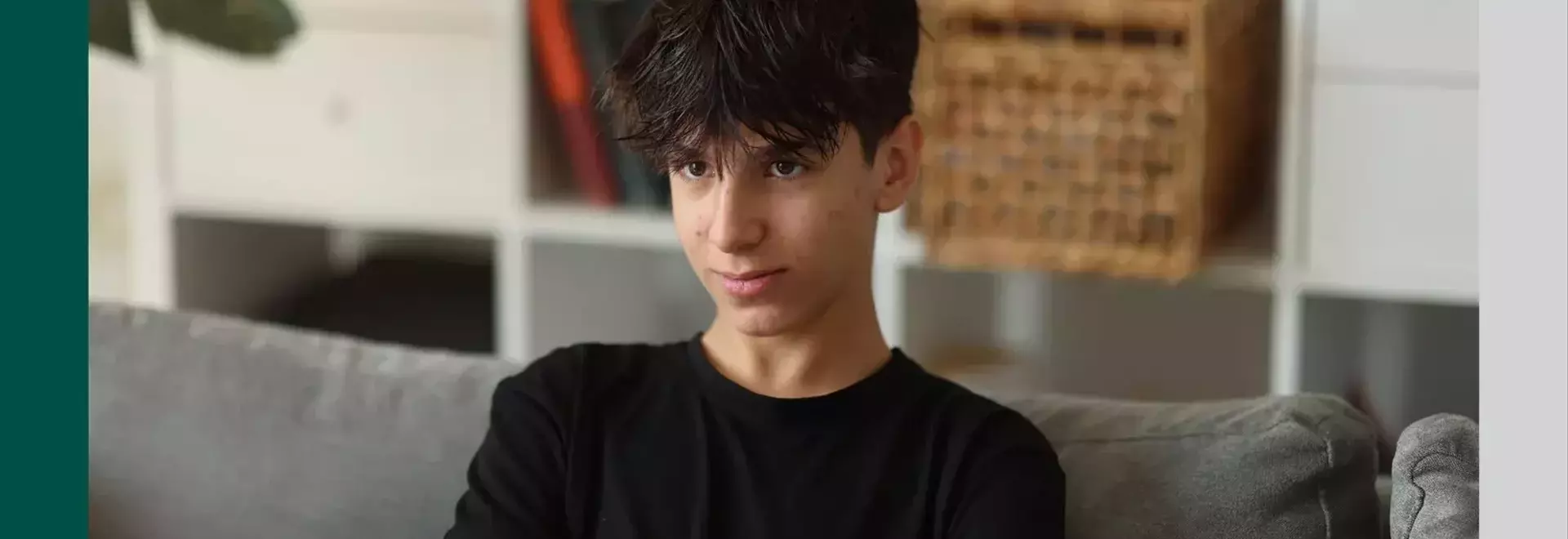
Understanding the 'Gen Z Stare': Beyond Disrespect
The prevalent \"Gen Z stare\"—that emotionless, almost vacant gaze frequently exhibited by today's youth—is a subject of increasing discussion among parents and developmental specialists. This distinctive non-verbal expression, often misconstrued as rudeness or disinterest by older generations, is in fact a complex signal, potentially indicative of social unease, a consequence of growing up in an ever-present digital world, or even a quiet defiance against trivial conversations. Understanding this contemporary phenomenon requires a deeper look into the evolving social landscape and the unique challenges faced by this generation, fostering greater empathy and more effective intergenerational dialogue.
Decoding the Silent Gaze: Insights into the 'Gen Z Stare'
In contemporary society, a peculiar non-verbal trend has emerged among young people, colloquially known as the \"Gen Z stare.\" This seemingly indifferent facial expression, characterized by a lack of discernible emotion, has caught the attention of parents, educators, and mental health professionals alike. While often interpreted as a sign of disrespect or apathy by older generations, particularly Millennials, this widespread gaze may tell a much more nuanced story about the intricate lives of today's adolescents.
Reports from various online platforms, including anecdotal observations from mothers of teenagers, highlight the pervasive nature of this stare. Social media, especially platforms like TikTok, have amplified discussions around this phenomenon, with viral content showcasing typical interactions where the \"Gen Z stare\" is present. Such portrayals often depict a generational divide in perception: older individuals view the stare as impolite, reflecting a perceived lack of \"social decency\" or a \"disinterested\" demeanor that hinders communication. However, a counter-narrative from numerous online commenters and experts suggests a different underlying reality. Many argue that this expression is not a deliberate act of rudeness but rather a manifestation of social anxiety, a byproduct of extended periods of isolation, or even a conscious rejection of superficial small talk.
According to experts like Matthew Solit, MSW, LMSW, an executive clinical director at LifeStance Health, and Sanam Hafeez, PsyD, a New York City-based neuropsychologist, the roots of the \"Gen Z stare\" are multifaceted. While the occasional aloofness of teenagers is not a new concept—adolescence has historically been a period of awkwardness and a desire for independence—the current generation faces unprecedented circumstances. The omnipresence of social media and digital communication from a young age has significantly altered how these individuals interact. As Dr. Hafeez notes, many young people are more adept at expressing themselves through text or curated online content than in spontaneous, face-to-face exchanges. Mr. Solit concurs, suggesting that the pressure of real-time responsiveness in in-person conversations, absent in digital interactions, can contribute to social anxiety among Gen Z, leading to this non-expressive demeanor.
Furthermore, the global pandemic played a pivotal role in shaping the social skills of this generation. Dr. Judy Ho, a clinical and forensic neuropsychologist at Pepperdine University, emphasizes that the enforced isolation during COVID-19 deprived many teens of crucial daily peer interactions essential for developing emotional intelligence and social confidence. This period, marked by a significant increase in social anxiety and avoidance among adolescents, has undoubtedly contributed to their discomfort in various social settings. The long-term effects of this unparalleled social disruption on Gen Z's development are still being extensively studied, but its immediate impact on their interpersonal communication is evident.
Beyond social anxieties and pandemic-induced changes, some experts propose that the \"Gen Z stare\" also serves as a subtle form of protest against mundane or repetitive conversations. In an era of instant gratification and rapid information consumption, facilitated by social media, attention spans have evolved. Dr. Hafeez suggests that when faced with what they perceive as uninteresting or overly simplistic questions, these young individuals may struggle to feign genuine interest. Dr. Ho adds that this expression can be a non-verbal signal of discomfort with questions that feel patronizing, redundant, or judgmental, reflecting a desire for more meaningful and authentic interactions.
It is crucial for adults to recognize that the \"Gen Z stare\" is not always a sign of defiance. Often, it's a coping mechanism for managing overstimulation in a hyper-connected world or an attempt to maintain a sense of calm and control, mirroring behaviors observed in popular online personas. Young people navigate a world rife with constant social comparison and performance pressure, making the stare a potential indicator of emotional fatigue. Understanding these underlying factors is key to bridging the communication gap.
While the \"Gen Z stare\" may not always be intentionally rude, its perception by older generations can lead to negative consequences, including missed opportunities in professional settings and challenges in forming lasting relationships. Therefore, parents are encouraged to address this behavior constructively. Instead of perceiving it as a personal affront, approaching the stare with curiosity and empathy can foster open dialogue. Experts recommend discussing the behavior calmly at a later time, modeling desired conversational traits like open body language and eye contact, and providing opportunities for low-pressure, in-person social engagements. Asking questions that delve into the teen's internal thoughts, such as \"What's on your mind when you go quiet like that?\" or \"How can I help you navigate these feelings?\", can offer valuable insights. In some instances, subtly mirroring the stare can even help teenagers recognize their own non-verbal cues. Ultimately, while every generation faces its unique challenges, fostering understanding and adapting communication strategies will ensure that Gen Z, like their predecessors, thrives in an evolving social landscape.
The emergence of the \"Gen Z stare\" is a compelling commentary on the rapid evolution of human interaction in the digital age. It serves as a potent reminder that communication is not merely about spoken words but also about the intricate non-verbal signals we transmit. For parents, educators, and society at large, this phenomenon calls for a deeper understanding and a more compassionate approach to intergenerational dynamics. Instead of rushing to judgment, we are presented with an opportunity to explore the complex interplay of social anxiety, technological immersion, and evolving social norms that shape the behaviors of the younger generation. By fostering an environment of empathy, open dialogue, and genuine curiosity, we can help equip Gen Z with the tools to navigate both the digital and physical worlds with greater confidence and connection, ensuring they can effectively communicate their unique perspectives and contribute meaningfully to society.
