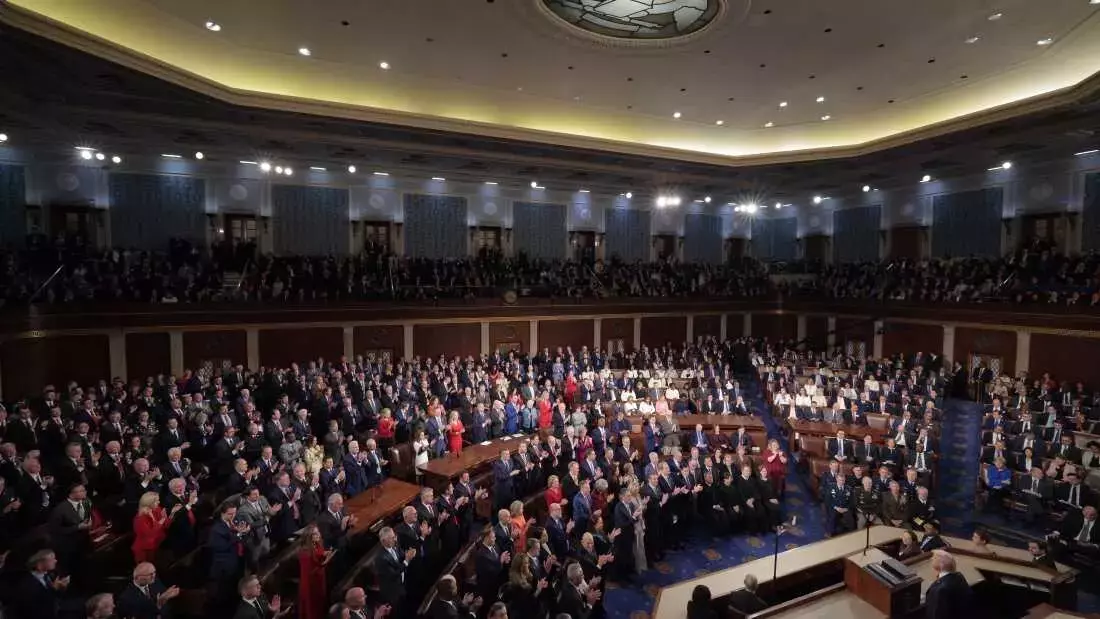
Trump's State of the Union Address, Aviation Safety, and AI Policy Debates
In early 2026, a series of pivotal events unfolded, impacting U.S. domestic policy, international relations, and technological advancements. President Trump delivered a State of the Union address that, while projecting national resurgence, conspicuously avoided addressing the public's primary concerns regarding economic hardship. Meanwhile, a critical aviation safety bill faced an unexpected defeat in the House of Representatives, raising questions about congressional priorities in the wake of a tragic air disaster. Adding to the complex landscape, the Pentagon issued a stark warning to a leading artificial intelligence firm over its refusal to relax safety protocols for military applications, signaling potential conflicts between national security and ethical technology development.
Crucial Discussions Shape National Discourse
On February 25, 2026, President Trump presented his first State of the Union address of his second term at the U.S. Capitol. During this extensively-covered event, he declared a national resurgence and a remarkable economic turnaround. However, the President largely overlooked widespread public anxieties regarding escalating living costs and economic pressures, a sentiment corroborated by unfavorable poll figures. His discourse instead underscored long-standing political tropes, including strict immigration enforcement and cultural debates, delivered with his characteristic theatrical flair. A notable aspect of the speech was the absence of a discernible legislative agenda, reinforcing the perception that his focus remains on consolidating political power. In response, Democrats displayed a fragmented front, with reactions ranging from open dissent to the official party response that critically examined economic issues.
Simultaneously, the U.S. House of Representatives recently voted against the ROTOR Act, a bipartisan measure aimed at enhancing aviation safety. This proposed legislation emerged following a devastating mid-air collision between a U.S. Army helicopter and a passenger jet near Washington, D.C., which tragically claimed 67 lives. Despite strong endorsements from safety experts and the victims' families, the Pentagon unexpectedly withdrew its support just before the vote, citing unspecified budgetary and operational security risks. NPR's Joel Rose reported that the bill mandated broader adoption of ADS-B technology, a system believed capable of preventing such collisions by providing real-time aircraft location data. Advocates of the act are now planning to reintroduce the bill for another House vote.
In a separate development impacting national security and technology, Defense Secretary Pete Hegseth reportedly threatened Anthropic, a prominent artificial intelligence company. This confrontation arose from Anthropic's refusal to lower its safety standards for military use. During a meeting with Anthropic CEO Dario Amodei, Hegseth allegedly warned of potential blacklisting and the cancellation of the company’s $200 million contract, with suggestions that the Pentagon might even seize Anthropic's AI assets without consent. These revelations, sourced from individuals with direct knowledge of the meeting, highlight a growing tension between the Department of Defense's operational demands and the ethical guidelines upheld by AI developers.
Reflections on Policy, Safety, and Ethics
The convergence of these events prompts a reflection on the core principles guiding national governance and technological integration. President Trump's State of the Union address, while a platform for outlining a vision for the country, revealed a strategic choice to emphasize a narrative of success while sidestepping immediate public concerns about economic well-being. This approach raises questions about the disconnect between political messaging and the everyday realities faced by citizens. The rejection of the aviation safety bill, particularly after a catastrophic accident and initial Pentagon support, underscores the complexities and potential bureaucratic hurdles in enacting crucial safety measures. This decision may leave many questioning the efficacy of legislative processes in safeguarding public welfare. Lastly, the Pentagon's firm stance against Anthropic highlights the escalating debate around AI ethics, particularly when advanced technologies intersect with military applications. It forces a critical examination of where the line should be drawn between national security imperatives and the responsible development of potentially powerful, yet risky, technologies. These instances collectively point to a dynamic and often contentious interplay between political leadership, public safety, and technological innovation in the modern era.
