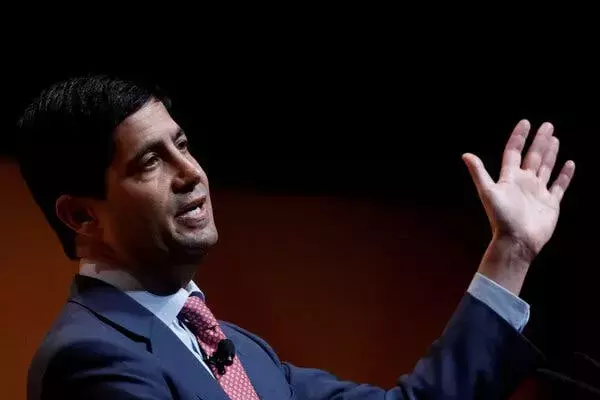
Trump Nominates Kevin Warsh as Next Fed Chair
President Trump has officially put forward former Federal Reserve governor Kevin Warsh as his choice to lead the central bank. This announcement follows a period of anticipation and occurs against a backdrop of scrutiny regarding the current Fed chief, Jay Powell. Warsh, who has previously expressed strong opinions on the Fed's approach to inflation and its impact on markets, is perceived as a candidate who aligns with the administration's goals for reduced interest rates.
The nomination of Kevin Warsh to head the Federal Reserve marks a significant development in economic policy. Warsh's past criticisms of the central bank's handling of inflation and its extensive market influence position him as a potentially transformative leader. His selection is also noteworthy given the ongoing investigation into Jay Powell, the current Fed leader, and the administration's perceived desire to assert greater control over monetary policy. This move could signal a shift towards policies that are more amenable to the President's economic agenda, particularly concerning interest rates.
During the 2008 global financial crisis, Warsh, then a 38-year-old governor under Ben Bernanke, played a pivotal, though ultimately unsuccessful, role in attempting to facilitate mergers between major Wall Street entities such as Goldman Sachs and Citigroup. His experience from that tumultuous period, coupled with his more recent outspoken views, suggests a leader prepared to challenge established norms within the Fed. The market's initial response to his nomination has been varied: the dollar saw a rebound, indicating some investor confidence, while S&P 500 futures and Treasury bonds experienced a sell-off, reflecting concerns about his potential hawkish stance on interest rates compared to other potential nominees.
The appointment comes after several months of speculation, during which Warsh was consistently mentioned as a strong contender. The administration's choice may also reflect an effort to counteract any perceived negative sentiment stemming from the investigation into Jay Powell, which some fear could compromise the Fed's independence. Kevin Hassett, another individual previously considered a front-runner, was reportedly deemed too closely associated with the President, having served as the director of the National Economic Council, making Warsh a more palatable choice to avoid accusations of undue political influence. His confirmation by the Senate will be a crucial next step, shaping the future direction of the nation's monetary policy.
The selection of Kevin Warsh as the nominee for Fed chair has sent ripples through financial markets, with investors analyzing what his leadership could mean for future economic stability and growth. His known advocacy for lower interest rates aligns with President Trump's preferences, potentially ushering in a new era for the central bank's policies. The mixed market reactions underscore the uncertainty surrounding the implications of this high-profile appointment.
