Supreme Court's Tariff Ruling: A Mixed Bag for Automakers
Cars

Supreme Court's Tariff Ruling: A Mixed Bag for Automakers

authorBy Jeremy Clarkson
DateFeb 22, 2026
Read Time2 min

The Supreme Court has delivered a nuanced decision regarding tariffs, striking down many imposed under emergency powers while leaving in place import duties impacting the automotive sector. This complex situation means that while some industries might seek tariff refunds, car manufacturers are still contending with existing import taxes, particularly those levied under Section 232. The distinction between tariffs imposed under the International Emergency Economic Powers Act (IEEPA), now deemed unlawful, and those under Section 232 is critical, as it dictates which businesses can pursue financial redress and which must continue to absorb increased costs.

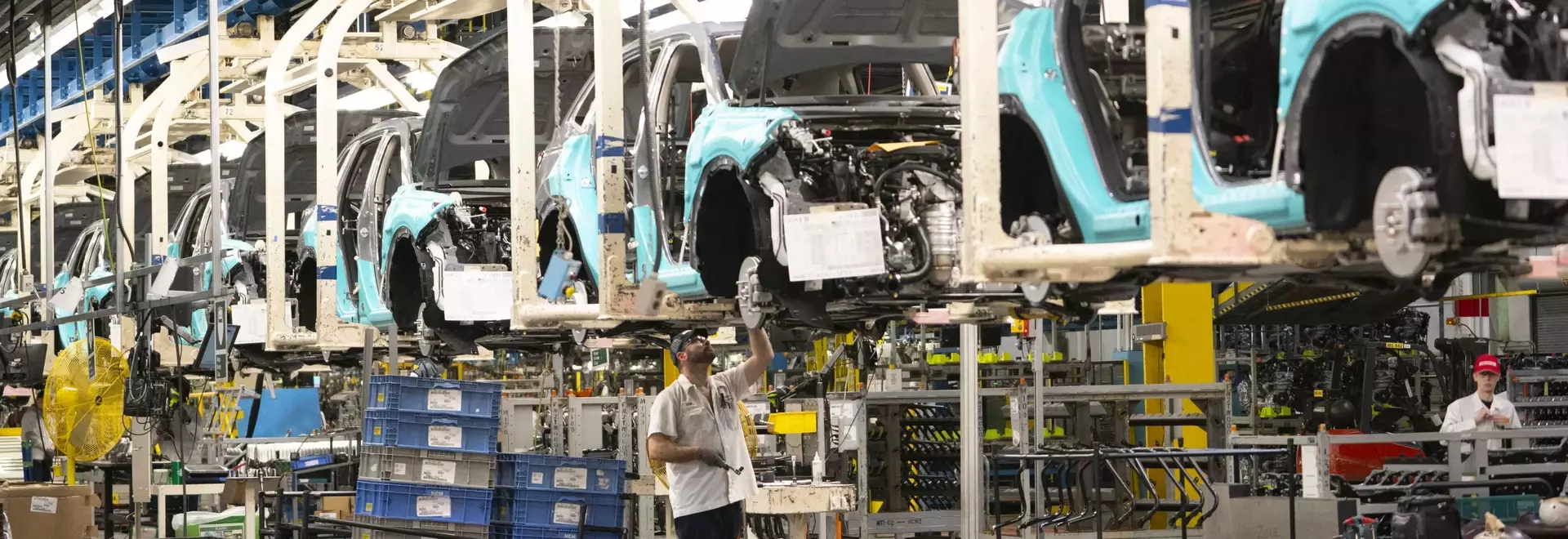
The current tariff framework has significantly influenced the financial strategies of automotive companies, prompting a reevaluation of their global manufacturing and supply chains. With total duties, taxes, and fees amounting to substantial figures since 2025, the burden on automakers has been considerable, even if not directly passed to consumers. This economic pressure is leading some manufacturers to explore expanding or establishing production facilities within the U.S. However, not all companies are following suit, as evidenced by General Motors' continued import of the Chevrolet Trax, balancing strong sales against import costs. The Supreme Court's ruling, alongside a new global tariff proposed by the former administration, underscores the fluctuating nature of trade policies and their impact on international commerce.

Amidst these evolving trade dynamics, there is a growing emphasis on strengthening regional economic agreements, such as the United States-Mexico-Canada Agreement (USMCA), to enhance North American competitiveness. As global markets see increasing participation from Chinese automotive manufacturers, deeper regional integration is viewed as a strategic imperative for long-term stability and growth. The Supreme Court's decision, while providing potential relief for some businesses, is also expected to improve clarity in supply chains, particularly those reliant on Asian sourcing networks, fostering a more transparent and predictable international trade environment.

The recent legal and political developments surrounding tariffs present both challenges and opportunities for the automotive industry. It is a period that demands resilience, strategic adaptation, and a proactive approach to evolving trade landscapes. Companies that embrace innovation and regional collaboration will be better positioned to thrive, turning obstacles into stepping stones for future success in an interconnected global economy.

More Articles
Cars
Henry Ford's Journey: From Early Failures to Automotive Triumph with the Model T
Before the monumental success of the Model T, Henry Ford faced two significant business setbacks. His first endeavor, the Detroit Automobile Company, struggled with production efficiency, leading to its dissolution. Later, the Henry Ford Company, despite initial funding, dissolved due to disagreements over its focus, eventually evolving into Cadillac. These early challenges ultimately paved the way for the establishment of Ford Motor Company and the revolutionary Model T, which democratized car ownership and cemented Ford's legacy.
By Simona De SilvestroFeb 22, 2026
Cars
Mercedes-Benz Reimagines the Iconic "Red Pig" as a Modern Luxury Sedan
Gorden Wagener, former Mercedes-Benz design chief, has unveiled his personal vision for a contemporary luxury sedan inspired by the legendary "Red Pig" race car. This reimagining blends the historical significance and iconic design cues of the original 300 SEL 6.8 AMG with modern aesthetics, offering a fresh perspective on a classic. The concept celebrates the car that propelled AMG to prominence, showcasing how its racing heritage can influence future luxury vehicle design.
By Michele AcquaragiaFeb 21, 2026
Cars
BMW's Special 'Shadow' Editions: A Japanese Exclusive
BMW Japan introduces new 'Edition Shadow' models for the 3 Series, X1, and X3, celebrating the 3 Series' 50th anniversary. These limited-edition vehicles feature a distinctive blacked-out aesthetic and M Sport enhancements, offering unique styling and equipment not available in other markets, including the US. This release marks a continued celebration of the iconic 3 Series' legacy.
By Michele AcquaragiaFeb 21, 2026
Cars
Toyota RAV4 Plug-in Hybrid: A Home Power Solution for Japan
Toyota's latest RAV4 Plug-in Hybrid model, exclusively for the Japanese market, introduces an 'HV power supply' feature. This innovative technology allows the vehicle to act as a mobile power source, capable of supplying electricity to a typical Japanese household for nearly a week. While offering a lower power output compared to some American counterparts, its impressive endurance sets a new benchmark for vehicle-to-home capabilities, underscoring Toyota's commitment to versatile and sustainable energy solutions.
By Michele AcquaragiaFeb 21, 2026
Cars
The Grandeur of the 1976 Cadillac Eldorado Convertible
Explore the enduring legacy of the 1976 Cadillac Eldorado convertible, a vehicle that marked the end of an era for American convertibles and epitomized luxury and scale. This article delves into the unique features of a well-preserved model currently up for auction, highlighting its pristine condition, powerful engine, and the unparalleled relaxed driving experience it offers, embodying the spirit of a bygone automotive age.
By Dan NeilFeb 21, 2026