STG Logistics Completes Financial Reorganization Amidst Rising Intermodal Demand
STG Logistics, a prominent intermodal service provider, has successfully concluded its financial restructuring, substantially decreasing its overall debt by 90%. The company has exited Chapter 11 protection with a fortified financial foundation, new ownership, and a significant capital injection, enabling it to pursue strategic investments and expansion. This development occurs as the intermodal market experiences considerable growth, driven by escalating truckload rates and fuel expenses.
STG Logistics' Strategic Reorganization Bolsters Market Position
In a significant announcement on Thursday, July 9, 2026, STG Logistics revealed the successful completion of its financial overhaul. The asset-based intermodal provider, headquartered in Dublin, Ohio, has effectively shed approximately 90% of its total funded debt, emerging from Chapter 11 bankruptcy with renewed vigor. This comprehensive restructuring, initiated with a pre-packaged Chapter 11 agreement in January, saw the company reduce over $1 billion in debt. Crucially, STG Logistics secured an additional $150 million in fresh capital from a consortium of investors, including Fortress, Fidelity, and Invesco, who now collectively hold a majority equity stake in the company.
Geoff Anderman, CEO of STG, emphasized the transformative nature of this achievement, stating that it marks a pivotal moment for the organization. The enhanced financial stability will enable STG to channel resources into its workforce, service offerings, technological advancements, and overall capabilities. With the robust backing of its new ownership group, STG Logistics is strategically positioned to maintain its leadership in the industry as the sole comprehensive port-to-door containerized freight provider across North America. Throughout this complex process, STG assured that there was no interruption to its operations, customer relations, or vendor partnerships.
This financial revitalization arrives at an opportune moment for STG Logistics. The intermodal sector is currently witnessing a significant upswing, largely propelled by an exodus of truckload capacity. This shift is primarily due to stringent regulatory crackdowns on noncompliant drivers, which have led to a sharp increase in truckload spot rates. Furthermore, the inflationary environment for truckload rates is exacerbated by rising diesel fuel prices, partly attributed to geopolitical conflicts in the Middle East. These factors collectively contributed to an 8% year-over-year surge in total intermodal traffic on U.S. Class I railroads during the second quarter, with domestic rail container volumes experiencing double-digit percentage growth.
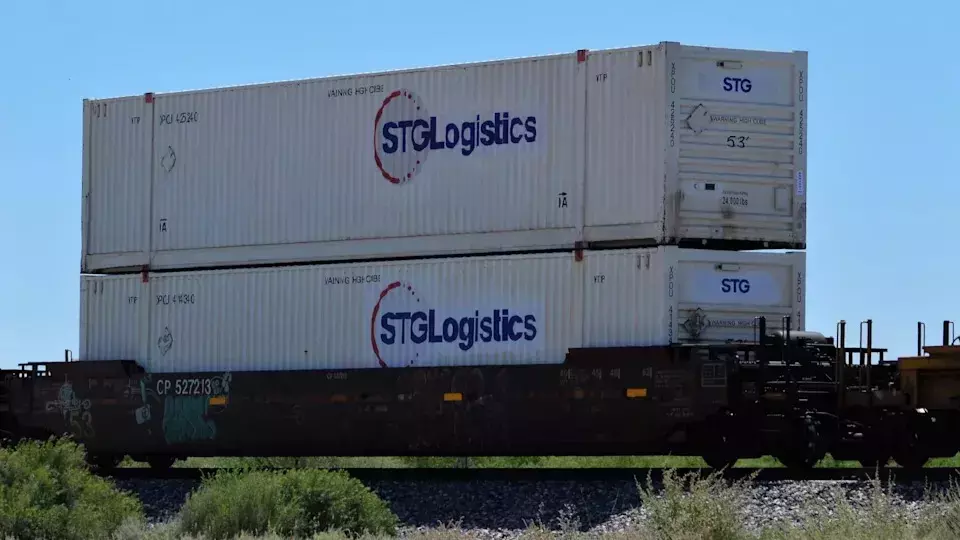
Currently, intermodal services offer a compelling 31% cost saving compared to full, over-the-road truckload services. This is substantially higher than the typical 15% cost savings threshold generally required to motivate a conversion from truckload to intermodal transport. STG Logistics leverages an extensive network of roughly 100 owned and partner facilities to provide container freight station and transloading services. As an asset-backed intermodal marketing company, it operates with 15,000 53-foot containers and 3,000 owner-operator tractors, facilitating coast-to-coast, cross-border, and intra-Mexico services. Additionally, the company offers full-truckload and less-than-truckload services through its vast network of over 25,000 carriers.
The successful emergence from Chapter 11 and the substantial financial reinforcement underscore STG Logistics' commitment to resilience and growth. This strategic move not only secures its future but also solidifies its position as a dominant force in the North American intermodal logistics landscape, ready to capitalize on evolving market dynamics and increasing demand for efficient freight solutions.
The successful financial reorganization of STG Logistics serves as a compelling illustration of resilience and strategic foresight in a dynamic economic landscape. It highlights how proactive financial restructuring, coupled with securing new investment, can transform a company's prospects. For businesses facing similar challenges, STG's journey offers valuable lessons in navigating complex financial waters and emerging stronger. Moreover, the increasing demand for intermodal services, driven by external factors like regulatory changes and fuel costs, underscores the importance of adaptability and capitalizing on market shifts. This case also reinforces the critical role of strong leadership and maintaining operational continuity even amidst significant corporate restructuring, demonstrating that strategic planning can ensure business stability while paving the way for future expansion and innovation.
