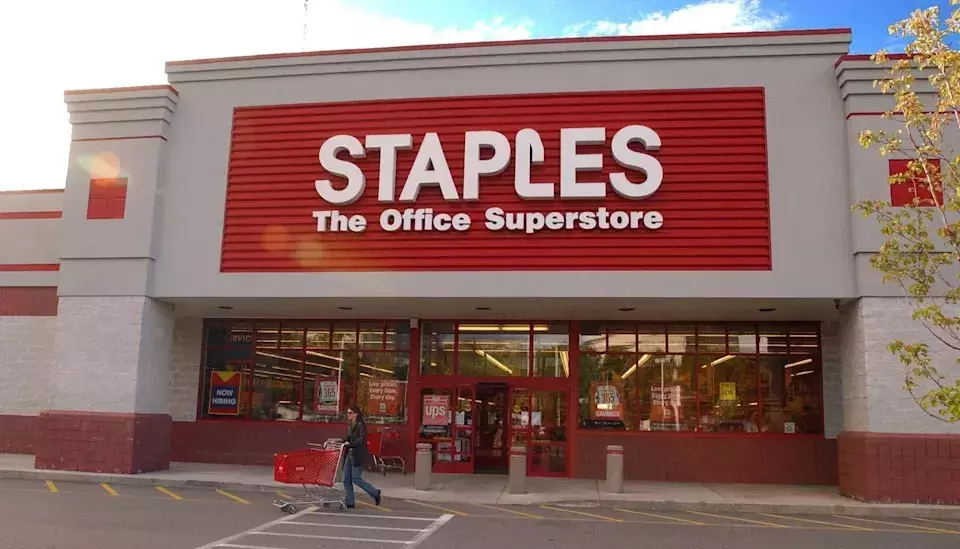
Staples Continues Store Consolidations Amid Shifting Market Dynamics
In an ongoing strategic realignment, Staples, a major office supply retailer, is reducing its physical store presence, with more closures anticipated in August 2026. This move reflects significant industry shifts, driven by the increasing popularity of e-commerce and the widespread adoption of digital tools that have lessened the reliance on traditional office products. The company, once a dominant force with over 900 U.S. outlets, has been progressively consolidating its footprint to navigate these transformative market dynamics and maintain profitability.
Staples to Close Additional Locations in California and New York
Come August 2026, Staples is preparing to shutter two more locations: one situated at 7015 Market Pl Dr in Goleta, California, which has served the community for over 27 years, and another at 2981-2991 Hempstead Tpke in Levittown, New York, after more than 15 years of operation. These specific closures signify the end of Staples' retail presence in Santa Barbara County and leave the Long Island suburb of Levittown without a Staples store. These impending shutdowns are a continuation of a larger pattern observed since October 2025, when the company saw a net reduction of 13 stores, decreasing its U.S. store count from 929 to 916 by January 2026. Additional closures reported throughout 2026 have included stores in Astoria and Bayside, New York; Waterville, Maine; Frederick, Maryland; Chicopee, Massachusetts; and Whitehall Square, Pennsylvania. These adjustments highlight the imperative for the office supplies sector to streamline its operations in response to profound structural changes.
The current landscape of the office supplies industry is profoundly shaped by evolving consumer habits and technological advancements. As digital workflows and online purchasing continue to gain traction, the demand for conventional office products has experienced a notable decline. This transformation is not unique to Staples but is a pervasive trend affecting retailers across the nation. The insights from Circana project a slight dip in the U.S. office supplies market, expecting $11.1 billion in sales in 2026, accompanied by a 2.8% decrease in unit sales. Experts emphasize that the industry is undergoing a "rightsizing" period, anticipated to extend through 2028, as growth becomes increasingly concentrated in specific product categories. The accelerating adoption of e-commerce, the emergence of hybrid work models shifting commercial purchases to retail, and the expanding influence of third-party marketplaces are all key factors. Moreover, significant investments in artificial intelligence and other technologies are reallocating traditional office supplies budgets. With online purchasing now contributing 28% to industry revenue and mobile applications driving 72% of business-to-business orders, the movement away from conventional brick-and-mortar stores is undeniable. While these long-term challenges persist, the industry demonstrates resilience in areas like tactile, creative, and analog solutions, particularly during crucial seasonal peaks. Staples' strategic refinement of its store network and its focus on commercial services and digital channels are critical steps toward ensuring its long-term viability and growth in this dynamic market.
