South Korea Celebrates Democratic Resilience One Year After Martial Law Crisis
News

South Korea Celebrates Democratic Resilience One Year After Martial Law Crisis

authorBy Anderson Cooper
DateDec 03, 2025
Read Time3 min
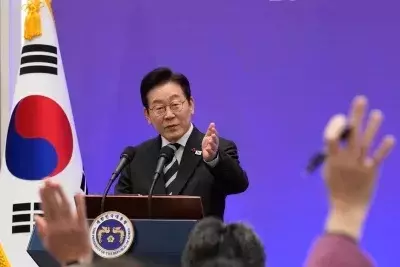
A year ago, South Korea faced a profound challenge to its democratic foundations when its then-president attempted to impose martial law. This period of political turmoil tested the nation's commitment to democratic principles, ultimately leading to significant constitutional and legal reforms. The resilience of the South Korean populace in safeguarding their democratic institutions is now being celebrated, with President Lee Jae Myung highlighting their pivotal role in overcoming what he termed a 'self-coup.'

Upholding Democracy: A Nation's Triumph Over Crisis

The Failed Attempt to Seize Power and the Citizens' Response

Exactly one year prior, the predecessor to the current president initiated an ill-fated attempt to declare martial law. Thousands of citizens spontaneously converged around the National Assembly building, vehemently opposing the declaration. This public outcry and the swift action of the parliament, which voted to nullify the martial law order within hours, successfully thwarted the executive's power grab and showcased the unwavering spirit of the South Korean people in defending their democratic rights.

Legal Ramifications for the Former President and His Associates

In the aftermath of the attempted martial law, an extensive legal process was initiated against the former president, leading to his arrest and subsequent impeachment by the National Assembly. A special counsel investigation uncovered allegations of extreme measures, including provocative actions against North Korea, designed to justify the martial law declaration. Numerous high-ranking officials, including military commanders and cabinet members, have also faced legal charges for their alleged involvement in the insurrection.

Implementing Structural Changes to Fortify Democracy

In response to the crisis, the National Assembly enacted crucial legislative reforms aimed at strengthening democratic safeguards. New laws were passed, imposing more stringent conditions for the declaration of martial law and enhancing parliamentary oversight. These reforms explicitly prohibit military or police presence within the parliamentary compound without explicit consent from the Speaker, even under martial law. Additionally, discussions are underway for further constitutional amendments to modify presidential terms and introduce mid-term elections, promoting greater accountability.

The Evolving Political Landscape of South Korea

While public trust in government institutions has shown signs of recovery, the martial law incident has undeniably exacerbated existing political divisions within South Korea. The opposition party, formerly led by the impeached president, grapples with internal conflict over whether to issue an apology for the past events. Meanwhile, the current administration faces the delicate task of balancing justice for past actions with the imperative of fostering national unity and reconciliation.

Global Implications and South Korea's Role as a Democratic Beacon

The attempted imposition of martial law significantly impacted South Korea's international standing, challenging its image as a model democracy that transitioned peacefully from authoritarian rule. The revelation of alleged provocations against North Korea also strained relations with key allies, particularly the United States. President Lee Jae Myung expressed hope that South Korea's experience will serve as a historical precedent for democratic resilience worldwide, emphasizing the nation's commitment to preventing future political instability and democratic erosion.

More Articles
News
The Evolution and Contested Meanings of 'Ideology'
This article explores the term 'ideology,' tracing its origins from a neutral concept in the French Enlightenment to its current use as a politically charged pejorative. It highlights how figures like Napoleon and Marx repurposed the term and examines contemporary political discourse where leaders employ 'ideology' to critique opposing viewpoints, advocating for a shift towards understanding diverse 'worldviews' or 'narratives' to foster greater empathy.
By Carl BernsteinDec 03, 2025
News
Democrats Seek to Restrict Immigration Judge Appointments Amid Mass Terminations
Democrats in Congress are pushing for new legislation to establish stricter qualifications for temporary immigration judges, following a wave of dismissals of experienced judges by the Trump administration. The proposed bill aims to ensure that only individuals with significant legal or judicial experience in immigration law can serve, a direct response to concerns that the administration is appointing less experienced personnel, including military lawyers, to accelerate deportations and reshape the immigration court system.
By Ann CurryDec 03, 2025
News
San Francisco Sues Major Food Companies Over Ultra-Processed Products
San Francisco has launched legal action against leading food manufacturers, including Coca-Cola and Nestle, claiming their ultra-processed products contribute significantly to a public health crisis. City Attorney David Chiu asserts these foods are intentionally designed to stimulate overconsumption and are linked to various severe health conditions, such as Type 2 diabetes and cancer. The lawsuit seeks to halt deceptive marketing practices, mandate consumer education, and impose financial penalties to offset healthcare costs.
By Christianne AmanpourDec 03, 2025
News
High Stakes: The Fierce Battle for Tennessee's 7th Congressional District
The special election in Tennessee's 7th Congressional District has become a pivotal contest, drawing significant financial investment from both Democrats and Republicans. This historically conservative district, which previously heavily favored Trump, is now seeing an intense struggle between Republican Matt Van Epps and Democrat Aftyn Behn. With Democrats outperforming recent special election margins, both parties are mobilizing heavily, pouring millions into campaigning, and focusing their messaging on the cost of living as they vie for this crucial seat.
By Anderson CooperDec 02, 2025
News
Oxford Announces "Rage Bait" as 2025 Word of the Year Amidst Digital Discourse Shift
Oxford University Press has declared "rage bait" as its 2025 Word of the Year, following extensive online participation. This term describes digital content designed to provoke anger or outrage, driving engagement. The selection highlights a significant shift in online interaction, where content increasingly aims to manipulate emotions rather than simply capture attention. The announcement comes as technology continues to reshape human communication and emotional responses.
By Katty KayDec 02, 2025