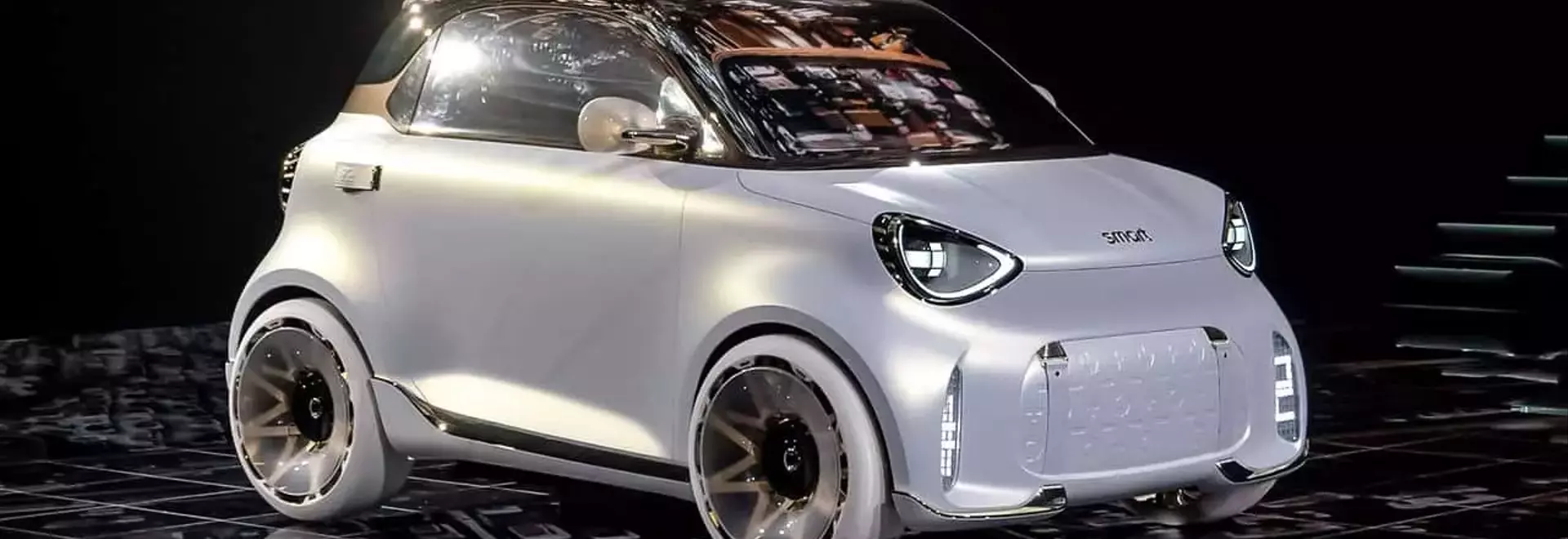
The Smart Car: A Return to Compact Electric Driving
Reclaiming Compact: Smart's Electric Future Unveiled
A Bold Reinvention: Smart's Journey Back to Its Core Identity
Since the 2019 partnership between Mercedes and Geely, the Smart brand has undergone a notable transformation, with production shifting entirely to China. This strategic move initially led to larger and heavier models, including SUVs and sedans, a stark departure from the brand's iconic compact origins. However, the introduction of the new Smart #2 signals a purposeful return to the brand's foundational principles of compact design and urban practicality.
The Revival of an Icon: Embracing the Spirit of the ForTwo
The Smart #2 is a modern interpretation of the beloved original ForTwo, meticulously designed by Mercedes to capture its predecessor's distinctive style and diminutive size. This two-door electric hatchback pays homage to the legacy of the ForTwo, which, since its debut in 1999, evolved through three generations before its discontinuation in 2024. Unlike earlier iterations that offered various fuel options, the upcoming fourth generation of this compact marvel will be exclusively electric, signifying Smart's full commitment to a sustainable future.
Innovative Design and Enhanced Electric Performance
Building on the foundation laid by the EQ ForTwo, the Smart #2 showcases prominent wheel arches and minimal overhangs, creating a visually striking and agile profile. While some design elements in this concept version are deliberately exaggerated for impact, they hint at a sophisticated and dynamic aesthetic. The vehicle's transition to an all-electric platform marks a significant leap in performance and efficiency.
The #2's Impressive Range and Advanced Charging Capabilities
The production model of the Smart #2 is slated for its global debut in October at the esteemed Paris Motor Show. This next-generation EV is engineered from the ground up on Smart's innovative Electric Compact Architecture (ECA) platform. A key highlight is its projected driving range of 186 miles (300 kilometers) on a single charge, a substantial improvement over the previous EQ ForTwo's 84-mile range. While this estimate awaits WLTP certification, it underscores significant advancements in battery technology. Furthermore, the #2 will support rapid charging, achieving 10 to 80 percent charge in under 20 minutes, and will feature Vehicle-to-Load (V2L) functionality, allowing it to serve as a mobile power source.
Optimized for European Urban Landscapes: A Compact Solution
Upon its release, the Smart #2 is set to become one of Europe's most compact electric vehicles. Although precise dimensions are yet to be revealed, the concept suggests a length comparable to the original EQ ForTwo's 106 inches (2.7 meters), making it significantly smaller than competitors like the new Renault Twingo, which extends to nearly 150 inches (3.8 meters), and even the BYD Dolphin Surf. Despite its production base in China, Smart's commitment to global accessibility is evident, with its vehicles distributed across 40 international markets, offering an agile and eco-conscious option for urban drivers worldwide.
