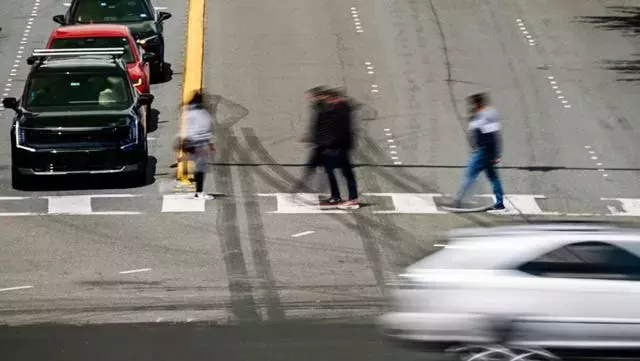
Rising Vehicle Hoods Linked to Thousands of Pedestrian Fatalities
A recent investigation spearheaded by the New York Times reveals a concerning trend: the escalating dimensions of vehicle hoods, especially on popular large SUVs and trucks, are directly correlated with thousands of additional pedestrian deaths. This comprehensive analysis, drawing upon various official datasets and real-world crash simulations, highlights a critical oversight in automotive safety, where advancements in occupant protection have inadvertently compromised the safety of those outside the vehicle. The findings suggest that current design trends contribute to a heightened risk for pedestrians, a demographic whose safety appears to have declined since the late 2000s.
Vehicle Design and Pedestrian Risk
The New York Times' extensive research indicates that the shift towards vehicles with elevated hood designs has significantly endangered pedestrians, contributing to a substantial increase in fatalities. The study meticulously analyzed crash data, vehicle dimensions, and registration records, revealing that the taller front ends of modern trucks and SUVs strike pedestrians at a higher point on their bodies. This impact trajectory is more likely to propel them to the hard ground rather than onto the vehicle's hood, a surface often engineered for impact absorption. This design characteristic fundamentally alters the dynamics of pedestrian collisions, making them far more lethal.
Furthermore, the investigation points to another critical factor: the expanded size of A-pillars in contemporary vehicles, designed to enhance occupant safety in rollover incidents. While beneficial for those inside the car, these thicker pillars create larger blind spots for drivers. This reduced visibility, particularly in vehicles with higher hoods, makes it more challenging for drivers to spot pedestrians, especially those who are shorter or approaching from certain angles. The combination of increased impact height and diminished driver visibility underscores a growing safety imbalance, where design choices prioritizing internal occupant protection inadvertently amplify external pedestrian hazards, resulting in a documented rise in fatal incidents over the last eight years.
The Alarming Statistics of Preventable Deaths
The research conducted by the New York Times paints a grim picture, estimating that the trend towards vehicles with taller hoods is directly responsible for approximately 3,000 additional pedestrian deaths between 2016 and 2024. This figure, considered conservative by the Times, excludes incidents occurring in private areas like parking lots and driveways, which federal databases typically do not include. Despite this exclusion, these unreported accidents are known to contribute hundreds more pedestrian fatalities annually, a number that has been on the rise, suggesting the true toll of vehicle design on pedestrian safety is likely even higher.
Further analysis by the Times revealed a quantifiable increase in fatality risk: for every one-inch increment in vehicle hood height, the odds of a pedestrian fatality rise by an estimated 2.8 percent. Through simulated crash scenarios, researchers projected that if vehicle sizes had remained consistent with early 2000s models, anywhere from 2,624 to 3,077 lives could have been spared between 2016 and 2024. The study also highlighted a significant increase in blind spots in popular truck models, with some nearly doubling in size compared to their 1990s counterparts, further underscoring the severe consequences of evolving vehicle designs on overall road safety for pedestrians.
