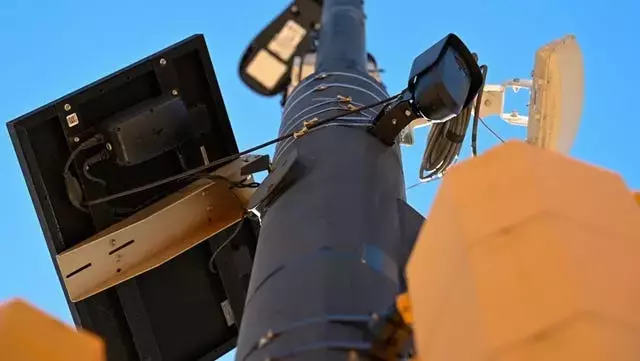
The Rise and Resistance of Automated License Plate Readers
Automated License Plate Readers (ALPRs), an increasingly common sight in communities nationwide, represent a significant advancement in surveillance technology, but also a growing source of contention. These AI-driven cameras, with Flock Safety being a prominent provider, are designed to automatically identify and track vehicles based on license plates and other distinct features like bumper stickers or roof racks. While proponents, primarily law enforcement agencies, argue for their efficacy in crime solving, a robust opposition is emerging, driven by concerns over privacy infringements, data sharing practices, and the potential for a pervasive surveillance state.
Historically, license plate readers have been a tool for law enforcement. However, the latest generation of ALPRs, particularly those incorporating artificial intelligence, marks a substantial escalation in their capabilities. Flock Safety's cameras, for instance, don't just capture plate numbers; they also record detailed vehicle characteristics such as make, model, color, and even minor cosmetic details like dents. This extensive data collection allows for comprehensive tracking and identification of vehicles, offering an unprecedented level of granular surveillance.
This enhanced surveillance power, while appealing to some authorities, has ignited a passionate debate among communities and privacy advocates. The widespread deployment of these cameras by thousands of law enforcement agencies and private entities, including homeowner associations, has been met with considerable resistance. Concerns primarily revolve around potential abuses of data, the erosion of personal privacy, and the unchecked expansion of a surveillance infrastructure. The involvement of such data in broader law enforcement operations, including those conducted by Immigration and Customs Enforcement (ICE), has further fueled public discontent.
A notable report highlighted the ease with which data collected by Flock Safety can be shared, despite the company's assertions that customers control their sharing settings. This discrepancy between policy and practice has led to a significant number of cities re-evaluating or terminating their partnerships with Flock. Over 50 cities across 20 states have either deactivated these cameras or rejected proposals for their installation, with the majority of these decisions occurring within the last six months, indicating a rapid escalation of local authority pushback.
In response to the criticism, law enforcement officials often cite the technology's effectiveness in solving serious crimes. For example, one police department utilized Flock's network data in a homicide investigation, claiming it enabled the resolution of numerous cases that would otherwise remain open. However, privacy activists challenge these claims, pointing out a lack of independent research to substantiate the assertion that ALPRs definitively lead to a reduction in crime rates, suggesting that the benefits might be overstated while the privacy risks remain significant.
The debate surrounding automated license plate readers underscores a fundamental tension between public safety and individual privacy rights. As technology continues to advance, the capacity for surveillance grows, prompting a critical need for balanced policies that protect civil liberties while addressing legitimate security concerns. The ongoing resistance from communities and local governments suggests a collective demand for greater transparency, accountability, and limits on the scope and use of such powerful surveillance tools.
