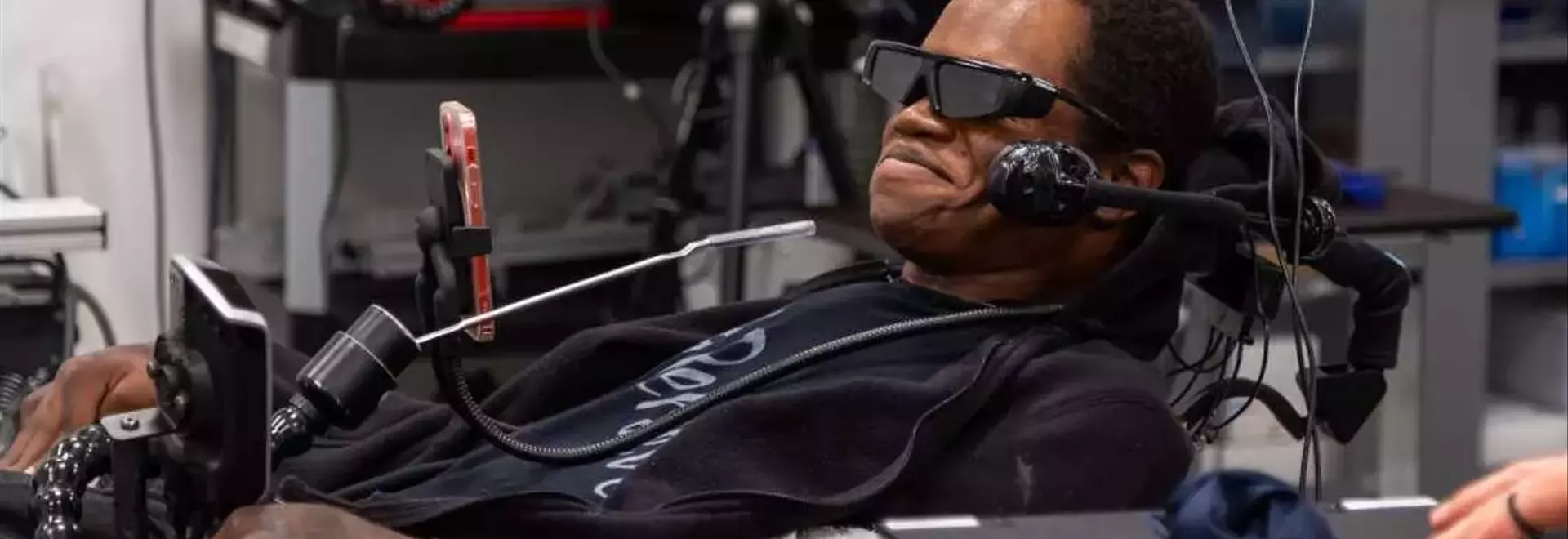
Revolutionizing Assistance: Brain-Computer Interfaces Empowering Individuals with Disabilities
Emerging advancements in brain-computer interface (BCI) technology are poised to revolutionize the lives of individuals living with severe disabilities. For those unable to move or speak, these sophisticated systems offer a new pathway to interaction and independence. Through surgically implanted devices that establish a direct link between the brain and external computers, once-impossible tasks like cursor control, vocal articulation, and even tactile sensation are becoming tangible realities. This transformative field, driven by decades of research and propelled by innovative companies, promises to transition from experimental marvels to widely accessible commercial products, fundamentally altering how affected individuals navigate their world and connect with others.
The concept of using thought to manipulate external devices, first demonstrated over two decades ago, has matured significantly. Researchers have progressively refined the ability to detect and interpret neural signals associated with intended movements or speech. Modern BCI systems typically comprise highly sensitive brain activity sensors, processing interfaces, and external devices that convert these decoded thoughts into actionable commands. This breakthrough allows users to seamlessly move a computer cursor, operate robotic limbs, or generate synthesized speech, providing a voice to the voiceless and agency to the immobile.
Several companies are at the forefront of this burgeoning industry. While Elon Musk's Neuralink has garnered considerable public attention, formidable competitors such as Precision Neuroscience, Blackrock Neurotech, Paradromics, and Synchron are also making significant strides. Some of these alternative firms bring extensive prior experience to the table, while others are developing less intrusive technologies that might accelerate regulatory approval processes. The initial beneficiaries of these groundbreaking devices are likely to be individuals suffering from paralysis due to spinal injuries or conditions like amyotrophic lateral sclerosis (ALS). Early applications will focus on enabling computer cursor control and speech generation, laying the groundwork for more complex functionalities.
A compelling demonstration of BCI's potential came in early 2024, courtesy of Neuralink and Noland Arbaugh, a man with quadriplegia resulting from a diving accident. At 29, Arbaugh became the first human recipient of Neuralink's device. Surgeons at the Barrow Neurological Institute in Phoenix implanted a wireless interface, roughly the size of a quarter, into his skull, along with over a thousand electrodes threaded into his brain's motor cortex. Within weeks, Arbaugh captivated audiences by demonstrating his ability to control a computer cursor solely through thought, articulating his astonishment with the technology. Despite a reported issue where some electrodes retracted, affecting device sensitivity, Neuralink has since expanded its trials to include additional participants, though detailed outcomes remain largely undisclosed.
The fundamental principles underlying modern BCIs build upon pioneering work initiated in 2004 by Dr. Leigh Hochberg and his team. Their early research involved Matt Nagle, a man with paralysis, whose brain was connected to a computer via conventional wires, enabling him to open emails with his thoughts. This foundational work by the BrainGate consortium has since evolved, with significant progress in decoding brain activity more precisely and consistently, often incorporating artificial intelligence to recognize neural patterns related to speech or object manipulation. The field has also diversified, with specialists focusing on areas such as speech decoding, robotic limb control, and even the reintroduction of sensory feedback into the brain, enabling prosthetic limbs to "feel."
The University of Pittsburgh stands as a leader in integrating sensory feedback into BCIs. Dr. Jennifer Collinger and her colleagues, collaborating with Blackrock Neurotech, underscore the critical role of tactile sensation for dexterous motor control. Their work has shown that sensory feedback allows users to discern contact with objects and gauge grip strength. Nathan Copeland, paralyzed in a car accident and a participant in their studies, famously fist-bumped President Barack Obama using a robotic arm and later demonstrated how sensory feedback dramatically improved his ability to manipulate objects. While these advanced features may not be in the first wave of commercial products, their successful integration in research settings highlights the future trajectory of BCI technology.
The immediate commercial horizon for BCI technology appears promising. Companies like Precision Neuroscience, co-founded by neurosurgeon Ben Rapoport and CEO Michael Mager, aim to deliver wireless devices enabling individuals with paralysis to seamlessly operate smartphones and computers. Their innovative approach involves placing a thin film of electrodes on the brain's surface, a less invasive method potentially simplifying FDA approval compared to devices that penetrate brain tissue. Synchron, another notable player, takes a different route, delivering electrodes through blood vessels. Despite the significant challenge of managing vast amounts of neural data and the substantial costs associated with clinical trials, industry leaders are optimistic. Michael Mager projects that market-ready BCI products could be available within the next two to three years, heralding a new era of independence and capability for people with disabilities.
