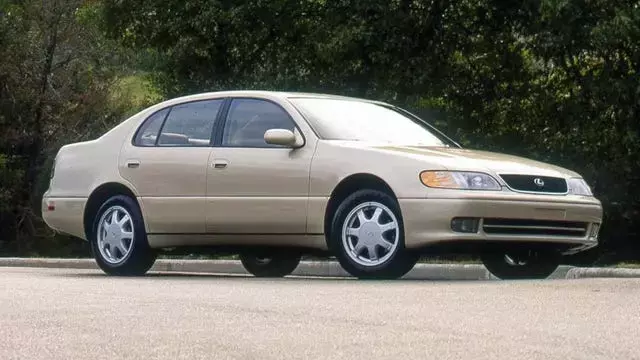
A Retrospective Review of the 1994 Lexus GS300: Luxury and Performance Reimagined
In a detailed evaluation from February 1993, the Lexus GS300 emerged as a sophisticated contender in the luxury sedan market, aiming to bridge the gap between Lexus's premium LS400 and its more affordable ES300 models. Priced competitively in the mid-$30,000 range, this vehicle was conceived to rival established European luxury sports sedans such as the BMW 5-series and Mercedes-Benz 300s. Its development was spearheaded by Hiroyuki Watanabe, an aerodynamicist whose vision for luxury cars emphasized both expansive, comfortable interiors and robust performance, driven by a personal passion for the thrill of driving.
The aesthetic appeal of the GS300 is immediately apparent, showcasing a distinctive Lexus identity while offering a more pronounced visual character compared to the LS400. Its original blueprint, conceived by Giorgetto Giugiaro's Ital Design studios, underwent subtle refinements by Lexus designers, primarily focusing on the vehicle's front and rear fascias, and its aerodynamic rocker panels. The result is an automobile that exudes an expensive, streamlined appearance, hinting at Italian design influences rather than traditional Japanese styling. While its design is unlikely to provoke strong criticism, it also refrains from pioneering groundbreaking aesthetic trends.
Stepping inside the GS300 reveals an interior that mirrors the lavishness of the LS400, offering a surprising degree of spaciousness that nearly rivals its larger counterpart. Key features include electronically adjustable leather seating (an optional amenity), and a steering wheel that tilts and telescopes, conveniently retracting for effortless entry and exit. The central console, though featuring minor variations in button and switch arrangement, maintains a strong resemblance to the LS400's design. This continuity ensures that the tactile experience of every surface and control within the GS300 retains the comforting and premium feel characteristic of the Lexus brand.
From a practical standpoint, the cabin is equipped with dual front airbags and seatbelt pretensioners, underscoring a commitment to safety. The ergonomic layout of all controls is exemplary, reflecting Lexus's renowned attention to user-friendly design. The rear seating area comfortably accommodates two adults, with space for a third being feasible though less ideal, a common characteristic among sedans of this class. An innovative optional feature is the Lexus on-board telephone system, a hands-free unit capable of responding to up to twenty voice commands. This system intelligently manages call quality by filtering out car noise and automatically lowering the radio and fan volumes during conversations. Additionally, the phone is designed to be detachable, transforming into a portable device that can be easily carried.
The driving experience in the GS300 is characterized by its remarkable smoothness, a hallmark of Lexus vehicles, perhaps even verging on being overly serene for those who prioritize a more aggressive driving feel. Power is supplied by a 220-hp inline-six engine, a slightly detuned version of the unit found in the Lexus SC300 coupe, paired exclusively with a seamless four-speed automatic transmission. While the transmission offers an exceptionally smooth operation, performance enthusiasts might express a desire for a manual gearbox option. During test drives in the Texas Hill Country, the suspension system adeptly managed varied road conditions and the car's available power, maintaining composure even under duress. The vehicle's rear-wheel-drive configuration, combined with an unequal-length control-arm front suspension and a multilink rear setup, ensures predictable and smooth handling, even when the rear end momentarily loses traction. Performance metrics included an 8.7-second sprint to 60 mph, a 0.82 g on the skidpad, and a 70-to-0 mph braking distance of 177 feet, positioning its handling and braking capabilities favorably against rivals like the BMW 535i, though its acceleration is marginally slower.
The ride quality is exceptional, upholding the esteemed Lexus tradition of comfort. Both front and rear subframes, enhanced by liquid-filled mounting cushions, contribute significantly to maintaining an exceptionally quiet and smooth interior within the structurally robust cabin. However, this dedication to smoothness results in a diminished sense of road feedback, a quality often sought after in European counterparts like BMW or Mercedes-Benz. While the GS300 skillfully combines precise linear control, effective cornering, and superior comfort, it may not offer the immediate and forceful acceleration that some drivers demand. Categorizing vehicles of this caliber, the Lexus GS300 firmly aligns with the 'luxury-performance' segment, primarily because Lexus consistently places luxury at the forefront of its design and engineering philosophy.
