Retirement Readiness Across the United States: A State-by-State Analysis of Savings
This comprehensive analysis delves into the landscape of retirement preparedness across the United United States, offering a revealing look at how median retirement savings vary significantly from state to state. Utilizing recent data from the U.S. Census Bureau, the report sheds light on the geographical factors influencing Americans' financial readiness for their golden years. It explores the interplay of living costs, local wages, and state tax structures in shaping these outcomes. By examining both the highest and lowest median savings, the study provides a clearer picture of the challenges and opportunities individuals face when planning for retirement, emphasizing that location plays a crucial role in one's financial journey toward retirement.
A Detailed Look at Retirement Savings Across U.S. States
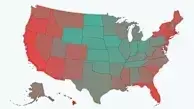
As of a July 20, 2026 report, states exhibit a wide range of median retirement savings, primarily influenced by diverse economic conditions. The U.S. Census Bureau's insights reveal that coastal states and those with higher costs of living tend to demonstrate greater accumulated wealth for retirement. This trend underscores the impact of local economic environments on individual financial planning.
Among the states boasting the most substantial median retirement savings, Massachusetts leads the nation with a median balance of $150,000. Despite a cost of living approximately 5.8% above the national average and a median home price of $667,628, its residents demonstrate robust saving habits. Following closely, Hawaii shows a median of $149,000, although it grapples with the second-highest cost of living nationally, with median home prices exceeding $722,000. Washington comes in third with $143,400 in median savings, coupled with a high cost of living (7% above national average) and steep median home prices around $612,823. New Jersey reports $134,000, facing a cost of living nearly 10% higher than the national average and median home prices of $563,000. Maryland rounds out the top five with $120,000, where living costs are 5% higher than the national average and median home prices are about $448,407.
Conversely, the states with the lowest median retirement savings are largely concentrated in the southern United States, where the cost of living is significantly lower. Mississippi has the lowest median retirement savings at $35,000. However, its cost of living is 13% below the national average, and median home prices are around $281,002. Oklahoma follows with $39,450, benefiting from a cost of living 12.2% below the national average and median home prices of approximately $264,062. Alabama records $46,000 in median savings, with living costs 11.2% below the national average and median home prices at $307,408. Both Louisiana and New Mexico report median savings of $50,000. Louisiana features one of the lowest costs of living, 11.8% below the national average, and median home prices at $259,977. New Mexico's cost of living is 7.8% below the national average, with median home prices around $357,729.
These figures highlight that while a lower cost of living might suggest less need for substantial savings, it does not automatically translate to higher retirement account balances. State income tax rates also play a significant role, with varying top marginal tax rates impacting disposable income and, consequently, savings potential.
This detailed geographic breakdown of retirement savings underscores the critical importance of understanding local economic conditions when formulating personal financial strategies for the future.
This exploration of state-by-state retirement savings offers a critical reminder that financial planning is deeply localized. The data clearly demonstrates that geographical location significantly impacts one's ability to save and the amount needed to live comfortably in retirement. For me, as a financial observer, this highlights the necessity for personalized financial advice rather than broad national guidelines. It suggests that policymakers could also consider regional economic disparities when developing retirement incentives or support programs. Ultimately, every individual's retirement journey is unique, and understanding these regional nuances is key to fostering more secure retirements across the nation. It inspires a call to action for individuals to proactively research their local economic environment and tailor their savings goals accordingly, emphasizing that awareness is the first step toward effective financial preparation.
