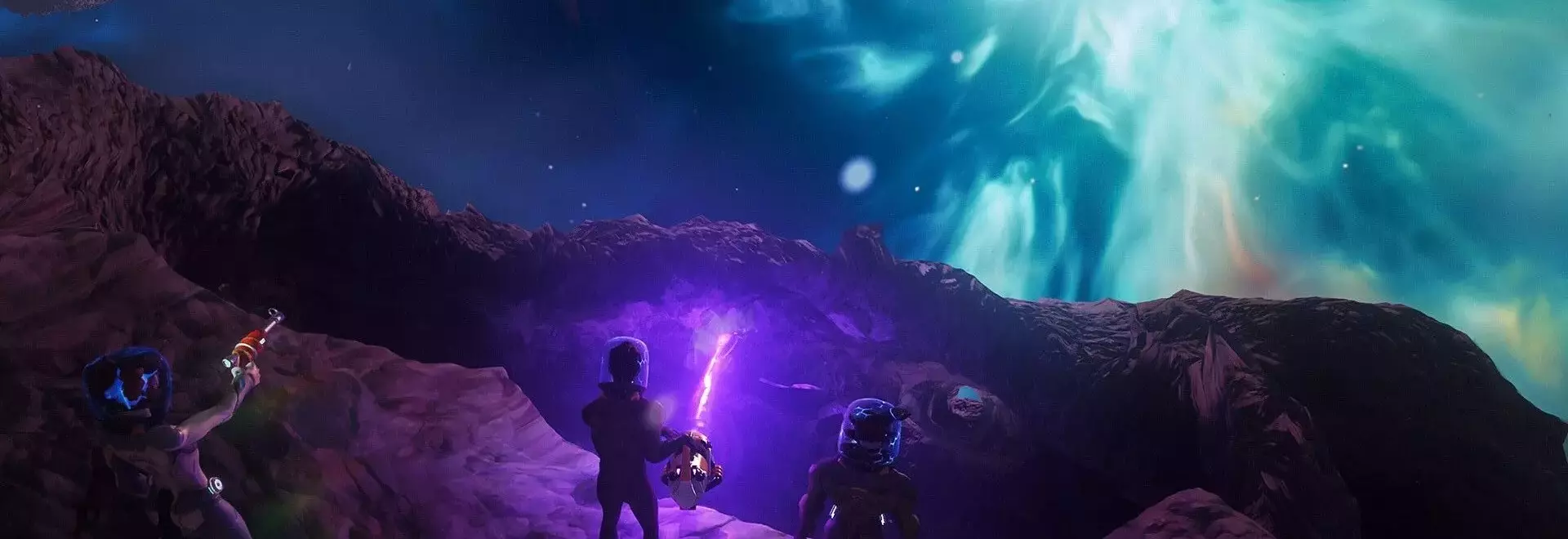
Raph Koster's Ambitious Vision for a Living, Player-Driven MMO: Stars Reach
Raph Koster, a renowned figure in the realm of online gaming and the creative mind behind landmark titles like 'Ultima Online' and 'Star Wars Galaxies', is finally realizing his lifelong ambition with the upcoming massively multiplayer online game, 'Stars Reach'. This ambitious project, now poised for early access this summer, represents Koster's vision for a dynamic, player-driven virtual universe that prioritizes emergent gameplay and complex environmental simulations over conventional game mechanics. His goal is to reignite the sense of wonder and possibility that defined early MMOs, offering a deeply interactive experience where every action has tangible consequences within a constantly evolving world.
Koster's design philosophy for 'Stars Reach' centers on creating a truly alive and responsive world. Players will encounter planets where precipitation dictates the formation of rivers and lakes, which can then freeze during colder seasons. Botanical life cycles are simulated, with forests capable of igniting and spreading. The geological makeup of each cubic meter is meticulously detailed, encompassing temperature, humidity, and a myriad of material properties. This intricate environmental design allows players to engage in transformative actions, such as melting stone into molten rock or inadvertently triggering ecological disasters, emphasizing a profound level of interaction with the virtual landscape.
The scope of 'Stars Reach' is breathtaking, encompassing thousands of celestial bodies interconnected by volatile wormholes, which can appear or vanish, altering access to various cosmic regions. New planets emerge as the game progresses, ensuring a perpetually expanding frontier. Players are granted an unparalleled degree of freedom: from asteroid mining and terraforming to constructing urban centers, designing spacecraft, managing businesses, or simply exploring the vast expanse. Koster intentionally avoids prescriptive gameplay, favoring emergent narratives and player-generated content, thereby distinguishing 'Stars Reach' from titles like 'World of Warcraft' that rely on more structured progression.
Koster views MMOs not as a genre of games, but as expansive virtual environments where diverse gaming experiences can unfold. He contends that the industry's focus on successful models, particularly after 'World of Warcraft's' dominance, inadvertently curtailed the innovative potential of MMOs. He points out that many features now commonplace across the gaming landscape, such as live services, community management, subscription models, and microtransactions, were pioneered within the MMO sphere. 'Stars Reach' is, therefore, a deliberate endeavor to return to the foundational principles of the genre, moving away from repetitive gameplay loops.
A significant aspect of 'Stars Reach' is its innovative approach to player governance and social interaction. Koster showcased a flourishing player settlement, complete with public spaces, transportation networks, and civic infrastructure, all developed and managed by its inhabitants. Planets can have elected mayors and citizens who establish laws and manage resources, leading to diverse societal experiments. Some communities might prioritize environmental preservation, while others pursue aggressive industrial expansion, or even devolve into chaotic self-governance. These player-driven political systems are not merely ancillary activities but form the very essence of the endgame, challenging players to collectively address complex societal problems.
Koster reflects on the early optimism surrounding MMOs as progenitors of the internet's future, a role he believes was ultimately usurped by social media. He acknowledges that while MMOs laid the groundwork for many online social systems, they often struggled with governance issues. 'Stars Reach' aims to tackle these challenges head-on by integrating moderation and community rulesets directly into the game's core design. Players can define the civilization they wish to forge, akin to a Discord server where each zone functions as a unique community within a larger, interconnected universe. This philosophy ensures that the underlying systems, from weather patterns to political structures, serve to preserve the "magic" of the virtual world, allowing players to genuinely engage and play rather than feeling compelled to grind.
