Presidential Frustration with Fuel Price Disparity
The Enduring Puzzle: Why Gas Prices Lag Behind Crude Oil Declines
The Former President's Public Outcry Over Pump Prices
Former President Trump recently took to social media to express his discontent with the rate at which gasoline prices are decreasing, noting that they are not falling as rapidly as crude oil prices. His public statement alluded to potential 'gouging' of consumers and indicated a directive for the Department of Justice to investigate the matter, demanding a swifter reduction in fuel costs.
A Familiar Quandary for Presidential Administrations
The issue of slow-to-fall gas prices is not new to the Oval Office. This very problem also troubled former President Biden's administration just a few years prior, illustrating a recurring challenge for leaders grappling with public sentiment and economic realities. Recent weeks have once again highlighted this disparity in price movements.
Comparing the Decline: Crude Oil vs. Consumer Gasoline
While both crude oil and pump prices have been on a downward trend, the former has seen a more dramatic reduction. Data reveals that international benchmark Brent Crude experienced a significant drop of over 5% within a recent week. In contrast, the national average for gasoline in the US, as monitored by the American Automobile Association (AAA), showed a more modest decline of approximately 2.5% during the same period, moving from around $4.02 to $3.92 per gallon.
Long-Term Price Movements: A Deeper Look
Examining price trends over a month reveals an even starker contrast: crude oil prices have fallen by over 27%, while gasoline prices have only decreased by 13%. This prolonged lag underscores the frustration felt by consumers and, consequently, by political figures.
Unfulfilled Promises and the Public's Impatience
This sluggish price adjustment contradicts earlier assurances from the former president and his team, who had predicted a sharp decline in fuel prices once certain geopolitical tensions eased. They had even suggested that pump prices could revert to levels below the pre-conflict average of $2.98 per gallon. However, market dynamics have proven less responsive than anticipated.
The Economic Explanation: 'Rockets and Feathers' Effect
Energy market analysts frequently refer to this phenomenon as 'rockets and feathers.' This term describes how fuel prices tend to escalate rapidly (like a rocket) when crude oil costs rise, but then descend much more slowly and gradually (like a feather) when crude oil prices drop. This asynchronous movement is a well-documented aspect of the energy sector.
Unpacking 'Asymmetric Pass-Through'
Economically, this behavior is known as 'asymmetric pass-through.' It arises from several market factors, primarily the time delay between refiners acquiring crude oil and subsequently selling their refined products. Furthermore, companies may engage in profit-taking, proactively safeguarding their profit margins during periods of uncertainty by increasing prices more quickly than they reduce them.
Political Repercussions of Delayed Price Relief
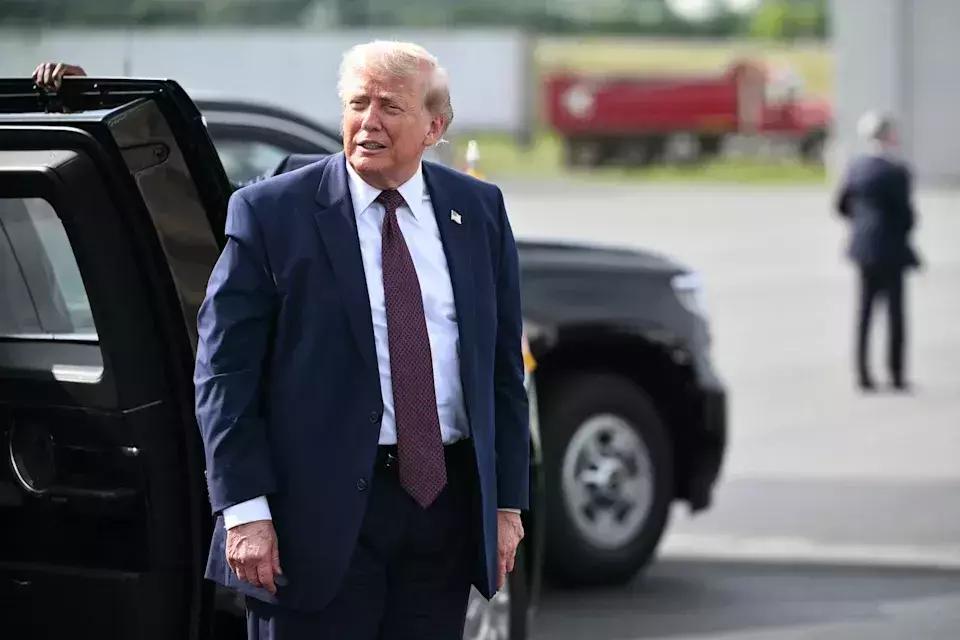
In practical terms, this means that motorists are often the last to experience relief from falling oil prices. This delay can impose significant political costs, as angry voters express their dissatisfaction at the polls. The image shows former President Donald Trump in Pennsylvania before returning to the White House.
Echoes from Past Administrations: Biden's Struggle with Fuel Costs
The aftermath of international conflicts, such as the Russian President's actions in Ukraine in 2022, saw a similar surge in both crude oil and pump prices. Gasoline prices remained high for an extended period even after crude oil began to fall, causing considerable frustration for the Biden administration and its advisors.
The Biden Administration's Stance on Price Discrepancy
In March of that year, then-Press Secretary Jen Psaki articulated the administration's rejection of the 'rockets and feathers' phenomenon, emphasizing that President Biden did not accept the notion that gas prices should rise quickly but fall slowly. His administration's response included calling for the Federal Trade Commission (FTC) to investigate price increases, making accusations of consumer gouging similar to those made by the former president.
The Limited Impact of Political Pressure
Despite these efforts, the pressure campaign had little discernible effect on the market. In a potentially foreboding sign for the current administration, President Biden continued to focus on the issue months later, appealing directly to gas stations to lower their prices, illustrating the persistent and often intractable nature of this economic challenge.
