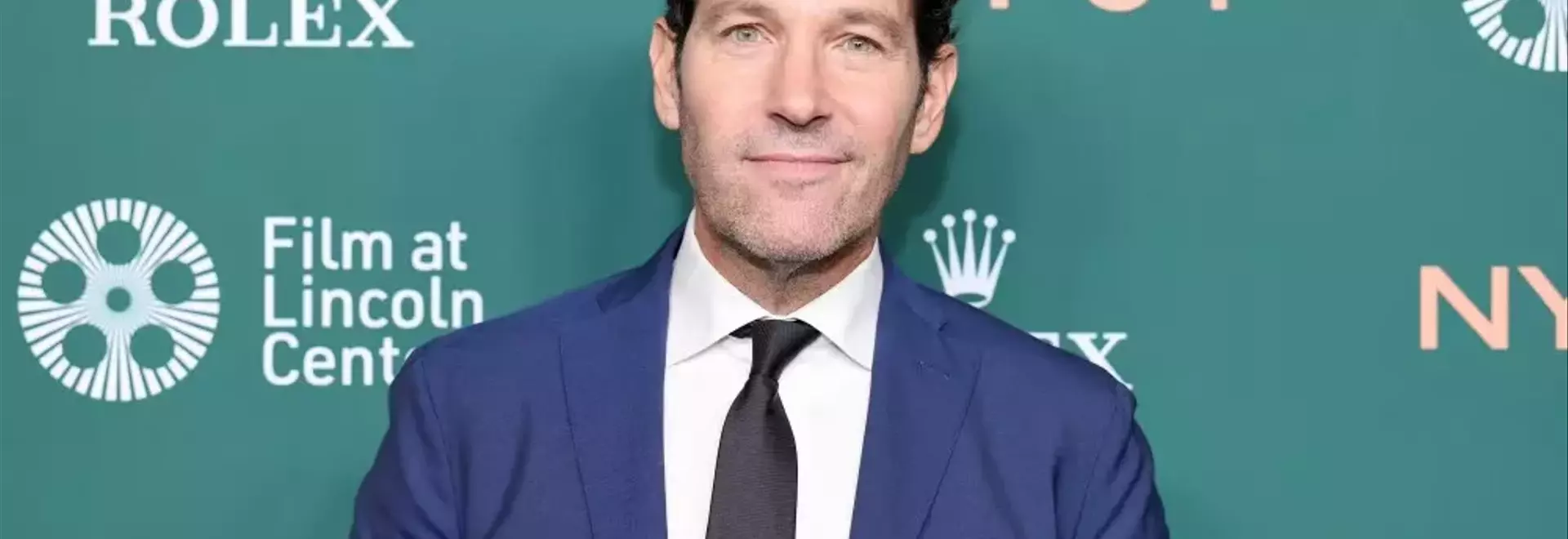
Paul Rudd's Digital Detox: Actor Shares Insights on Phone Addiction and Its Impact on Human Connection
Entertainment

Paul Rudd's Digital Detox: Actor Shares Insights on Phone Addiction and Its Impact on Human Connection

authorBy Guillermo del Toro
DateOct 04, 2026
Read Time3 min
Paul Rudd, a prominent figure in the entertainment industry, has recently opened up about his personal decision to disconnect from his smartphone during film productions. This move, he believes, not only combats personal addiction but also enhances the collaborative spirit and genuine interactions on set. His reflections offer a poignant commentary on the pervasive influence of technology in our lives and its potential to disrupt authentic human engagement.

Reclaiming Connection: The Power of Disconnecting on Set

A Conscious Choice: Leaving the Smartphone Behind

During the recent premiere of "A Statement" at the New York Film Festival, actor Paul Rudd shared a deliberate practice he has adopted: refraining from bringing his phone to film sets. This decision stems from a deep-seated belief that these devices, while ubiquitous, are ultimately detrimental to human connection and even personal well-being. He candidly admitted to struggling with smartphone addiction, much like many others in contemporary society, emphasizing that these devices contribute to a form of self-destruction.

"A Statement" and the No-Phone Mandate

Rudd's latest cinematic endeavor, "A Statement," directed by Oscar-winner Tom McCarthy, is set in 1980 and centers around a group of experts tackling the climate crisis. Interestingly, director McCarthy implemented a stringent no-phone policy on set, a rule that Rudd found profoundly beneficial. This enforced digital detox, according to Rudd, significantly strengthened the bonds among the diverse cast, which included talents like Paul Giamatti, Tatiana Maslany, and John Turturro. The absence of digital distractions fostered a more immersive and communal experience, akin to the dynamic of a theatrical play.

Echoes of the Past: Reviving Authentic Interaction

Rudd observed a noticeable shift in how people interact since the advent of mobile phones, noting a decline in direct eye contact and face-to-face communication. The no-phone environment on the set of "A Statement" allowed the cast to revert to more traditional forms of interaction. Dressed in 1980s attire and free from digital tethering, they were compelled to engage in genuine conversations, recreating a sense of connection that he fondly recalled from earlier times. This experience, he suggested, felt like a rediscovery of how people used to truly communicate.

The Benefits of a Digital Break: A Co-Star's Perspective

Amy Ryan, a co-star in "A Statement," echoed Rudd's sentiments, advocating for other filmmakers to consider adopting similar policies. She highlighted how the absence of constant notifications and the urge to "doomscroll" enriched the creative process. Ryan described how, during short breaks, instead of retreating into their phones, cast members would naturally engage with each other, discussing scenes, sharing personal anecdotes, and building camaraderie. She likened the experience to quitting sugar, noting that after an initial period, the desire for the phone dissipates, transforming the device from an essential tool into a mere novelty that one eventually grows tired of.

A Call for Mindful Technology Use

The shared experiences of Rudd and Ryan on the set of "A Statement" serve as a powerful testament to the potential benefits of intentional digital disconnection. In an era where smartphones are deeply embedded in daily life, their reflections offer a timely reminder of the importance of fostering genuine human connection and maintaining a mindful relationship with technology, both in professional and personal spheres.

More Articles
Entertainment
Jeremy Strong's Method Acting: Unapologetic Dedication
Actor Jeremy Strong recently defended his method acting approach, stating he feels no need to apologize to co-stars who might find his intensity disruptive. He believes his commitment is in service of the material and that negative reactions are often personal. This stance comes amidst past criticisms from colleagues, including 'Succession' co-star Brian Cox, regarding his immersive acting style.
By Shonda RhimesOct 04, 2026
Entertainment
Aaron Sorkin Reveals Jesse Eisenberg's Disinterest in 'The Social Reckoning' Despite Initial Expectations
Aaron Sorkin expressed surprise and a touch of frustration after Jesse Eisenberg declined to reprise his role as Mark Zuckerberg in the upcoming film 'The Social Reckoning.' Sorkin had assumed Eisenberg's participation was a given, even attempting to persuade him with detailed arguments and acknowledging that financial incentives held no sway for the actor, who prioritizes raising his children without excessive wealth. Eisenberg, however, cited a desire to move in new directions, despite acknowledging the film's potential quality.
By John LasseterOct 03, 2026
Entertainment
Zurich Film Festival Crowns 'Flesh and Fuel' as Best Film
Pierre Le Gall's 'Flesh and Fuel,' a compelling love story that first premiered at Cannes, has taken home the Golden Eye for Best Film at the 22nd Zurich Film Festival. Pete Muller's 'Bucks Harbor' received the Golden Eye for Best Documentary. Both winning films highlight emerging directorial talent and offer profound insights into human connection and societal challenges.
By Stephen KingOct 03, 2026
Entertainment
Box Office Update: 'Verity' Secures Top Spot, 'Digger' Disappoints on Opening Weekend
The film adaptation of Colleen Hoover's 'Verity' starring Anne Hathaway, Josh Hartnett, and Dakota Johnson achieved a strong box office debut, taking in $15.1 million on its opening Friday and projecting $33.6 million for the weekend. In contrast, 'Digger,' despite a significant budget and Tom Cruise's involvement, performed poorly with only $3.4 million on its first day.
By Mindy KalingOct 03, 2026
Entertainment
Skydance Soars: David Ellison's Ambitious Merger of Paramount and Warner Bros. Takes Flight
David Ellison has successfully orchestrated the massive $111 billion merger of Paramount and Warner Bros. Discovery, forming a new entertainment behemoth named Skydance Corp. Despite initial skepticism and regulatory hurdles, Ellison's relentless pursuit prevailed. This article explores the challenges and opportunities facing the newly formed entity, including navigating immense debt, integrating two vast media empires, and addressing concerns within the creative community and on Wall Street, as Skydance aims to establish itself as a dominant force in the global entertainment landscape.
By Roger EbertOct 03, 2026