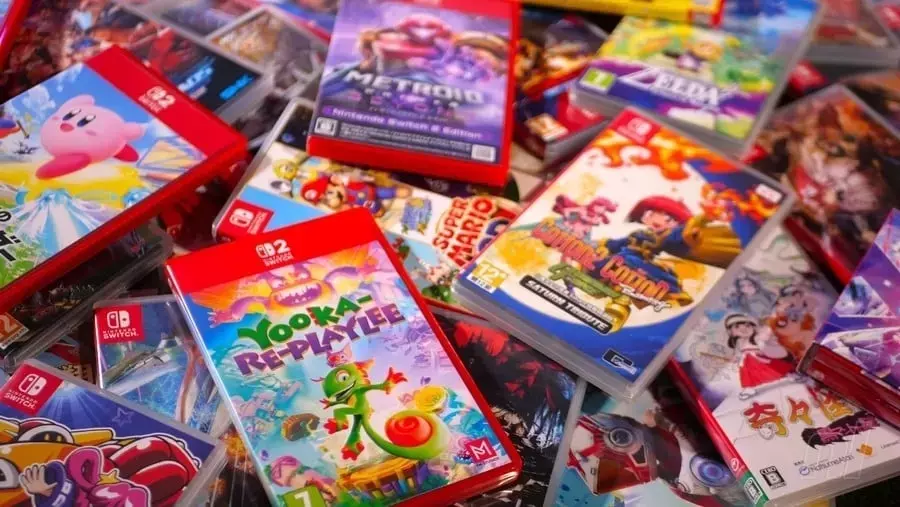
Nintendo's Physical Game Strategy Unaffected by Sony's Digital Shift, Says Analyst
Industry analyst Mat Piscatella suggests Sony's recent announcement regarding the phasing out of disc-based PlayStation games will not sway Nintendo's existing strategies concerning physical media. Nintendo, known for its distinct market approach, is expected to continue prioritizing its own interests, especially given the success of the Switch 2 in physical software and hardware sales. Despite an overall decline in physical game sales since the late 2000s, Nintendo has observed modest growth in the U.S. physical market over the past year, reinforcing its commitment to this segment. The introduction of Game-Key Cards further demonstrates Nintendo's innovative approach to bridging physical and digital offerings.
Nintendo's ongoing commitment to physical releases is highlighted by its sustained retail presence and strong sales performance, particularly since the launch of the Switch 2. The company has actively supported this by establishing in-store kiosks to boost sales of its new console and game library. This strategy caters to a diverse audience, including families and younger players, for whom physical game ownership and the 'plug and play' experience remain significant. While the long-term industry trend leans towards digital, Nintendo's independent stance and adaptability, as evidenced by its hybrid Game-Key Cards, position it uniquely in the evolving landscape of game distribution.
Nintendo's Independent Path in Game Distribution
In the wake of Sony's declaration to cease physical PlayStation disc production by 2028, industry observer Mat Piscatella states that Nintendo's strategic direction for physical game sales is unlikely to be influenced. Piscatella, a senior director and advisor in the video game sector who meticulously tracks hardware and software sales across the U.S., suggests that Nintendo operates on its own terms, making decisions based on its unique market position and consumer base, rather than reacting to competitors' moves. This independent approach, he argues, has been a consistent characteristic of Nintendo, shaping its trajectory in the gaming industry.
Piscatella’s analysis underscores Nintendo's self-reliant business philosophy, asserting that the company will persist in pursuing what it deems most beneficial for its ecosystem, irrespective of actions taken by rivals like Sony or Microsoft. He points out that while the broader trend for physical video game sales has been downward since the late 2000s, Nintendo has seen a marginal increase in this segment within the U.S. market over the last year. This resilience is attributed to strong retailer support and Nintendo's significant market share in both physical software and hardware since the introduction of the Switch 2, indicating a continued viability for its physical game strategy.
The Enduring Appeal of Physical Games for Nintendo
Despite the prevailing industry shift towards digital distribution, Nintendo's dedication to physical game releases appears steadfast. This commitment is particularly evident in its strong performance within the physical software and hardware markets, notably boosted by the launch of the Switch 2. Nintendo has actively reinforced this by deploying in-store kiosks, designed to enhance visibility and encourage sales of its latest console and accompanying game titles. This direct engagement with consumers in retail environments underscores a strategic focus on maintaining a tangible presence in the market.
Moreover, Nintendo's appeal to a broad demographic, including families and younger players, plays a crucial role in its continued support for physical media. For many, the physical game cartridge or box retains significant value, offering a sense of ownership, collectibility, and the simple 'plug and play' convenience without immediate reliance on internet downloads. While the Switch 2 era has seen the introduction of Game-Key Cards—a compromise offering a physical 'key' for digital downloads—this hybrid model reflects Nintendo's efforts to adapt to evolving preferences while still catering to a demand for physical products, demonstrating its flexible approach in navigating the future of game distribution.
