New Homeowners Face Substantial Unexpected Repair Costs
New homeowners frequently encounter substantial unforeseen expenses for repairs, often without having adequately prepared their budgets for such eventualities. A recent survey highlights that a significant majority, close to three-quarters of recent home purchasers, spend approximately $10,000 on these unexpected fixes within two years of acquiring their property. While the dream of owning a home brings immense satisfaction to most, many are caught off guard by the financial demands of maintaining it.
The Hidden Costs of New Homeownership: A Detailed Look at Unforeseen Repairs
A comprehensive study conducted by Jobber, a prominent provider of home service software, sheds light on a critical oversight among new homeowners: the underestimation of home maintenance and repair costs. The report indicates that while a high percentage of new homeowners express contentment with their properties, an alarming 58% found themselves facing unanticipated repair needs almost immediately after settling in. More precisely, 72% of these recent buyers reportedly spent around $10,000 on these unexpected issues within their initial two years of ownership, costs for which they had not budgeted.
Daniel Amodeo, president of Amo Realty in Boston, emphasized that a common misconception among first-time buyers is equating mortgage affordability with overall homeownership affordability. The initial years of owning a home frequently present expenses that were not part of the original financial planning, ranging from replacing crucial systems like water heaters or HVAC units to managing increased insurance premiums, property taxes, landscaping, and general upkeep. Amodeo strongly advises buyers to establish a robust emergency fund before finalizing their purchase, underscoring that it's a matter of 'when,' not 'if,' something will require repair. This sentiment is echoed by 45% of Jobber's survey participants, who recommend allocating a more generous budget for potential household repairs than initially anticipated.
Wyatt Simon, founder of Omaha Home Advisors, noted that buyers often concentrate predominantly on a home's upfront costs, such as the listing price and mortgage payments, neglecting to factor in these additional expenses. He pointed out that first-time homeowners, in particular, frequently lack the foresight to anticipate these surprising outlays.
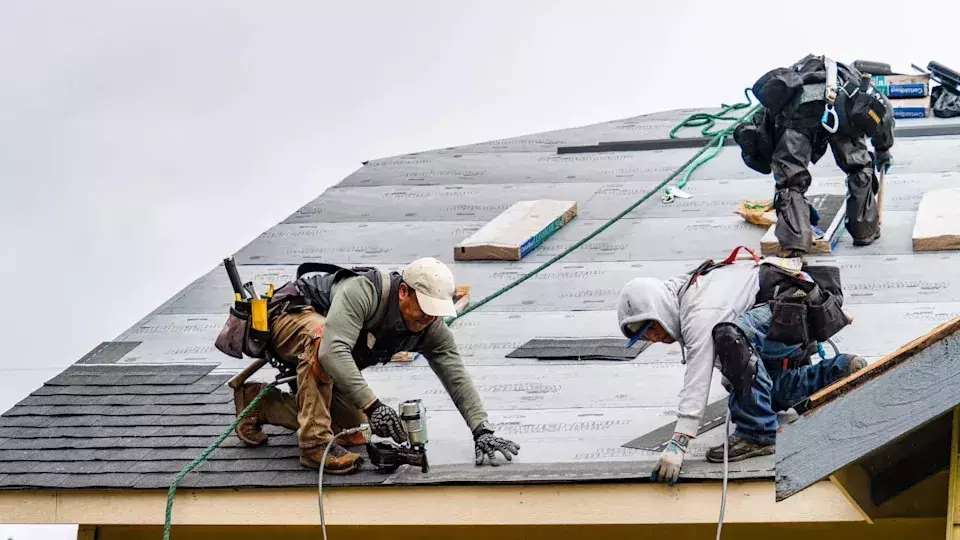
The most significant early repair bills typically arise from critical structural and functional components of a home, rather than cosmetic issues. Alexei Morgado, a Florida-based real estate agent and founder of Lexawise, explained that common problems include the aging of roofing systems, heating and air conditioning units, water heaters, and plumbing or electrical systems, along with high insurance deductibles. These systems, often installed around the same time, tend to fail concurrently. Many buyers are ill-prepared for these expenses, as mortgage qualification processes primarily focus on monthly payments rather than comprehensive maintenance costs. Morgado also cautioned that a home inspection provides only a snapshot of a property's condition and does not guarantee the remaining lifespan of its equipment. Consequently, many buyers deplete their financial resources on down payments, closing costs, moving expenses, and furnishings, leaving little for emergencies.
Furthermore, new homeowners often belatedly discover that a fixed-rate mortgage does not equate to a fixed total housing payment. Data from Cotality shows that non-mortgage housing costs surged by 30% in 2025. Concurrently, ATTOM reported that the national average for property taxes reached $4,427 in 2025, marking a 3% annual increase. Buyers must account for insurance and property tax costs during the purchase process, as these can be as significant as mortgage rates and payments. Morgado advised awareness that purchasing a less expensive home in a high-risk insurance area might lead to additional expenses for wind and flood insurance, higher deductibles, or potential property reassessments post-purchase.
Prudent Preparation: Navigating Unexpected Home Repair Costs
Prospective homeowners can mitigate the impact of unforeseen repair bills through proactive preparation. Industry experts suggest that diligent maintenance, although an expense, is considerably more cost-effective than addressing major repairs. Melanie Musson, an insurance analyst at Clearsurance.com, recommends allocating at least 1% of a home's value annually for maintenance, increasing to 3% for older properties. For instance, a $400,000 home would require approximately $4,000 per year, or about $333 monthly, for upkeep.
First-time homebuyers are urged to avoid exhausting all their savings on a down payment. Instead, it is prudent to set aside a minimum of $5,000 for home maintenance. Musson advises that when issues arise, especially while adjusting to the financial changes of homeownership, the focus should be on functionality. She suggests addressing problems without extravagance, for example, opting for a discounted or refurbished appliance if a dishwasher breaks, and saving for a more premium replacement once financial stability is established in later years of ownership.
