New Appointments to CDC's Vaccine Advisory Committee Spark Debate
News

New Appointments to CDC's Vaccine Advisory Committee Spark Debate

authorBy Ann Curry
DateSep 15, 2025
Read Time3 min

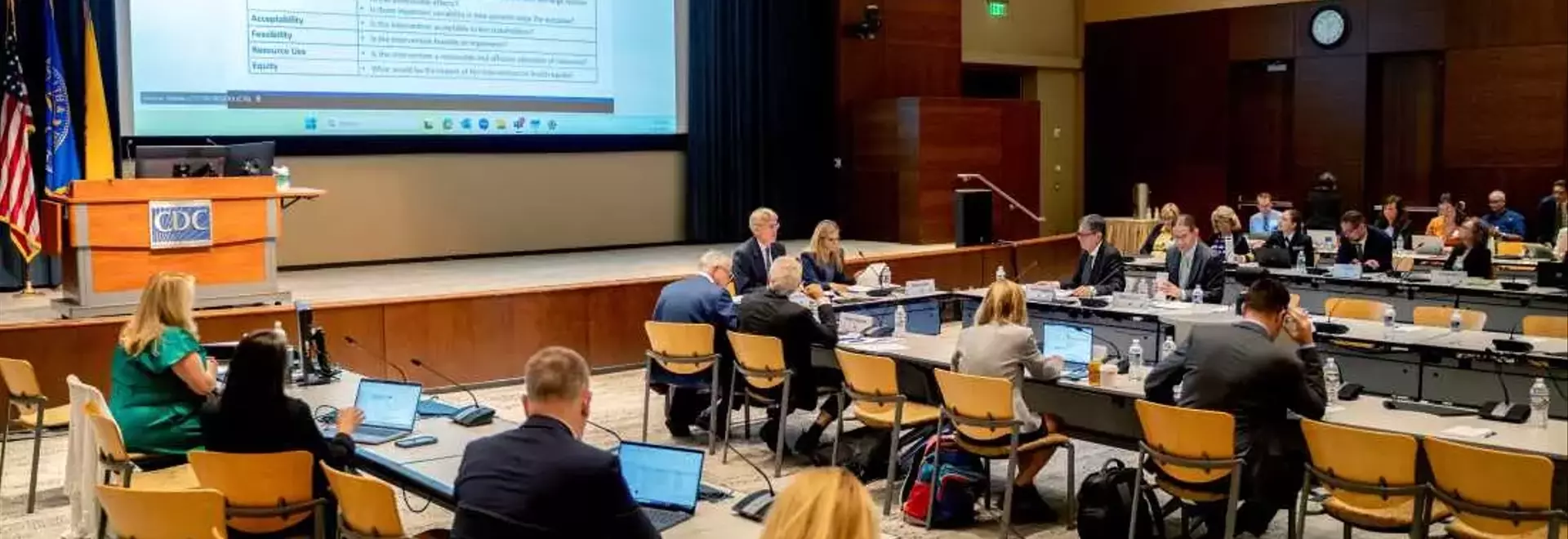
In a significant development for public health policy, Health Secretary Robert F. Kennedy Jr. has announced five new additions to the Centers for Disease Control and Prevention's (CDC) influential Advisory Committee on Immunization Practices (ACIP). This expansion comes just prior to a crucial two-day session where the committee will evaluate recommendations for COVID-19 and hepatitis B vaccines.

The newly appointed experts bring diverse backgrounds to the committee, which now totals 12 members. They include Hilary Blackburn, a pharmacist and podcast host; Dr. Kirk Milhoan, a pediatric cardiologist affiliated with the Independent Medical Alliance; Dr. Evelyn Griffin, an ob/gyn and functional medicine practitioner; Dr. Raymond Pollak, a semi-retired transplant surgeon; and Catherine Stein, an epidemiology professor who has previously voiced skepticism regarding the extent of COVID risks. Deputy Secretary of Health and Human Services and acting CDC Director Jim O'Neill expressed that these new members will contribute valuable real-world public health experience and help restore trust in vaccines, which he suggested was eroded during the previous administration. These appointments continue a trend initiated by Kennedy in June, when he replaced all 17 existing ACIP members, including figures like Dr. Robert Malone, known for spreading misinformation about COVID, and Retsef Levi, who has critically assessed COVID vaccines. The former members were selected for their specialized medical and vaccine policy expertise and underwent vetting to prevent conflicts of interest. Critics, such as former ACIP member Noel Brewer, argue that the current committee lacks crucial expertise in vaccinology, primary care, cost-effectiveness, and clinical trials, asserting that their foundational understanding of vaccines is insufficient for setting national policy.

The restructuring of ACIP has already led to significant shifts in its operations, notably the committee's vote in June to effectively ban flu vaccines containing thimerosal, a decision based on claims that lack new scientific substantiation. This and other actions have prompted leading medical and public health organizations, including the American Academy of Pediatrics and the American College of Physicians, to express concerns about the committee's integrity and the potential for politicization to undermine public trust in health recommendations. Given that many state vaccine laws are linked to ACIP guidelines, some states with Democratic governors are beginning to reconsider their reliance on the committee. States like Washington, California, Oregon, and Hawaii have formed a vaccine policy alliance, citing fears that future recommendations might be driven by ideology rather than scientific consensus.

The evolving composition and direction of the ACIP underscore the critical importance of maintaining scientific rigor and public confidence in health advisory bodies. As global health challenges persist, transparent and evidence-based decision-making remains paramount to safeguarding community well-being and ensuring equitable access to vital medical advancements. Upholding integrity in such institutions is not merely a procedural requirement but a foundational element of a resilient public health infrastructure.

More Articles
News
Young Fan's Baseball Dream Restored After Viral Home Run Ball Incident
A young baseball enthusiast at a Philadelphia Phillies game experienced a disheartening moment when a home run ball he received was controversially claimed by another spectator. This unfortunate incident, captured on video and widely shared online, sparked outrage. However, the story took a heartwarming turn as the Phillies and Miami Marlins organizations intervened, showering the boy with exclusive team merchandise and an unforgettable personal encounter with the player who hit the ball.
By Isabel AllendeSep 07, 2025
News
Japanese Prime Minister's Resignation Imminent Amidst Political Turmoil
Japanese Prime Minister Shigeru Ishiba has signaled his intent to step down, following mounting pressure from his party after a significant electoral setback in July. Despite initial resistance, citing concerns of a power vacuum during critical national and international challenges, Ishiba's decision aims to prevent further division within the Liberal Democratic Party ahead of a crucial leadership vote. His departure paves the way for a new party presidential election, anticipated in early October, as Japan grapples with pressing economic issues and regional tensions.
By Isabel AllendeSep 07, 2025
News
Carlo Acutis: The First Millennial Saint and Digital Evangelist
Carlo Acutis, a young man who passed away at 15 from leukemia in 2006, is recognized by the Catholic Church as the "God's influencer" due to his innovative use of technology to spread religious messages. His upcoming canonization in the Vatican marks a pivotal moment, making him the first millennial saint. Acutis developed a website documenting Eucharistic miracles, demonstrating his foresight in utilizing digital platforms for faith. His enduring legacy continues to inspire countless individuals globally, with many attributing miracles and healings to his intercession.
By Mona ChalabiSep 07, 2025
News
States Forge Independent Paths Amidst Evolving Federal Vaccine Policies
In response to shifting federal vaccine guidelines and perceived instability in national health agencies, several U.S. states are proactively developing their own independent COVID-19 vaccine policies. This move aims to ensure continued access and consistent public health recommendations, as federal agencies face staff cuts, leadership changes, and altered vaccine eligibility criteria. States like New York, Massachusetts, and New Mexico are enacting measures to maintain broad vaccine availability, while a West Coast alliance formed by California, Oregon, Washington, and Hawaii seeks to coordinate regional health strategies based on scientific evidence, rather than potentially ideologically driven federal directives. This decentralization of policy highlights a growing divergence in public health approaches across the nation.
By Lester HoltSep 06, 2025
News
Controversial Autism Report from HHS: Acetaminophen and Folate Link Questioned by Scientific Community
A forthcoming report from the U.S. Department of Health and Human Services (HHS), spearheaded by Secretary Robert F. Kennedy Jr., is anticipated to suggest connections between autism spectrum disorder and prenatal acetaminophen use, alongside certain vitamin deficiencies. This comes despite a lack of compelling scientific evidence, sparking considerable concern among medical professionals and researchers who emphasize the safety of acetaminophen during pregnancy and highlight the complex genetic and environmental factors contributing to autism.
By Mona ChalabiSep 06, 2025