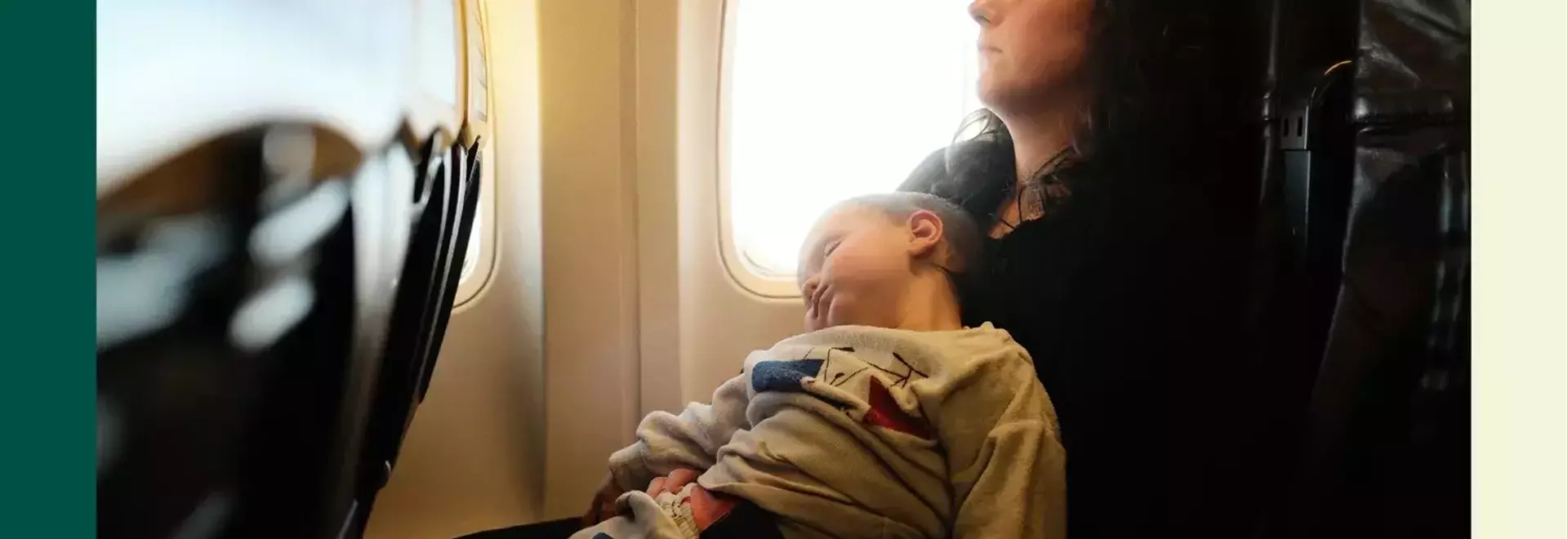
Navigating Air Travel with Young Children: A Parent's Perspective
For many parents, the thought of embarking on an airplane journey with an infant or toddler can induce considerable stress. A recent poll conducted by the swaddle brand Love To Dream highlights this widespread concern, indicating that a significant fifty percent of parents have either deferred or completely abstained from flying due to apprehensions regarding their child's sleep routines while aloft. This anxiety is not unfounded, as the challenges of maintaining a child's established sleep patterns in a confined, noisy environment like an airplane are very real. Nevertheless, this piece champions the notion that families should confidently pursue travel, asserting their right to occupy public spaces without undue worry about potential disruptions or societal judgment. It underscores the importance of a more empathetic public discourse surrounding children in shared environments.
Understanding Parental Flight Apprehensions
Many parents experience substantial anxiety when contemplating air travel with their young children. A recent study by Love To Dream illuminates this apprehension, revealing that 50% of parents actively delay or completely avoid flying due to concerns over their baby's sleep during the flight. This issue is particularly poignant for parents who have meticulously cultivated a sleep routine for their infants, as disrupting it can lead to significant challenges not only for the child but also for the parents and, potentially, other passengers. The survey further notes that experienced parent travelers found flying with toddlers even more demanding than with infants, dispelling the common misconception that it becomes easier as children grow. These findings underscore a critical aspect of family travel: the immense pressure on parents to ensure their children's tranquility and avoid public disturbances.
The root causes of this parental anxiety are multifaceted. Airplanes, by nature, are not conducive to a baby's comfort or sleep. The limited space, incessant noise, and bright lighting create an environment vastly different from a child's familiar crib. The abrupt transition from a secure home setting to a rattling, unfamiliar cabin filled with strangers can understandably lead to distress for the child. Moreover, parents are acutely aware of the potential for their child's meltdown to inconvenience fellow passengers, leading to feelings of embarrassment and judgment. This societal pressure, often amplified by viral online content portraying children as public nuisances, exacerbates parents' fears. Despite the inherent adaptability of babies and their ability to re-establish routines upon returning home, the immediate prospect of managing an unhappy child in a confined space often outweighs the desire to travel, highlighting a need for greater public empathy and understanding toward families.
Challenging Societal Expectations and Embracing Family Travel
The apprehension parents feel about flying with their children is significantly compounded by unfair societal expectations. Instances of well-meaning but ill-timed interventions from flight attendants or the well-intentioned, albeit sometimes overwhelming, offers of help from fellow passengers, coupled with the increasingly vocal sentiment that children are unwelcome in public spaces, contribute to parents' self-consciousness. This can lead to unnecessary gestures like parents distributing "gift bags" as a pre-emptive apology for a crying baby, a practice that unjustly burdens already stressed parents with the responsibility for others' emotional reactions. Such expectations isolate parents, particularly mothers, and dehumanize children by categorizing them separately from adults, denying their fundamental right to occupy shared environments.
It is crucial for society to cultivate a greater sense of tolerance and understanding towards children in public. The common adage among parents, "You are entitled to a child-free life in private, but not in public," succinctly encapsulates this perspective. While discomfort caused by a crying child is understandable, it does not nullify the child's right to exist in public spaces. Passengers have access to noise-canceling headphones, various amenities, and entertainment options that can mitigate minor disturbances. Ultimately, the temporary inconvenience of a crying baby on a flight is fleeting for other passengers, who can simply disembark and move on. Parents should confidently book their trips, knowing that minor disruptions to a child's routine are easily remedied upon returning home, and they, along with their children, have every right to be on that plane, free from the burden of excessive self-consciousness or judgment.
