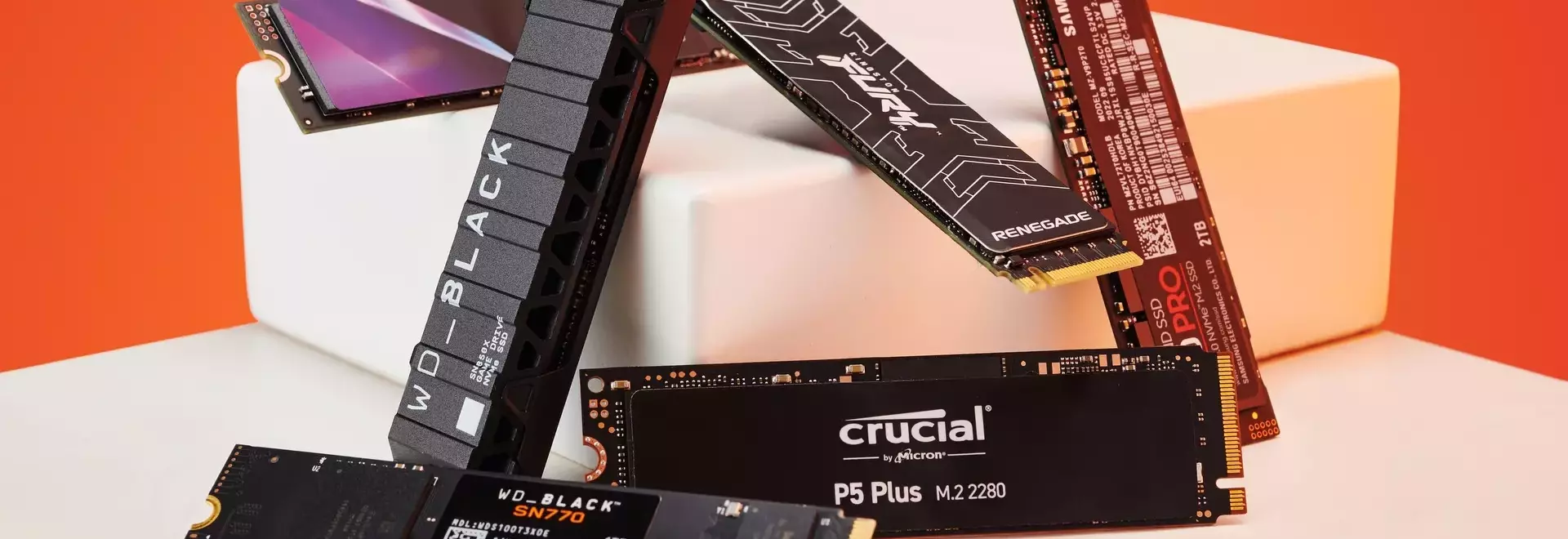
NAND Flash Supply Shortage to Persist for Four More Years, Driving Up SSD Prices
The ongoing strain on the memory and storage markets, particularly for SSDs, is poised to persist for the foreseeable future. Industry leaders anticipate that the imbalance between supply and burgeoning demand, heavily influenced by the artificial intelligence sector, will continue to drive up costs for several years, creating a challenging landscape for consumers.
Detailed Report: Global NAND Flash Shortage to Extend Until 2030 Amidst Soaring AI Demand
Taiwan's Phison Electronics, a prominent controller chip maker for NAND flash, has indicated a prolonged period of elevated prices for memory products. According to an interview given by Phison CEO Pua Khein-Seng to the Commercial Times, the global supply of NAND flash is not expected to catch up with demand for at least another four years, pushing potential market stabilization beyond 2030.
Mr. Pua highlighted the relentless growth in demand originating from AI infrastructure customers, a trend that is predicted to intensify from late this year and extend into early 2027. In anticipation of this surge, Phison is proactively building its inventory to ensure a consistent supply for the next two years. However, the fundamental constraint lies in the overall availability of NAND chips across the industry.
The CEO pointed out a significant hurdle: the substantial lead time involved in expanding manufacturing capabilities. From the initial investment in constructing new production facilities to their operational readiness and actual market supply, a timeframe of approximately four years is typically required. While efforts to establish new NAND-producing facilities are underway, it will be some time before their output meaningfully impacts the market. This sentiment was echoed by Micron executive Sumit Sadana last week, who emphasized the inherent difficulties in rapidly scaling up new memory wafer fabrication plants to meet the escalating AI-driven demand.
The current situation presents a more acute challenge for storage solutions compared to system memory (DRAM). While innovations like more efficient AI models might slightly alleviate DRAM supply pressures, the immense volumes of data generated and processed by AI servers necessitate vast amounts of storage. This divergence in demand could further complicate the supply chain, potentially widening the gap between storage availability and its cost.
Consequently, Phison is strategically reallocating its resources. The company plans to reduce its focus on the retail market, shifting instead towards prioritizing enterprise and AI clients. This strategic move underscores the severity of the supply crunch and the economic imperatives driving manufacturers' decisions. For the average consumer, this means that the current trend of increasing SSD prices is unlikely to reverse soon, and improvements are not on the immediate horizon.
This sustained period of constrained supply and rising prices paints a rather bleak picture for individuals and businesses reliant on affordable memory and storage solutions. The structural nature of the shortage, coupled with the rapid expansion of AI technologies, suggests that this challenging market environment will be a defining feature of the hardware landscape for years to come.
