Mizuho Downgrades Circle on Margin Pressure, Cuts Price Target
Japanese investment bank Mizuho has revised its outlook on Circle, the issuer of the USDC stablecoin, downgrading its rating and significantly lowering its price target. This reevaluation is primarily driven by anxieties surrounding increasing competition within the stablecoin market and its potential to erode Circle's profit margins, despite the company's ongoing expansion efforts.
Mizuho Revises Circle's Financial Prospects Amidst Stablecoin Market Shifts
On Wednesday, July 15, 2026, investment bank Mizuho, led by analysts including Dan Dolev, announced a downgrade for Circle, moving its rating from Neutral to Underperform. Concurrently, the price target for Circle was sharply reduced from $85 to $50. This decision was largely influenced by mounting pressures on the economic viability of Circle's USDC operations.
A key factor in Mizuho's revised forecast is the emergence of new market entrants, notably OpenUSD. This initiative, supported by over 140 companies including industry giants like Coinbase, Mastercard, Stripe, and BlackRock, is poised to reshape the stablecoin landscape. OpenUSD's business model, as detailed in a CoinDesk report, intends to directly distribute the majority of its reserve earnings to issuers and participants, after deducting only a minimal management fee. This contrasts sharply with Circle's existing structure, where reserve income is generated first, and then portions are shared with partners.
Mizuho projects that this new competitive dynamic will compel Circle to offer more attractive revenue-sharing agreements to maintain its network of partners. Consequently, the bank has increased its estimate for Circle's 2027 distribution and transaction expense ratio from 64% to 73%. This adjustment reflects an expectation that a larger share of reserve income will be diverted to partners, thereby reducing the portion retained by Circle.
The anticipated impact on Circle's profitability is substantial. Mizuho has slashed its forecast for Circle's 2027 adjusted EBITDA from $1.09 billion to $699 million, a figure approximately 25% below current Wall Street consensus. Although high interest rates continue to bolster reserve income from USDC, analysts believe that intensified competition will increasingly counteract these benefits by compressing profit margins.
Furthermore, Circle's critical relationship with Coinbase is under scrutiny. The two entities, who have historically shared USDC distribution economics, are slated to renegotiate their agreement later this summer. Coinbase's involvement in the OpenUSD ecosystem could strengthen its bargaining power in these discussions, potentially allowing it to demand a larger share of Circle's reserve income. This concern is echoed by an earlier warning from JPMorgan, which lowered earnings estimates for both Circle and Coinbase after a new revenue-sharing arrangement with Hyperliquid. Under this agreement, Coinbase reportedly passes 90% of the USDC reserve yield generated on its platform to Hyperliquid, further diminishing the economic returns for both Circle and Coinbase, even with continued USDC adoption.
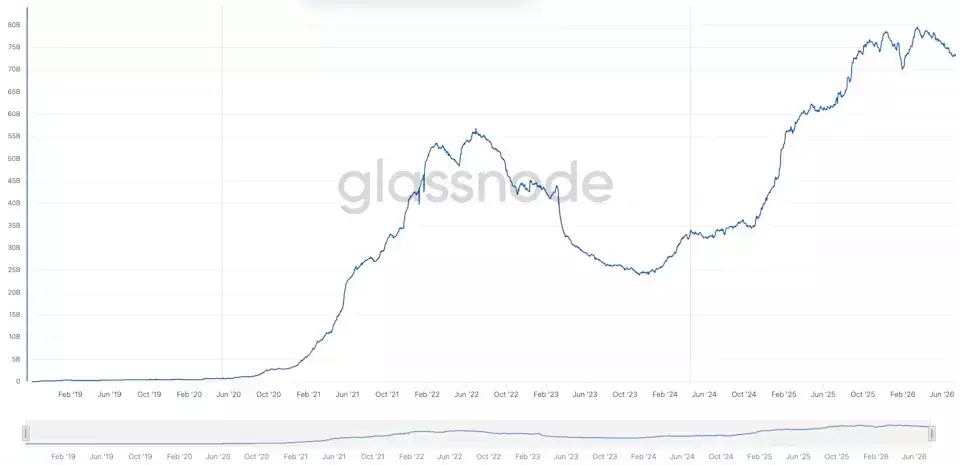
Despite these profitability concerns, Circle continues to expand its global infrastructure. The company recently secured final approval to establish Circle National Trust, a federally regulated entity intended to provide custody services. International expansion remains a priority, evidenced by a partnership with JCB, Japan's largest credit card network, to pilot USDC-based treasury transfers and explore future payment applications in Japan. USDC's circulating supply currently stands at around $73 billion, solidifying its position as the world's second-largest dollar-backed stablecoin.
The evolving landscape of the stablecoin market, particularly with new revenue-sharing models gaining traction, suggests that merely increasing USDC adoption may no longer be sufficient for Circle. The company's future success will likely depend on its ability to safeguard its profit margins in an increasingly competitive environment where distribution partners have a broader array of stablecoin ecosystems vying for their business.
This analysis highlights a critical shift in the stablecoin sector. Traditionally, growth in adoption was a primary metric for success. However, as the market matures and new players introduce innovative revenue-sharing models, the focus for established entities like Circle must pivot towards defending profitability and adapting to a more fragmented distribution landscape. The unfolding negotiations between Circle and its partners, particularly Coinbase, will be a crucial indicator of how effectively Circle can navigate these evolving market dynamics. It underscores the importance of not just market share, but also the sustainability of business models in a rapidly changing decentralized finance ecosystem.
