Mississippi Gulf Coast: A Decade-Long Battle for Recovery Post-Katrina
Rising from the Rubble: The Unyielding Spirit of the Mississippi Gulf Coast
The Devastating Onslaught: A Governor's Recollection of Katrina's Fury
Former Governor Haley Barbour vividly recounts the moment Hurricane Katrina made landfall on August 29, 2005, describing its catastrophic power as the eye passed directly over the Pearl River, the boundary between Louisiana and Mississippi. The storm, characterized by 120 mph winds and a nearly 30-foot storm surge, unleashed its most destructive force on the Mississippi coastline, causing what Barbour described as \"utter obliteration.\"
Beyond New Orleans: The Forgotten Ground Zero of Mississippi
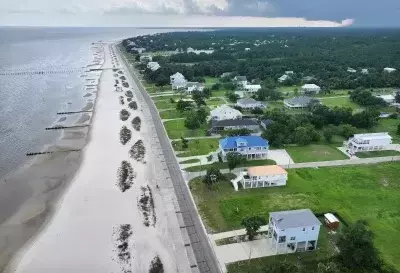
While global attention largely concentrated on New Orleans' levee failures, the Mississippi Gulf Coast bore the brunt of Katrina's direct assault. The entire 70-mile shoreline was engulfed by a three-story-high storm surge, obliterating infrastructure, homes, and businesses. The storm tragically claimed 238 lives in Mississippi, contributing to the nearly 1,400 total fatalities and leaving 60,000 structures uninhabitable, with over 25,000 completely erased, spawning the grim term \"slabbed.\"
The Initial Chaos and a Call for Aid: Barbour's Leadership in Crisis
In the immediate aftermath, Governor Barbour, in his inaugural term, confronted a critical void in federal assistance. With FEMA overwhelmed, the state turned to the U.S. Northern Command, which delivered vital Army rations to Biloxi. While acknowledging initial logistical challenges, Barbour noted a subsequent improvement in federal support, particularly for debris removal—a colossal undertaking that spanned 18 months. He firmly asserts the indispensability of federal disaster aid, dismissing suggestions of eliminating such agencies as a potential \"catastrophe.\"
A United Front: Interstate Assistance and Financial Lifelines
The path to recovery was paved by a remarkable outpouring of assistance from 48 other states, which dispatched National Guard units, law enforcement, and utility crews. Crucially, over $5 billion in federal grants, facilitated by Mississippi Senator Thad Cochran's influential position, provided vital financial support. Barbour also highlighted bipartisan cooperation, including an offer from Massachusetts Democrat Barney Frank to rally congressional votes for Mississippi's relief efforts.
Rebuilding Lives and Communities: The Vision for Mississippi's Revival
Governor Barbour's recovery strategy centered on revitalizing the economy by bringing back employment, reopening educational institutions, and, most critically, restoring housing to encourage residents to return. This monumental effort was significantly bolstered by the influx of more than 900,000 volunteers who dedicated five years to rebuilding Mississippi, serving as a beacon of hope and practical assistance.
Challenges and Disparities: The Turkey Creek Community's Ongoing Struggle
Despite widespread recovery efforts, disparities persisted. Derrick Christopher Evans of Gulfport, a resident of the historic Turkey Creek community, noted that while volunteers were instrumental, many areas like his, located inland and lacking flood insurance, struggled to access government and private resources. Evans also criticized the state's initial prioritization of casino and port reconstruction over investments in struggling neighborhoods, underscoring the community's perception of a perpetual recovery phase.
Waveland's Arduous Road: A Town Transformed
Waveland, identified as \"ground zero,\" epitomizes the uneven recovery. Twenty years later, empty lots and demolished building slabs remain, and its once vibrant downtown business district is largely deserted. Bernie Cullen, chairperson of Waveland's Ground Zero Museum, recounts the prolonged process of healing and the significance of small victories, such as restored streetlights and the reopening of Walmart, in rekindling hope. However, Waveland has seen a 20% population decline, and stricter building codes have inflated construction costs, complicating the return to normalcy.
Law Enforcement's Ordeal: A Police Department's Resilient Return
The Waveland police force endured unimaginable hardship, with officers and staff clinging to trees to survive the storm surge at their flooded headquarters. Police Chief Michael Prendergast and administrative assistant Lisa Parker recall the overwhelming sense of apocalypse and helplessness as their department lost all equipment and its personnel lost their homes. Yet, despite the widespread devastation that spared no one, they persevered, exemplifying the community's determination.
Preserving Heritage: The Fight to Restore Gulfside Assembly
Katrina also erased significant cultural landmarks, including the United Methodist Gulfside Assembly in Waveland, a century-old waterfront retreat for African Americans. Executive Director Cheryl Thompson, who spent her childhood summers there, described the loss as profoundly emotional. This site, a sanctuary during segregation and a hub for civil rights strategizing, continues its struggle to regroup two decades later, operating from a donated church building, yet maintaining its commitment to ministry.
Pearlington's Perseverance: A Town's Unyielding Battle
Jayne Crapeau, owner of Turtle Landing Bar and Grill in Pearlington, shares her harrowing experience of riding out the storm in her restaurant, enduring chest-high water. Her town was isolated for four days before aid arrived, forcing residents to organize their own relief efforts. Although Pearlington has seen a third of its population depart and parts of it remain in ruins, Crapeau, despite battling cancer, continues her work, reflecting the unwavering spirit of those committed to rebuilding their community and ensuring its survival.
Character Forged in Crisis: A Lasting Legacy of Resilience
Reflecting on the profound impact of Katrina, former Governor Barbour posits that the crisis did not create character but rather unveiled the inherent resilience of Mississippians. He commends their determination to rise again after being knocked down, symbolizing a testament to their enduring spirit in the face of unparalleled adversity. This perseverance underscores the ongoing journey of recovery and renewal across the Mississippi Gulf Coast.
