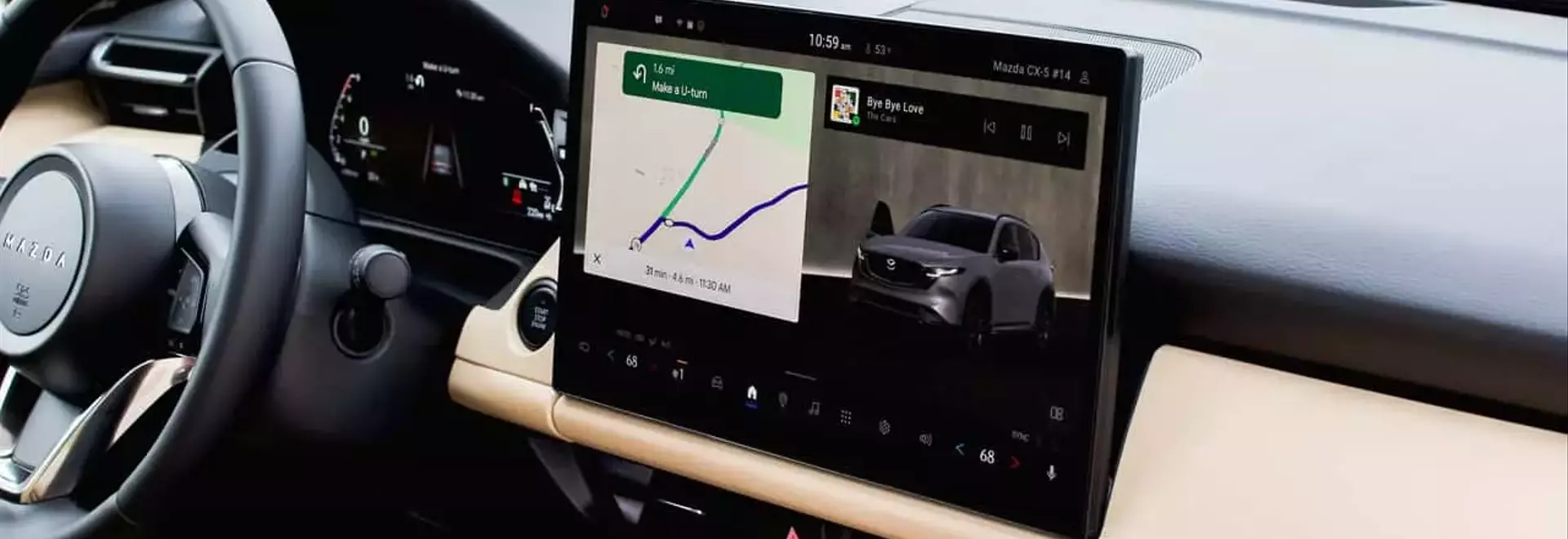
Mazda Defends Large Infotainment Screens in CX-5, Citing Reduced Driver Distraction
Innovation on Display: Mazda's Vision for Driver Focus
The Shifting Paradigm: Touchscreens Over Tactile Controls
Since the latest generation of the CX-5 debuted, Mazda has faced inquiries concerning the significant display that dominates the dashboard, replacing most traditional buttons. While some observers have attributed this design choice to cost-saving measures, Mazda officials maintain that the primary motivation is to enhance driver safety by minimizing potential distractions.
Expert Insights on Driver Engagement
Matthew Valbuena, a project manager specializing in in-vehicle technologies and human-machine interfaces at Mazda, previously clarified in February that the company's objective is to reduce driver distraction. Similarly, Tamara Mlynarczyk, Mazda North American Operations' public affairs manager, stated in July 2025 that the new user interface was developed in response to customer feedback. These statements underscore a consistent message from the automaker regarding its design choices.
Arguments for Screen-Centric Design
Koichiro Yamaguchi, the program manager for the CX-5, further elaborated on this perspective in an interview with an Australian automotive publication. He explained that managing climate controls, for instance, with numerous similar-looking physical buttons located lower on the dashboard, necessitates drivers to divert their gaze from the road to select the correct function. In contrast, a strategically placed, eye-level touchscreen is presented as a safer alternative, reducing the time a driver's eyes are off the road.
The Debate on Ergonomics: Muscle Memory vs. Digital Interfaces
However, critics often point out the advantage of muscle memory associated with physical buttons and knobs. Once drivers become accustomed to the layout of traditional controls, they can often operate them without needing to visually confirm their actions, thus reducing potential distraction. This aspect presents a nuanced challenge to Mazda's screen-first approach, suggesting that while screens offer perceived benefits, the established cognitive benefits of tactile feedback remain a strong counterpoint.
Future Directions and Consumer Input
Despite the current design, Mazda has indicated a willingness to adapt based on future customer feedback. While essential functions like climate settings are integrated into the base of the touchscreen for easy access, the possibility of reintroducing more traditional controls in upcoming models remains open, provided there is a clear demand from consumers. This suggests an ongoing evaluation of user experience and safety considerations.
Expanding the Digital Horizon: Other Mazda Models
The design philosophy seen in the CX-5 is not isolated. Other Mazda vehicles, such as the 6e and CX-6e, also feature interiors where large infotainment displays are central. These models, which draw inspiration from Chinese market preferences known for favoring expansive screens, further illustrate Mazda's global strategy in adopting digital interfaces. This trend highlights a broader industry shift towards integrated digital experiences in automotive design.
A Look Back: Mazda's Evolving Stance on Distraction
Interestingly, Mazda held a different view in 2019 with the launch of the Mazda3. Research at that time indicated that drivers reaching for a touchscreen often inadvertently applied torque to the steering wheel, causing the vehicle to drift. Furthermore, touchscreens inherently demand visual attention during interaction. This historical context reveals a significant evolution in Mazda's understanding and implementation of in-car technology, reflecting a dynamic adaptation to both technological advancements and safety research.
