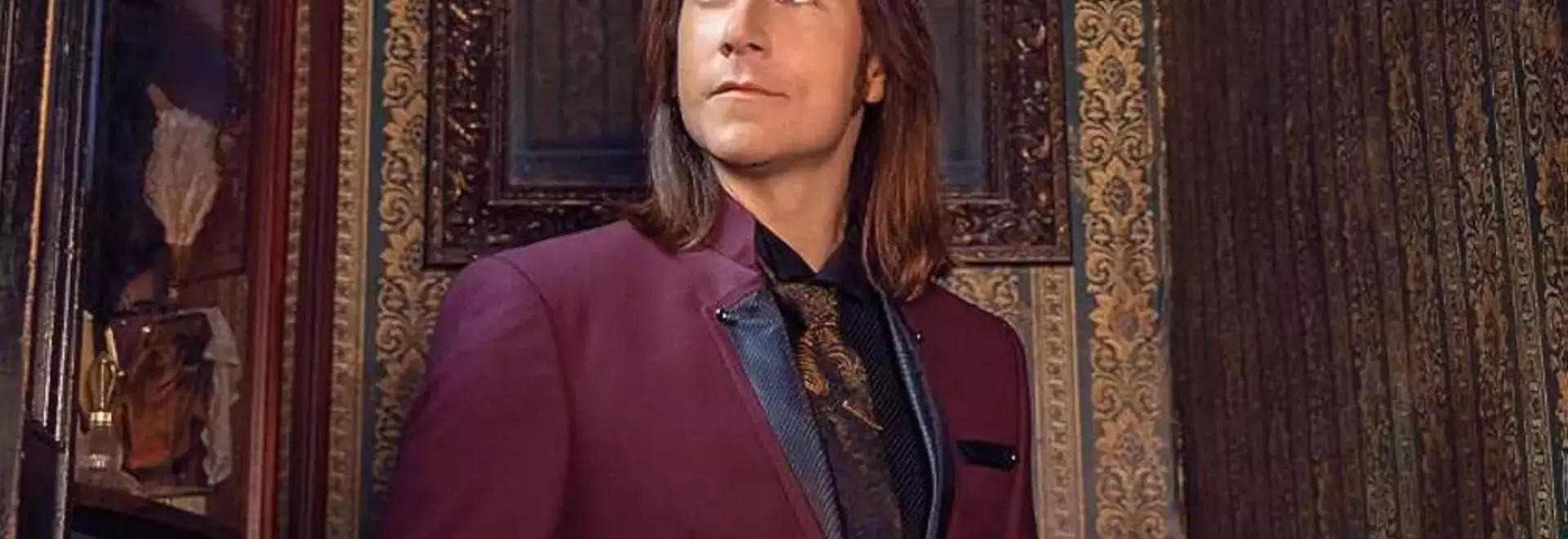
Matthew Mercer's Philosophy: Players' Game, Not Fans'
Games

Matthew Mercer's Philosophy: Players' Game, Not Fans'

authorBy Richard Garfield
DateOct 11, 2026
Read Time2 min

Critical Role, a beloved actual-play Dungeons & Dragons series, has captivated audiences for over a decade with its cast of professional voice actors and their undeniable chemistry. The show is celebrated for its improvisational storytelling and the memorable dialogue that arises from it. Among these, a particular quote from Matthew Mercer during Campaign 3 stands out as a powerful declaration against external criticism, encapsulating the very essence of the D&D experience.

During a pivotal moment in Campaign 3, episode 42, the cast found themselves engrossed in gambling games within the city of Yios, diverting from their primary objective. When Laura Bailey expressed an apology for this digression, Mercer interjected with a profound statement: "It’s our game to have fun." This assertion, accompanied by a shrug towards the home audience, underscored that the cast would play their game as they always have, regardless of external expectations. This sentiment, though perhaps less iconic than his signature "How do you want to do this?" line, perfectly illustrates what makes Critical Role unique: a group of friends collaboratively crafting their own narrative without external influence.

The growth of Critical Role has inevitably brought scrutiny, particularly regarding perceived corporate interference, such as with Amazon's involvement in animated adaptations. However, CEO Travis Willingham has consistently denied such claims. Mercer's statement also addresses a segment of the fanbase that, for better or worse, holds strong opinions on how Dungeons & Dragons should be played. While a loyal fanbase is largely beneficial, driving engagement and discussion, it can also foster a sense of entitlement. Instances like Mercer altering resurrection rules in Campaign 2 or Marisha Ray's character, Laudna, diverging from established lineage traits in Campaign 3 have sparked backlash from purist fans. While constructive criticism is valid, the show’s improvisational nature means narrative and tension are ultimately in the hands of the players and Game Master, not solely dictated by fan opinions or strict adherence to rules. In an entertainment landscape often shaped by nostalgia and fan feedback, Mercer’s declaration serves as a vital reminder that Critical Role is, fundamentally, their game to play.

This steadfast commitment to their creative autonomy embodies a powerful message about artistic integrity and the joy of shared experience. In a world where creators often face immense pressure to conform to audience demands, Critical Role’s dedication to playing their own game, in their own way, serves as an inspiring example of authenticity. It highlights the beauty of spontaneous storytelling and the importance of preserving the intrinsic fun and personal connection that define such a unique collaborative endeavor.

More Articles
Games
Exclusive 'Doctor Doom' Magic: The Gathering Card for 'Avengers: Doomsday' Premiere
Marvel fans attending the premiere of 'Avengers: Doomsday' on December 18th will have the chance to receive an exclusive 'Doctor Doom' Magic: The Gathering card. This special edition card, featuring unique artwork, will be available to Regal Crown Club members who watch an Infinity Vision showtime during the opening weekend. The film's release coincides with 'Dune: Part Three,' leading to a theatrical showdown, with 'Doomsday' utilizing Disney's 'Infinity Vision' for enhanced viewing.
By Sid MeierOct 11, 2026
Games
AI-Powered Driving Simulator Faces Financial Hurdles with Rising AI Costs
The developers of "Teach My Little Sister How To Drive," an AI-driven driving instruction simulator, are incurring significant costs, spending over $1,000 daily on AI services due to a surge in player numbers. This unexpected expenditure has forced them to take out a bank loan, highlighting the financial challenges of integrating advanced AI chatbots into games, especially when player engagement drives up token usage. The future viability of the demo and the full game's pricing strategy are now in question.
By Kim SwiftOct 11, 2026
Games
Wii Sports Resort Box Art: A Global Design Showdown
This article delves into a comparative analysis of the box art for Wii Sports Resort, highlighting the distinct design philosophies behind the North American version and the combined European/Japanese release. It explores how each region chose to represent the game's core offerings and overall aesthetic, inviting readers to consider which cover best captures the spirit of the game.
By Reiner KniziaOct 11, 2026
Games
The Quest for the Ultimate Peanuts Comic Strip
This article delves into the monumental task of identifying the single best Peanuts comic strip from Charles Schulz's extensive 50-year career. It explores the challenges of evaluating nearly 18,000 strips, dismissing the first and last ones as not truly representative. The author outlines criteria for selection, focusing on strips from the 1960s that prominently feature both Charlie Brown and Snoopy, ultimately pinpointing a specific 1961 strip as a prime candidate for its narrative depth and character portrayal.
By Richard GarfieldOct 11, 2026
Games
The Enduring Humor of Gary Larson's The Far Side
Gary Larson's iconic comic strip, 'The Far Side,' distinguished itself by prioritizing clever humor over profound social commentary or visual grandeur. Unlike contemporaries that explored deeper themes or boasted intricate art, Larson's genius lay in his ability to craft uniquely funny, often bizarre, one-panel gags. This article delves into what made 'The Far Side' a comedic masterpiece, showcasing 10 of its most ingenious and laugh-out-loud strips that exemplify Larson's distinctive wit and unconventional approach to cartooning.
By Reiner KniziaOct 11, 2026