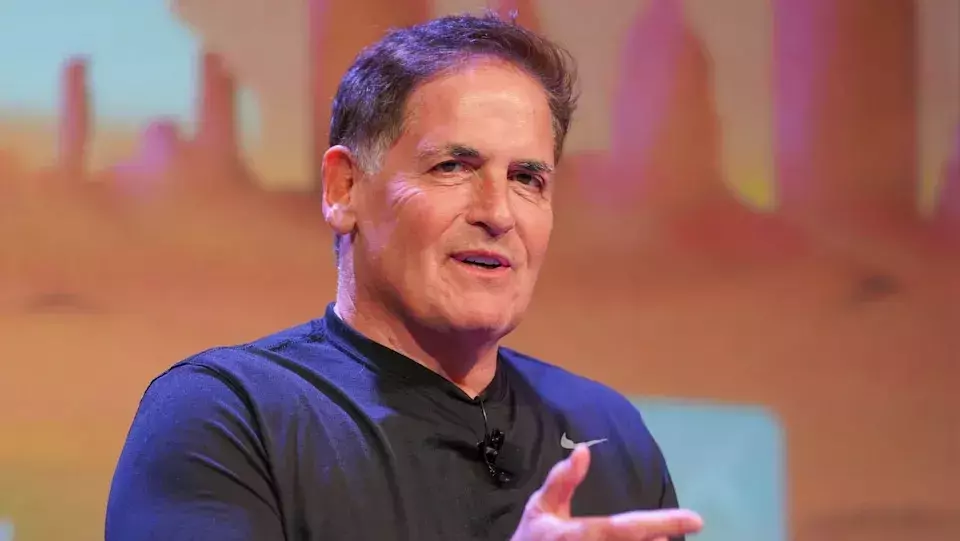
Mark Cuban Defends Entrepreneurs Against 'Eat the Rich' Rhetoric, Highlights Job Creation and Wage Responsibility
Billionaire investor Mark Cuban has forcefully pushed back against the growing sentiment that demonizes wealthy entrepreneurs, arguing that such rhetoric overlooks their critical contributions to job creation and economic progress. He contends that while income disparity is a legitimate concern, labeling all successful business owners as "blood-sucking" ignores the efforts of those who risk everything to build enterprises, ultimately generating over 60% of new jobs in the country. Cuban emphasizes that rather than fostering animosity, efforts should focus on constructive strategies to empower individuals and support policies that promote fair compensation and broader asset ownership. This perspective is a direct response to recent public debates and political calls for wealth taxes, sparked by the extreme wealth accumulation of figures like Elon Musk.
Cuban's commentary also highlights that a significant number of entrepreneurs are dedicated to improving their employees' financial well-being and supporting their communities. He shares his own experience of ensuring fair wages within companies he invested in, recognizing the importance of lifting workers out of a paycheck-to-paycheck existence. Experts in the business community largely agree with Cuban's assertion about entrepreneurs as job creators but suggest that the dialogue needs to differentiate between addressing extreme wealth concentration and disparaging all business ventures. They propose that a balanced approach, integrating both "trickle-up" wage policies and entrepreneurial support, can lead to a more equitable and prosperous society, encouraging innovation while ensuring widespread benefits.
The Entrepreneur's Role in Economic Growth and Job Creation
Mark Cuban, a prominent figure in the business world, has recently spoken out against the prevalent "eat the rich" narrative, highlighting what he perceives as a fundamental misunderstanding of the entrepreneurial landscape. Cuban argues that entrepreneurs, far from being a monolithic group of self-serving individuals, are the primary drivers of economic expansion and job creation. He points to statistics indicating that over 60% of new jobs in the United States originate from entrepreneurial ventures. His stance challenges the notion that all wealthy business owners are exploitative, suggesting instead that many risk their personal capital and face significant challenges, often enduring failures, in their pursuit of building successful businesses. This defense underscores the innovative spirit and economic vitality that entrepreneurs bring to the market, often creating opportunities where none existed before.
Cuban's comments emerged amidst heightened discussions on wealth inequality, fueled by the massive fortunes amassed by individuals such as Elon Musk. While acknowledging the importance of addressing income disparities, Cuban cautions against blanket condemnations of the wealthy, asserting that such generalized criticism is counterproductive. He believes that political rhetoric focused on demonizing successful individuals often serves to divide rather than to unite, diverting attention from practical solutions. Instead, Cuban advocates for an approach that recognizes the positive impact of entrepreneurship while also implementing policies that empower workers and foster broad-based prosperity. He suggests that a more nuanced conversation is needed, one that distinguishes between genuine exploitative practices and the legitimate pursuit of innovation and growth that benefits society as a whole.
Balancing Wealth Creation with Fair Compensation and Societal Benefit
Beyond simply defending entrepreneurs, Mark Cuban extends his argument to address the critical issue of fair wages and the broader societal impact of business practices. He asserts his belief in a "trickle up" economic philosophy, which prioritizes increasing the purchasing power and assets of the working class. Cuban has publicly advocated for a higher federal minimum wage, specifically suggesting $20 per hour, and has demonstrated this commitment by ensuring raises for employees of companies in which he has invested, particularly when he became aware of their reliance on government assistance. This proactive stance reflects his view that successful businesses have a responsibility to contribute to the economic well-being of their employees and the communities they serve, moving beyond mere profit motives to embrace a more inclusive form of capitalism.
Business experts and fellow entrepreneurs largely support Cuban's vision for combining wealth creation with social responsibility. They argue that policies promoting fair wages and broader employee ownership can actually strengthen companies by fostering a more motivated and stable workforce. The consensus among these voices is that the perceived conflict between taxing the wealthy and supporting entrepreneurship is often a false dichotomy. Instead, they propose that thoughtful policy design can create a system that rewards calculated risk-taking and innovation while simultaneously ensuring that economic success is shared more broadly. By improving access to capital for small businesses and developing regulations that support growth, it is possible to build an economy where high wages and thriving entrepreneurial ecosystems coexist, ultimately benefiting a wider spectrum of society.
