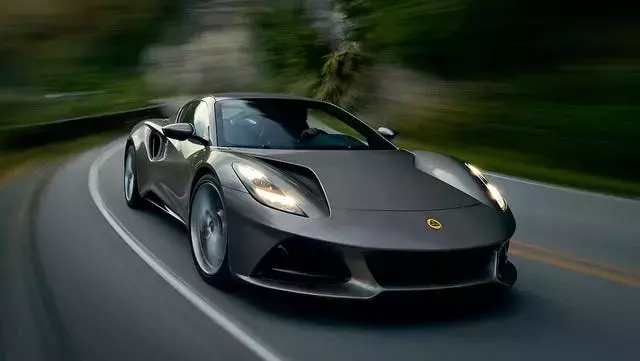
Lotus Emira to Adopt Hybrid V-6 Powertrain in 2027, Phasing Out Manual Transmission
Lotus is set to redefine its Emira sports car with a significant powertrain overhaul, confirming a transition to a hybrid V-6 system by 2027. This strategic shift will see the brand move away from its existing Toyota-sourced V-6 and Mercedes-AMG four-cylinder engines, introducing a more powerful, electrified future for the Emira. While promising enhanced performance, this evolution also signals the potential discontinuation of the beloved manual transmission, marking a pivotal moment for the sports car.
Lotus Emira Embraces Hybrid Future with New V-6 Powertrain
In a groundbreaking announcement, Lotus CEO Qingfeng Feng confirmed to Autocar that the Emira sports car will receive an upgraded hybrid V-6 powertrain in 2027. This decisive move is part of Lotus's broader strategy to electrify its lineup, following earlier reports of a hybrid V-8 for its Type 135 supercar. The new power unit, a turbocharged 3.0-liter V-6, will be produced by Horse Powertrains, a joint venture between Renault and Lotus's parent company, Geely. It will be paired exclusively with an automatic gearbox featuring an integrated e-motor, effectively replacing the current Toyota-sourced supercharged V-6 and Mercedes-AMG turbocharged four-cylinder engines.
The current Toyota V-6, which delivers 400 horsepower and 310 pound-feet of torque, and the Mercedes-AMG four-cylinder, offering 400 horsepower and 354 pound-feet, will be retired due to evolving emissions regulations and the company's forward-looking vision. The forthcoming Horse W30 V-6 engine alone is capable of an impressive 536 horsepower and 516 pound-feet of torque, with additional power expected from the integrated electric motor. This represents a substantial leap in performance for the Emira. Despite concerns about potential weight increases from the hybrid components, Horse Powertrains claims its V-6 is remarkably light at just 353 pounds, purportedly lighter than most other V-6 engines on the market and only slightly heavier than many 2.0-liter four-cylinders. The accompanying Horse 4LDHT transmission, including fluids, weighs 439 pounds.
This strategic pivot reflects Lotus's responsiveness to market demands, particularly from the United States, where the V-6 Emira has been a top seller. The decision to prioritize the V-6, albeit in a hybrid automatic configuration, underscores the brand's commitment to delivering high-performance vehicles while adapting to environmental standards and enthusiast preferences. More detailed specifications and further insights into the updated Emira powertrain are anticipated to be revealed in the coming year.
This shift to a hybrid V-6 powertrain in the Lotus Emira highlights a broader industry trend where performance and environmental considerations are increasingly intertwined. While the prospect of a more powerful Emira is exciting for many, the potential loss of the manual transmission could be a point of contention for purist enthusiasts. It underscores the delicate balance automakers must strike between innovation, regulatory compliance, and retaining the tactile driving experience that defines sports cars. This evolution serves as a reminder that even iconic brands are adapting to a changing automotive landscape, striving to offer both thrilling performance and sustainable solutions.
