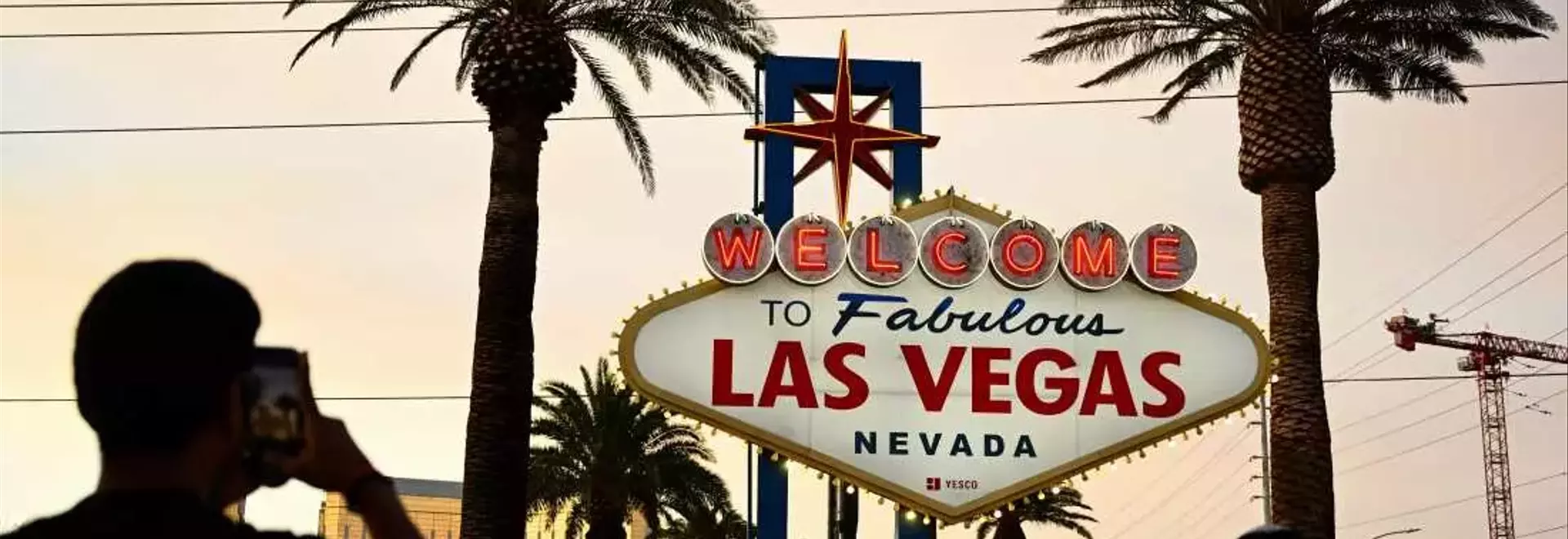
Las Vegas Tourism Downturn Signals Broader U.S. Economic Challenges
The vibrant tourism sector in Las Vegas, a key indicator of consumer confidence and the overall health of the U.S. economy, has recently seen a notable downturn. For six consecutive months, the city has recorded a year-over-year decrease in visitors, with June experiencing an 11.3% drop compared to the previous year. This trend, while partly attributed to the traditionally slower summer season and a quieter convention schedule, also appears to be influenced by broader economic factors such as trade disputes, evolving immigration policies, and persistent inflationary pressures affecting consumer spending patterns. Industry experts and economists are closely analyzing this shift, suggesting that what happens in Las Vegas often reflects larger national economic trends.
The current slump in visitor numbers marks a significant departure from the city's previously booming tourism. According to data from the Las Vegas Convention and Visitors Authority (LVCVA), June alone saw nearly 400,000 fewer visitors. This decline extends beyond just foot traffic; hotel occupancy rates and convention attendance have also fallen. Furthermore, Harry Reid International Airport reported a decrease of approximately 318,000 passengers in June, impacting both domestic and international travel. Even road traffic on Interstate 15, connecting California and Nevada, saw a 4.3% dip, as reported by the Las Vegas Review-Journal.
Economists emphasize the significance of Las Vegas's performance as a national economic barometer. Andrew Woods, director of the Center for Business and Economic Research at the University of Nevada, Las Vegas, highlights that the city's economic trajectory often foreshadows broader economic movements. The LVCVA's June report explicitly linked the tourism dip to a 'broader backdrop of persistent economic uncertainty and weaker consumer confidence.'
A major contributing factor to the decline in tourism, particularly international visitors, is perceived to be the impact of U.S. trade and immigration policies. Experts like Rachel J.C. Fu, chair of the Department of Tourism, Hospitality, and Event Management at the University of Florida, point to longer visa processing times and stricter entry requirements as deterrents for international travelers. Notably, there has been a significant drop in Canadian visitors, historically the largest international market for Las Vegas. This decrease is partly linked to ongoing trade disputes and tariffs, which have led many Canadians to reconsider travel to the U.S.
Beyond policy impacts, domestic economic conditions are also playing a role. Persistent inflation and general economic uncertainty are influencing consumer behavior. While many Americans still plan to travel, surveys indicate a trend towards more budget-conscious vacationing. This shift means that destinations like Las Vegas, which have seen rising costs in labor and services, may no longer be perceived as a 'bargain destination,' according to casino-industry consultant Oliver Lovat. He notes that while the initial post-pandemic tourism boom was unsustainable, current figures, though concerning, might not signal a long-term crisis, especially with major events scheduled to attract visitors later in the year.
The situation in Las Vegas serves as a critical lens through which to view the broader U.S. economic landscape. The willingness of consumers to spend on discretionary items and experiences, such as travel and entertainment, will be a key indicator of economic health. The current slowdown prompts questions about the durability of consumer confidence and the potential for shifts in global travel patterns and domestic spending habits. As the year progresses, the performance of the tourism sector in cities like Las Vegas will continue to offer valuable insights into the nation's economic resilience and its capacity for recovery.
