Jeff Bezos's Substantial Amazon Stock Sales Amidst Valuation Milestones
Amazon's founder, Jeff Bezos, has recently undertaken a notable divestment of company shares, coinciding with Amazon's achievement of a remarkable $3 trillion market valuation. This strategic move, which involved the sale of 15 million shares valued at about $4.07 billion, marks another instance in a series of substantial stock transactions by Bezos that have historically aligned with Amazon's significant financial milestones. Despite these large-scale sales, market sentiment, particularly among individual investors, remains largely positive, bolstered by Amazon's robust second-quarter performance and its ambitious expansion plans in cloud computing and artificial intelligence.
Amazon Founder Sells Billions in Stock as Company Reaches New Valuation Heights
In early August 2026, Jeff Bezos, the visionary behind Amazon, initiated the sale of approximately 15 million shares of Amazon stock through Morgan Stanley, a transaction valued at around $4.07 billion. This significant divestment occurred just days after Amazon joined an exclusive club of companies achieving a $3 trillion market capitalization on August 3, 2026. This sale represents Bezos's second-largest single Form 144 filing by dollar value, surpassed only by a $5.4 billion filing made in June 2025.
This latest sale is part of a broader pattern of increasing stock dispositions by Bezos. Between June and late July 2025, he completed a program involving 25 million shares, generating nearly $5.7 billion. Cumulatively, his sales since mid-2025 have reached approximately $9.7 billion. While this figure is considerable, it still falls short of his personal annual record of $13.5 billion in sales throughout 2024. The timing of these large sales, particularly as Amazon celebrates new valuation milestones, has drawn attention from financial observers across Wall Street.
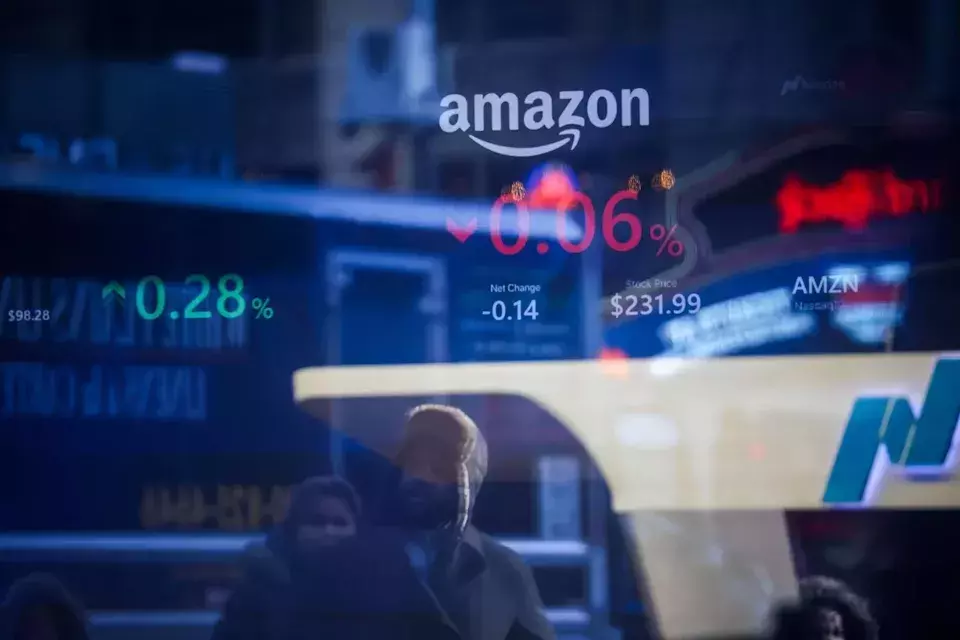
The current filing, submitted to the Securities and Exchange Commission, specifies that the transaction was pre-arranged under Rule 10b5-1 on November 14, 2025. This means the sale plan was established months before Amazon's recent $3 trillion valuation, suggesting a pre-determined financial strategy rather than a reaction to immediate market conditions. Despite this, Amazon's stock experienced a slight dip of over 2% on August 4, 2026, the day the sale was publicly disclosed, briefly falling below the $280 mark after closing at a record $284.02 just prior.
The market's underlying confidence in Amazon, despite the founder's sales, is rooted in the company's exceptional financial results. Amazon's second-quarter earnings report for 2026 surpassed analyst expectations, with revenue hitting $200.61 billion, a 20% year-over-year increase. This marked the first non-holiday quarter where Amazon exceeded $200 billion in revenue. A significant contributor to this success was Amazon Web Services (AWS), the cloud computing division, which reported revenue of $42.2 billion, a 37% year-over-year surge, and accounted for 61% of Amazon's total operating profit with a 39.4% operating margin. CEO Andy Jassy highlighted the 'booming' cloud business and accelerating enterprise adoption of artificial intelligence workloads as key drivers.
Looking ahead, Amazon projected third-quarter revenue between $197 billion and $202 billion, with an operating income forecast of $22.5 billion to $26.5 billion. The company also announced an increase in its full-year capital expenditure guidance to $220 billion from $200 billion, signaling aggressive investments in infrastructure. This strong performance and future outlook have led analysts from major financial institutions like Morgan Stanley, JPMorgan, Goldman Sachs, UBS, and Bank of America to raise their price targets for Amazon, emphasizing AWS growth, cloud margins, and AI-driven demand as primary factors. Retail investors have also shown increased bullish sentiment, with a 500% surge in message volume on platforms like StockTwits following the $3 trillion milestone and earnings report, indicating that many view Bezos's sales as a routine part of his financial planning rather than a cautionary signal.
The recent financial activities at Amazon and the strategic moves by its founder, Jeff Bezos, offer several compelling insights into the dynamics of a colossal tech enterprise and its leadership. Firstly, Bezos's consistent pattern of selling shares as Amazon reaches new valuation milestones underscores a methodical approach to wealth management and diversification, rather than a lack of confidence in the company. This systematic divestment, often planned months in advance through Rule 10b5-1, highlights the importance of transparent and pre-scheduled trading plans in mitigating concerns about insider trading. Secondly, the market's resilient, even bullish, reaction to these sales speaks volumes about the current strength of Amazon's fundamentals. The outstanding performance of AWS and the company's aggressive investment in AI demonstrate a clear growth trajectory that overshadows individual shareholder actions. It suggests that for many investors, Amazon's future is firmly rooted in its innovative services and expanding infrastructure, providing a strong foundation that transcends the personal financial decisions of its founder. This scenario emphasizes that in the modern corporate landscape, a company's robust operational performance and strategic vision can often dictate market sentiment more powerfully than the actions of even its most iconic leaders.
