IRS Revises Stance on Religious Institutions' Political Endorsements
News

IRS Revises Stance on Religious Institutions' Political Endorsements

authorBy Katty Kay
DateJul 08, 2025
Read Time2 min

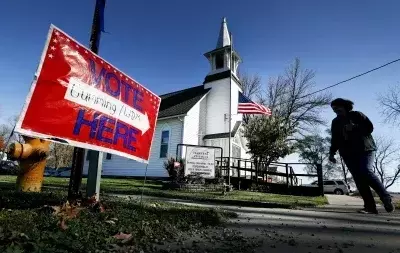
A notable change in policy from the Internal Revenue Service indicates that religious institutions may now openly support political candidates while retaining their tax-exempt status. This pivotal development, revealed in recent court documents, effectively reinterprets the Johnson Amendment, a regulation from 1954 that had previously restricted houses of worship and other non-profit entities from endorsing or opposing political campaigns.

For decades, the Johnson Amendment served as a legal barrier, preventing religious organizations from direct political endorsements. Despite its existence, enforcement by the IRS was often inconsistent. This policy shift comes after legal challenges from various religious groups, including the National Religious Broadcasters, who argued that the prior restriction infringed upon their First Amendment rights to freedom of speech and religious expression. The IRS's new guidance suggests that internal communications from a religious institution to its congregation regarding electoral politics, when delivered through established channels and viewed through a lens of faith, do not constitute prohibited political intervention, likening such discussions to a \"family conversation.\"

This reinterpretation by the IRS represents a significant recalibration of the relationship between religious freedom and political engagement. By classifying certain internal political discourse within religious organizations as permissible, the agency acknowledges the intertwined nature of faith and civic life for many. This adjustment empowers religious leaders and their congregations to engage more directly with the political landscape, reflecting a broader understanding of religious expression in the public sphere and potentially fostering a more vibrant civic discourse within religious communities.

More Articles
News
Restoring Public Confidence in Immunization: The Pediatricians' Approach
Amid shifting governmental vaccine policies and increasing public skepticism, pediatricians and public health experts are grappling with how to rebuild trust in immunizations. This article explores the challenges posed by new governmental directives and highlights the critical role of frontline healthcare providers in communicating accurate information and addressing parental concerns through empathetic and evidence-based discussions.
By Lester HoltJul 07, 2025
News
U.S. to Cease Temporary Protected Status for Hondurans and Nicaraguans
The United States Department of Homeland Security has announced the cessation of Temporary Protected Status (TPS) for thousands of individuals from Honduras and Nicaragua. This decision, impacting approximately 76,000 people, marks a shift in immigration policy, with authorities citing improved conditions in the Central American nations. TPS provides crucial protection against deportation and grants work permits to migrants from countries affected by severe crises.
By Ann CurryJul 07, 2025
News
Understanding the Enigma of Insomnia: A Journalist's 25-Year Battle and Scientific Insights
Pulitzer Prize-winning author Jennifer Senior shares her two-and-a-half-decade struggle with sleeplessness in a compelling new article for The Atlantic. Her piece delves into her persistent, often unsuccessful efforts to initiate sleep and explores the most recent scientific investigations into this widespread condition. This exploration offers solace to those grappling with similar nocturnal challenges.
By Ann CurryJul 07, 2025
News
Key Global Developments: Texas Flooding, Trade Tariffs, and Economic Shifts
This report examines the aftermath of devastating flash floods in central Texas, which claimed numerous lives and raised questions about local warnings. It also covers the Trump administration's impending implementation of new tariff rates and the ongoing ceasefire negotiations between Israel and Hamas. Additionally, the piece delves into the implications of FICO's decision to include buy-now, pay-later data in credit scores and offers health tips for blood sugar management.
By Lester HoltJul 07, 2025
News
The Fading Financial Brilliance: Assessing the Dollar's Recent Decline
The U.S. dollar is experiencing its most significant first-half decline since 1973, sparking concerns among investors about America's economic dominance. This downturn, influenced by a blend of political instability, rising national debt, and shifts in global market sentiment, prompts a critical examination of the dollar's future. While some see it as a temporary correction, others view it as an acceleration toward a multipolar financial world, challenging the dollar's long-held reserve currency status.
By Isabel AllendeJul 07, 2025