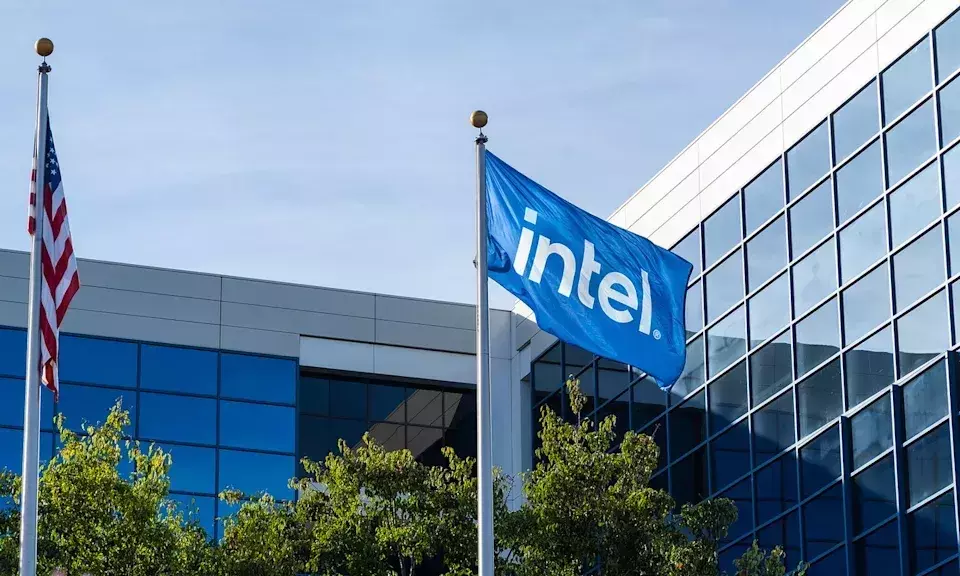
Intel Stock Soars: AI Demand and Rising CPU Prices Signal Strong Q2 Earnings
Intel, a prominent semiconductor giant, has witnessed a remarkable 357% surge in its stock value over the last year. This impressive growth is largely attributed to the company's robust financial performance and its expanding presence in the artificial intelligence (AI) chip market. Despite a recent 25% decline from its 52-week high, market analysts anticipate a strong rebound for Intel's shares, especially with its second-quarter 2026 earnings report approaching on July 23. This positive outlook is fueled by recent revelations from Taiwan Semiconductor Manufacturing (TSMC) concerning increased CPU demand in AI data centers and Intel's strategic decision to raise CPU prices due to supply shortages, signaling a potential for earnings exceeding expectations.
Intel Poised for Rally Amidst Surging AI-Driven CPU Demand and Strategic Pricing
As the much-anticipated second-quarter earnings report approaches on July 23, 2026, Intel (NASDAQ: INTC) is strategically positioned for a significant market rally. The company has recently experienced a substantial 357% increase in its stock value over the past year, thanks to its improving financial health and deepening engagement in the burgeoning AI chip sector. Although its stock has seen a temporary dip of 25% from its June 30 peak, the broader market sentiment remains optimistic due to key developments in the semiconductor industry.
A critical indicator of Intel's potential resurgence comes from Taiwan Semiconductor Manufacturing (TSMC), a leading foundry player. In its recent Q2 earnings call, TSMC highlighted a notable shift: the escalating demand for Central Processing Units (CPUs) within AI data centers, a trend driven by the emergence of 'agentic AI.' Historically, AI data centers primarily relied on Graphics Processing Units (GPUs) for intensive tasks like training large language models. However, agentic AI applications, which involve breaking down complex tasks into multiple sequential steps, are increasingly requiring CPUs to manage these intricate workflows and alleviate the computational load on GPUs. This strategic redistribution of tasks leads to a more balanced CPU-to-GPU ratio in data centers handling agentic AI, a significant departure from the GPU-heavy configurations seen in traditional LLM-centric AI data centers.
According to market research firm TrendForce, agentic AI data centers are expected to feature an equitable 50-50 split between CPUs and GPUs, a stark contrast to the 1:4 or 1:8 CPU-to-GPU ratios in LLM-focused centers. This development bodes exceptionally well for Intel, which holds a commanding 54% share of the server CPU market, as reported by Mercury Research. Despite ongoing competition from AMD, Intel is actively implementing measures to solidify its position in this rapidly expanding segment.
Industry projections are equally encouraging. AMD estimates that the server CPU market could achieve an annual revenue of $120 billion by 2030, demonstrating a compound annual growth rate exceeding 35% throughout the decade. Even if Intel maintains a conservative 50% market share, it could generate an impressive $60 billion in annual revenue from server CPU sales by 2030, a substantial increase from its 2025 Data Center and AI (DCAI) revenue of $16.9 billion. This segment, it's important to note, also encompasses revenues from other AI accelerators, such as custom processors.
Furthermore, analysts are anticipating a significant turnaround in Intel's profitability. Projections suggest earnings per share (EPS) of $0.22 for Q2, a considerable improvement from a loss of $0.10 per share in the same period last year. This estimate is only marginally above Intel's own guidance of $0.20 per share, implying a high probability of exceeding expectations. The company recently confirmed to Tom's Hardware its decision to increase CPU prices due to tight supply, a move expected to provide a crucial boost to its earnings. This strategic pricing adjustment, coupled with the burgeoning demand, sets the stage for Intel to regain significant momentum post-earnings report, presenting a compelling opportunity for investors.
The current market landscape presents a unique opportunity for Intel, as the convergence of increasing demand for CPUs in AI data centers and strategic pricing adjustments creates a fertile ground for growth. Investors should closely monitor the upcoming earnings report, as it could confirm Intel's trajectory towards sustained profitability and a dominant position in the evolving semiconductor market. The company's proactive measures to adapt to market shifts, particularly in the critical AI sector, underscore its potential for long-term value creation.
