Intel's Stock Surge Fuels AI Investments
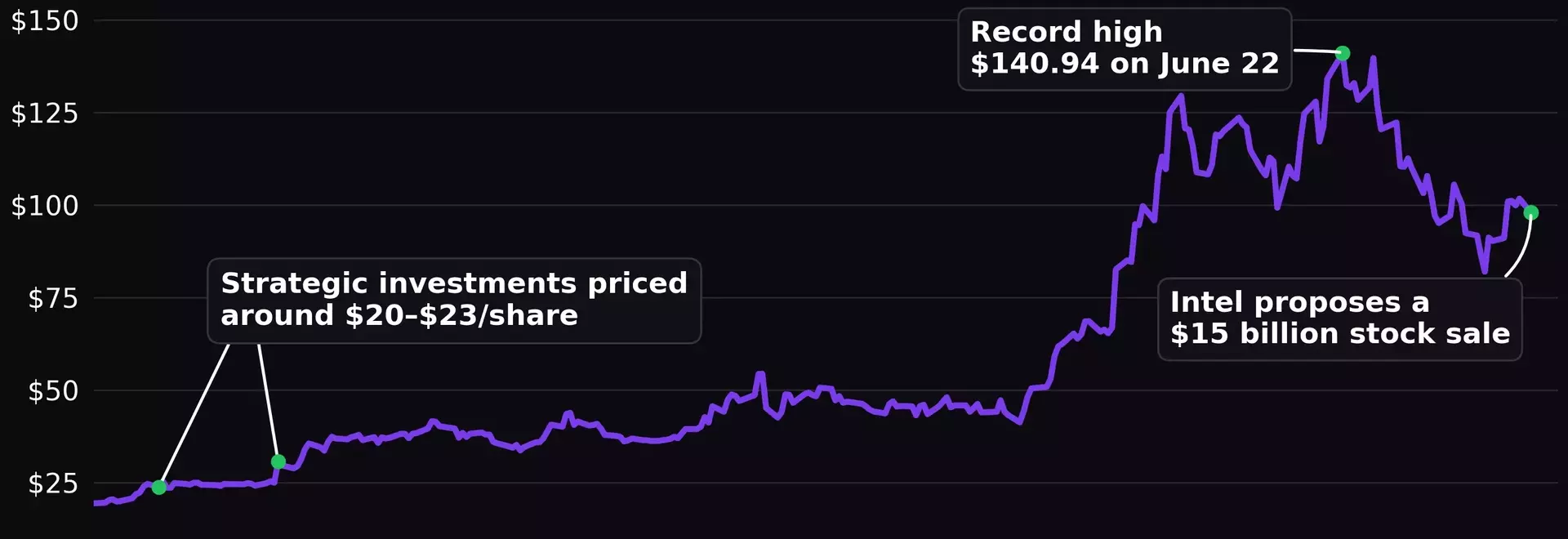
Intel's recent substantial increase in stock value is significantly contributing to its financial capacity for expansion into artificial intelligence. The company's impressive 165% stock surge this year provides a vital financial foundation, enabling it to fund its ambitious AI initiatives. This robust market performance allows Intel to navigate its investment strategies with greater flexibility and reduced shareholder impact, especially concerning new stock offerings.
The semiconductor giant recently disclosed intentions to secure $15 billion through the issuance of new shares to investors. This capital infusion is earmarked for essential expenditures, including manufacturing facilities, advanced equipment, operational costs, and other strategic requirements. While the issuance of new shares typically leads to dilution, where each existing share represents a smaller portion of the company, Intel's strong stock performance has mitigated this effect considerably.
At a recent closing price of approximately $98 per share, Intel would need to issue around 153 million shares to achieve its $15 billion fundraising target. This contrasts sharply with last year's scenario, when the U.S. government acquired its stake in Intel at $20.47 per share. To raise the same amount at that lower price point, the company would have needed to issue roughly 733 million shares, highlighting an almost 80% reduction in the number of shares required due to the current elevated stock price.
Intel's stock rebound has been remarkable, even when compared to the broader AI sector. Its 165% gain this year surpasses AMD's nearly 120% increase and Nvidia's 17%. Although Intel's shares have recently experienced a 31% dip from their June 22 peak, erasing over $200 billion in market value, the overall rally has positioned the company favorably to secure necessary funding.
The U.S. government's prior investment of $8.9 billion in Intel stock, part of a national effort to bolster domestic advanced chip manufacturing, adds a unique dimension to Intel's funding landscape. This backing, along with investments from entities like SoftBank and Nvidia, occurred at fixed prices ranging from $20 to $23 per share. While this support doesn't entirely insulate Intel investors from dilution, it underscores a vested interest from Washington in maintaining Intel's operational and competitive standing.
A year ago, securing sufficient capital posed a significant challenge for Intel. However, post-rally, the ease of access to capital has dramatically improved. The company has elevated its projected spending on factories, equipment, and long-term investments to approximately $20 billion for the current year. The proposed stock sale alone could cover three-quarters of this amount, although Intel has not specified the exact allocation of these funds toward construction or AI initiatives. Intel is actively engaged in developing sophisticated chip integration technologies and manufacturing services for external companies, placing it strategically within the evolving AI financing narrative, where large technology firms increasingly leverage various financial mechanisms to fund their AI infrastructure build-outs.
