Intel's Robust Q2 Performance and Strategic Options for Investors
Money

Intel's Robust Q2 Performance and Strategic Options for Investors

authorBy JL Collins
DateJul 26, 2026
Read Time2 min

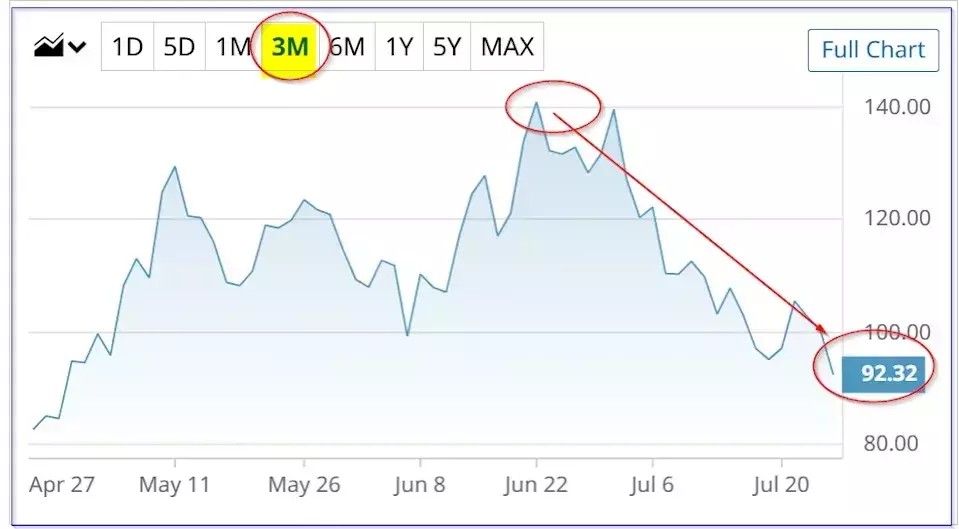
Intel Corporation recently reported its second-quarter financial outcomes, surpassing analysts' forecasts for both revenue and earnings. The company also achieved positive free cash flow (FCF), excluding a one-time payment. Despite a notable decline in its stock value, analysts remain optimistic about its future trajectory, citing strong FCF generation as a key driver for potential stock appreciation. This analysis delves into Intel's recent performance and explores a strategic options trading approach.

Intel's Q2 revenue saw a significant year-over-year increase of 25.4%, exceeding analyst predictions by 11.6%. This growth was widespread across all product categories, with standout performances in Foundry production and data center offerings, indicating robust demand for its chips, particularly from artificial intelligence applications. The company's non-GAAP earnings per share more than doubled to $0.42, far exceeding the $0.20 consensus. Furthermore, Intel's FCF for Q2 reached $4.45 billion, representing a substantial 27.59% of its $16.128 billion revenue. Over the past year, the trailing 12-month FCF margin has turned positive at 4.96%. Management's optimistic outlook for Q3, projecting $0.38 EPS, further reinforces confidence in sustained financial health.

Looking ahead, analysts have revised their 2027 revenue projections for Intel upwards to $70 billion. Based on an estimated 8.5% FCF margin, the company's FCF could approach $6.0 billion. Applying a 1.0% FCF yield, Intel's fair market value could reach $595 billion, representing a 27.8% upside from its current market capitalization. This translates to a price target of $118 per share. For investors seeking alternative strategies, selling out-of-the-money (OTM) puts presents an attractive opportunity. For instance, an $85.00 strike price put expiring in one month offers a premium of $5.90, yielding 6.94%. A more conservative option, the $83.00 strike price, provides a 5.963% yield with a lower risk profile. These put options allow investors to generate significant income or potentially acquire shares at a reduced price.

Intel's strong financial results and promising future outlook highlight its potential for growth and value creation. The strategic use of options, such as shorting out-of-the-money puts, offers a sophisticated avenue for investors to capitalize on this upside while managing risk effectively. This approach not only provides attractive yields but also presents opportunities for favorable entry points into a fundamentally sound company.

More Articles
Money
Maximizing Social Security Spousal Benefits: A Coordinated Strategy for Retirement Income
Many married couples overlook the substantial financial gains possible by strategically coordinating their Social Security spousal benefits. By having the lower-earning spouse claim benefits around their full retirement age, while the higher-earning spouse defers until age 70, households can significantly boost their combined monthly income, potentially reaching up to $10,000 annually. This approach optimizes benefits for both partners and establishes a robust financial safety net for the surviving spouse, making informed timing crucial for a secure retirement.
By JL CollinsJul 26, 2026
Money
Understanding the Financial Implications of Farm Development Rights for Retirees
Selling farm development rights can offer immediate financial relief but may unintentionally lead to increased Medicare premiums and other tax burdens for retirees. This article explores the complexities surrounding such transactions, including the impact on Social Security and Medicare's Income-Related Monthly Adjustment Amount (IRMAA), and presents alternative strategies like conservation easements. It emphasizes the critical need for professional financial and tax advice before making irreversible decisions, ensuring landowners are aware of both short-term benefits and long-term financial consequences.
By Vicki RobinJul 26, 2026
Money
AI Investment Showdown: Hyperscalers vs. Neoclouds
The AI boom has ignited a massive capital expenditure race, creating two distinct investment groups: AI hyperscalers like Microsoft, Amazon, Meta, and Alphabet, and specialized neocloud providers such as CoreWeave and Nebius. While neoclouds exhibit explosive growth fueled by debt for specialized GPU data centers, hyperscalers leverage their strong financial positions and existing cloud infrastructure, increasingly developing custom AI chips, positioning them as a more secure long-term investment in the evolving AI landscape.
By JL CollinsJul 26, 2026
Money
Navigating IVF Debt: A Couple's Financial Ordeal While Awaiting Their Baby
A couple, aged 37 and 39, find themselves in a precarious financial situation, burdened with $52,000 in debt from three rounds of IVF. With a baby due in four months, they face the daunting task of managing this debt alongside impending childcare costs. This article explores the challenges of limited insurance coverage for fertility treatments, the financial strain new parents experience, and strategies to manage significant debt, highlighting their efforts to consolidate finances before the baby's arrival.
By Mr. Money MustacheJul 26, 2026
Money
Big Tech Earnings and Central Bank Policies to Shape Summer Market Trends, Barclays Predicts
Barclays anticipates that the trajectory of equity markets this summer will largely depend on upcoming earnings reports from major technology companies and decisions made by central banks. Investors are currently weighing robust corporate performance against increasing macroeconomic challenges. The bank highlights that strong earnings have helped stocks endure higher bond yields and rising oil prices, but warns that the investment landscape is becoming more complex. Key factors include sustained inflation concerns driven by oil prices and pivotal central bank policy adjustments.
By Bola SokunbiJul 26, 2026