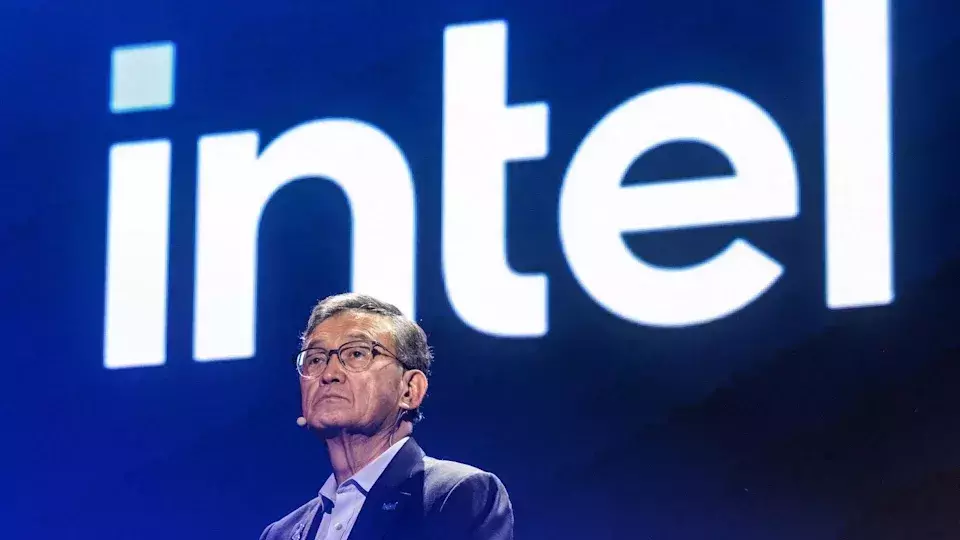
Intel's Impressive Q2 Performance and Goldman Sachs's Measured Outlook
Money

Intel's Impressive Q2 Performance and Goldman Sachs's Measured Outlook

authorBy Chika Uwazie
DateJul 25, 2026
Read Time2 min

Intel has recently unveiled its second-quarter financial results for 2026, marking a significant milestone with its most robust revenue increase in more than a decade and a half. The company's ongoing revitalization efforts, which have involved strategic adjustments in management, substantial investments in foundry capabilities, and various cost-cutting measures, appear to be yielding positive outcomes. These impressive figures serve as a strong affirmation of the strategies implemented to steer Intel back to a dominant position in the semiconductor industry.

Key financial highlights from Intel's second-quarter report include a total revenue of $16.1 billion, representing a 25% year-over-year surge. This performance notably surpassed market expectations, with non-GAAP earnings per share (EPS) of $0.42, nearly doubling the Street's estimate of $0.22. Furthermore, the company provided an optimistic third-quarter revenue guidance of $16.3 billion, exceeding both Goldman Sachs's and general market consensus. The Data Center and AI (DCAI) segment emerged as a primary growth engine, with its revenue climbing to $6.3 billion, a 59% increase from the previous year, fueled by strong demand for general-purpose servers and agentic AI solutions. Intel also made significant strides in its foundry ambitions, with its 18A-P process entering risk production and plans for high-volume manufacturing of Core Ultra Series 3 processors using advanced lithography technology.

Despite Intel's impressive financial turnaround and technological advancements, Goldman Sachs has maintained a 'Neutral' rating on the stock, accompanied by a $150 price target. The firm acknowledged Intel's exceptional quarter and its integral role as a beneficiary of increasing server demand and a key U.S. semiconductor manufacturer, especially with the support of the CHIPS Act. However, Goldman Sachs's cautious stance stems from its assessment that competing semiconductor companies like AMD, Nvidia, and Broadcom present more compelling risk-reward scenarios and clearer revenue predictability. The long-term success of Intel's investment thesis heavily relies on several factors, including the acceleration of its foundry business, enhanced market share in server CPUs, and more rapid improvements in gross margins, all of which continue to be under close observation.

Intel's journey demonstrates that strategic vision, innovation, and perseverance can lead to significant resurgence. The company's robust performance not only underscores its renewed vitality but also highlights its critical contribution to the broader technology sector's growth. By continually investing in groundbreaking technologies and adapting to market dynamics, Intel is poised to inspire future generations of innovators and solidify its legacy as a cornerstone of the digital age.

More Articles
Money
TIPS ETF: A Superior Inflation Shield for Retirees Compared to Gold
This article explains why Treasury Inflation-Protected Securities (TIPS) are a more suitable option than gold for retirees seeking inflation protection. It highlights that TIPS directly adjust to inflation, offer reduced interest-rate risk with short durations like VTIP, and provide tax efficiency. Unlike gold, which is volatile and non-income-producing, TIPS offer a conservative, income-generating, and reliable way to preserve purchasing power.
By Natalie PaceJul 25, 2026
Money
SpaceX Stock Plunge Sparks Broader Market Warning from Peter Schiff
Economist Peter Schiff views SpaceX's recent stock decline as a harbinger for other overvalued assets, including AI-related stocks and cryptocurrencies. Despite an investment-grade rating, bond markets had already signaled caution with increased yields on SpaceX debt, suggesting a re-evaluation of risk before the equity market reacted. This situation highlights a critical disconnect between bond market signals and equity investor sentiment, especially during periods of market hype.
By Ramit SethiJul 25, 2026
Money
Unexpected Healthcare Costs Challenge Rural Retirement Dreams
Many retirees seek affordability in small towns, but the closure of local healthcare facilities can turn a cost-effective retirement into a financial burden. This article examines the story of a retiree, Ray, who faced substantial medical expenses due to an unexpected health crisis in a rural area lacking immediate medical access, highlighting the often-overlooked gaps in Medicare coverage and offering strategies for better preparation.
By T. Harv EkerJul 25, 2026
Money
Strategic Roth Conversions: Maximizing Retirement Savings Before Medicare Impacts
Understanding the precise timing for Roth conversions is crucial for individuals nearing retirement, particularly those with substantial 401(k) balances. Medicare's two-year income lookback rule can significantly increase Part B premiums if conversions occur at age 63 or later. Strategic planning, including leveraging lower pre-Medicare income years and specific tax brackets, can help mitigate these surcharges. Additionally, new catch-up contribution rules for those aged 60-63 offer further tax-advantaged savings opportunities.
By Vicki RobinJul 25, 2026
Money
NVIDIA's Market Position: Bullish Momentum vs. Bearish Concerns
This article explores the contrasting perspectives on NVIDIA Corporation (NVDA) stock. While some analysts maintain a strong bullish outlook due to NVIDIA's dominant AI infrastructure, full-stack platform, and impressive financial performance, others, like investor Michael Burry, present a bearish thesis. Burry's concerns revolve around a potential market bubble, the cyclical nature of semiconductors, and the sustainability of NVIDIA's high gross margins amidst increasing competition. The article delves into these arguments, offering a comprehensive view of NVDA's current investment landscape.
By Mr. Money MustacheJul 25, 2026