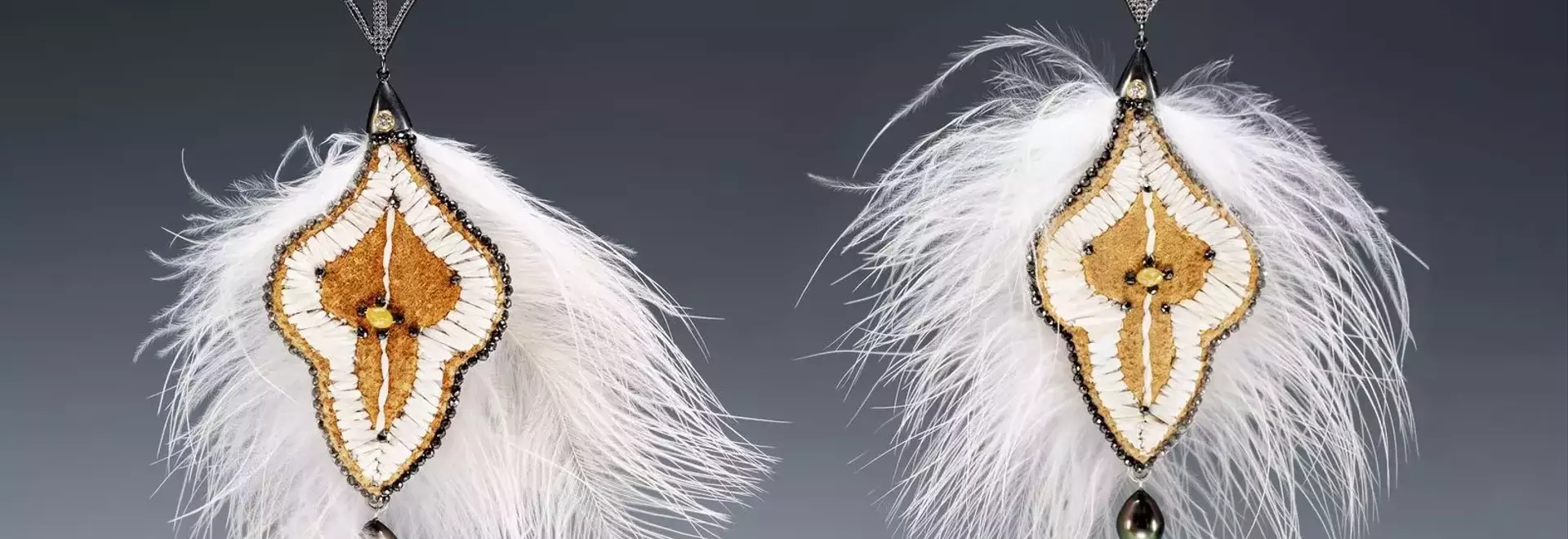
Indigenous Earrings: Cultural Narratives Through Adornment
Each August, the Santa Fe Indian Market in New Mexico becomes a vibrant hub where over a thousand Indigenous artists from more than 200 tribal groups showcase and sell their artistic creations. This annual event is not merely a marketplace but a dynamic display of Indigenous fashion, where attendees proudly exhibit their finest handcrafted Native pieces. Among these, earrings stand out as particularly potent cultural symbols, conveying deep-seated meanings and heritage.
Keri Ataumbi, a Kiowa jeweler renowned for her exquisite earrings that merge traditional elements like feathers and porcupine quills with precious stones, emphasizes the inherent value placed on adornment across all genders in her community. She explains that these pieces are highly communicative, serving as a visual language that expresses beliefs and personal stories to others.
As the United States commemorates its 250th anniversary of independence, the ongoing celebration of vibrant cultural pride, particularly through Indigenous artistry, gains significant relevance. Despite historical challenges, such as the Code of Indian Offenses from 1883 to 1978, which sought to suppress Native cultural and religious practices, Indigenous artists have continued to innovate using time-honored materials. These include porcupine quills, various types of beads, caribou hides, and sealskins, demonstrating an unbroken lineage of creativity and resilience.
Joe Big Mountain, a Mohawk, Cree, and Comanche artist specializing in quillwork earrings, underscores the enduring spirit of Native artistic practice, even when it was proscribed. He highlights how these traditions are passed down through generations, making earrings vital carriers of community identity and teachings. This intergenerational transfer of knowledge reinforces the cultural continuity and significance embedded in each piece.
In a notable feature from Vogue's summer 2026 issue, Deb Haaland, a member of the Laguna Pueblo tribe and former United States Secretary of the Interior, is pictured wearing titanium star earrings created by Pat Pruitt. Pruitt, a Laguna and Chiricahua Apache artist and a long-time participant in the Santa Fe Indian Market, views his designs as more than mere accessories. He describes them as 'markers of navigation, protection, and ancestral presence,' imbued with profound symbolic weight.
Jamie Okuma, an artist of Luiseño, Shoshone-Bannock, Wailaki, and Okinawan heritage, also creates highly symbolic earrings frequently seen at the Indian Market. Her distinctive shoulder-sweeping designs, crafted from tiered dentalium shells combined with floral beadwork motifs, honor both her ancestral background and the inherent beauty of the natural world. Okuma articulates a deep connection to wearing natural elements, viewing it as a continuation of traditional practices and a forward-looking affirmation of heritage.
Ultimately, Indigenous earrings transcend their function as mere ornaments. They embody centuries of cultural narrative, artistic innovation, and unwavering resilience. Each piece tells a story of heritage, identity, and the enduring connection between Native peoples and their traditions, reflecting a profound sense of self and community passed down through generations.
