The Illusion of an 'Easy' Stock Picker's Market: Why Low Correlations Don't Guarantee Success
Navigating the Nuances of Market Performance: Beyond Simple Correlations
The Deceptive Nature of Low Stock Correlations: A Closer Look at Market Dynamics
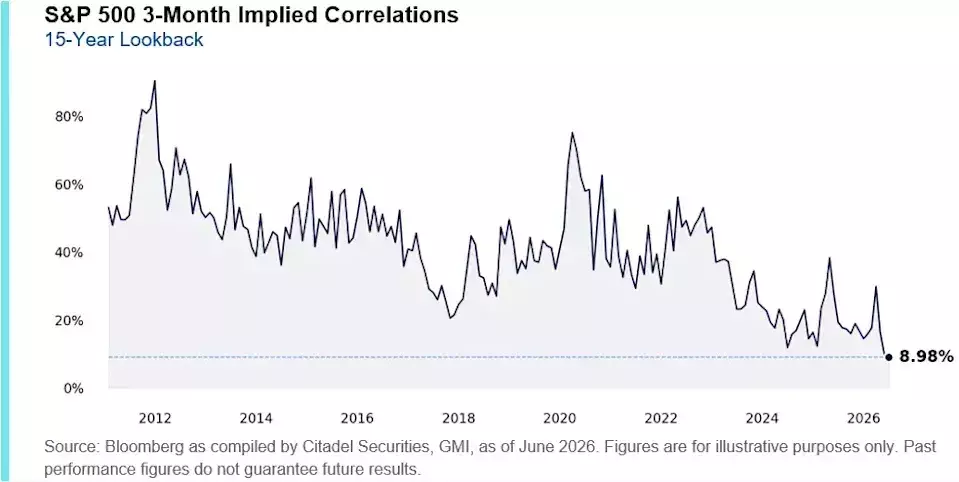
Recent observations highlight a significant drop in correlations among S&P 500 stocks, reaching levels not seen in over a decade and a half. This phenomenon implies that individual stocks are no longer moving in lockstep with the broader market, theoretically creating more opportunities for investors to identify and capitalize on individual stock performance. However, this increased divergence does not automatically translate into an easier path to outperformance; it merely signifies a different set of challenges and complexities for those attempting to beat market averages through selective stock investments.
The Double-Edged Sword of Divergent Stock Movements: Why Picking Winners Remains Difficult
While low correlations present a fertile ground for individual stock outperformance, they also amplify the risks of underperformance. In such an environment, incorrectly chosen stocks can significantly lag the market, negating any gains from successful picks. Recent market trends exemplify this, with certain sectors like memory and storage experiencing sharp declines, while others like financials, industrials, and healthcare have seen substantial growth. This stark divergence underscores the difficulty of consistently selecting winning stocks, as missteps can lead to substantial losses compared to a diversified market average.
Unpacking Active Fund Performance: A Persistent Struggle Against Benchmarks
Despite the prevailing low stock correlations over the past 15 years, data from S&P Dow Jones Indices consistently shows that the majority of actively managed large-cap equity funds have failed to outperform the S&P 500. This trend, with 2025 marking one of the worst years for active managers in recent history, challenges the notion that low correlations inherently benefit active stock selection. The persistent struggle of professional fund managers suggests that even in a market ripe with individual stock movements, the ability to consistently generate alpha remains elusive.
The Skewed Reality of Stock Returns: The Few Drive the Many
A fundamental challenge in stock picking lies in the highly skewed distribution of stock returns. Historical analysis reveals that only a small fraction of stocks generate above-average returns, and even fewer produce truly extraordinary gains that significantly impact overall portfolio performance. This inherent asymmetry means that unless an investor successfully identifies and invests in these rare high-performing companies, their portfolio is likely to underperform the broader market, regardless of the overall correlation levels.
Reinterpreting Analyst Ratings: A Case for Diversification
A prevalent observation in financial markets is the overwhelming number of "buy" and "hold" recommendations from analysts, with very few "sell" ratings. While this might superficially appear to be a disservice to investors seeking critical insights, an alternative perspective suggests that these pervasive positive ratings can inadvertently encourage diversification. By prompting investors to hold a broad portfolio of various stocks, this trend increases the likelihood of capturing the exceptional returns generated by a few market-leading companies, thereby improving overall portfolio performance. This approach acknowledges the difficulty of pinpointing future winners and instead leverages the power of broad market exposure.
The Enduring Challenge: Stock Picking in a Complex Market
Ultimately, the idea that a "stock picker's market" makes success more attainable is a simplification. While low correlations create more varied individual stock movements, the fundamental challenges of market-beating performance persist. Investors must recognize that inherent market complexities, including the skewed distribution of returns and the consistent underperformance of active managers, demand a nuanced and often diversified approach rather than relying solely on the hope of identifying singular winning stocks. Sound investment principles, informed research, and a clear understanding of market dynamics remain crucial for navigating the investment landscape.
