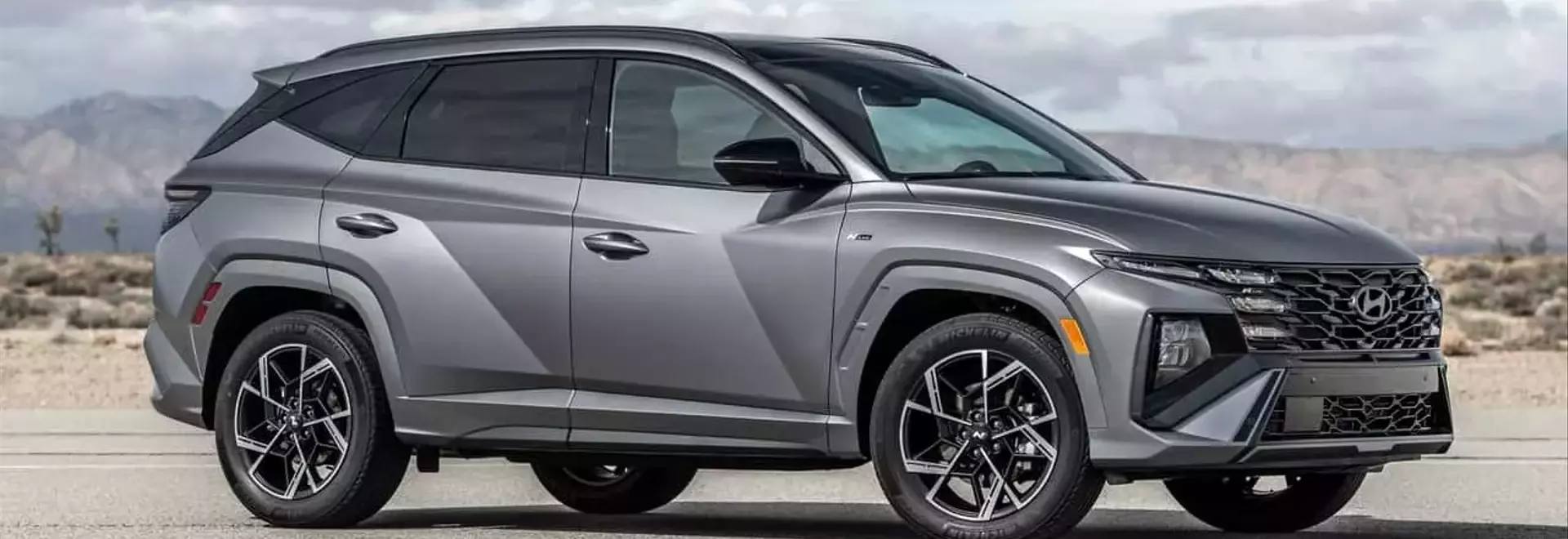
Hyundai Recalls 96,000 SUVs for Faulty Displays
Cars

Hyundai Recalls 96,000 SUVs for Faulty Displays

authorBy Dan Neil
DateJun 29, 2026
Read Time2 min

Hyundai has announced a recall affecting a significant number of its 2025-2026 Tucson SUV models, specifically 96,310 vehicles. This action is prompted by a software anomaly that can lead to the instrument panel display unexpectedly going blank while the vehicle is in operation. This critical malfunction affects the primary display responsible for showing vital driving information, posing a safety risk to drivers.

The root of the problem lies in an intermittent communication issue between the instrument panel and the head-up display, causing the system to reboot unpredictably. Such an event could temporarily obscure essential data like the speedometer and fuel gauge, directly contravening federal vehicle safety standards. Hyundai's investigation into this matter began in July 2025, following a customer complaint about the display's erratic behavior, and concluded with the decision to issue a recall after identifying a faulty connection in the head-up display's external wiring harness.

Addressing the defect, Hyundai will notify owners of the affected Tucson models, including hybrid variants, instructing them to visit a dealership for a software update to the instrument panel. The company is also actively developing an over-the-air update to provide a more convenient solution for customers once it becomes available. Fortunately, Hyundai reports no incidents of accidents, fires, injuries, or fatalities directly linked to this display issue, underscoring the proactive nature of this recall to ensure driver safety.

This incident highlights the growing complexities in modern automotive technology, where integrating sophisticated software systems into vehicles can introduce unforeseen challenges. The recall by Hyundai for the Tucson's instrument panel display, though concerning, reflects the industry's commitment to continuous improvement and safety. It serves as a reminder that even with advanced systems, vigilant monitoring and swift corrective actions are paramount to maintaining consumer trust and ensuring the well-being of all road users. As vehicles become increasingly reliant on digital interfaces, ensuring their flawless operation is not just a matter of convenience, but of fundamental safety and reliability.

More Articles
Cars
Hyundai Considering Hybrid-Only Models Following Toyota's Success
Hyundai is exploring the possibility of transitioning several of its mainstream models to hybrid-only powertrains, similar to Toyota's successful strategy. This move is driven by the perceived benefits of hybrids over traditional gasoline cars, including improved fuel efficiency. While some smaller, more affordable models might retain internal combustion engines, larger vehicles like the Sonata, Santa Fe, and Palisade are strong candidates for this shift. This reflects a broader industry trend towards electrification.
By Brock YatesJun 29, 2026
Cars
Nissan Frontier to Offer Patriotic 'Stars and Stripes' Badge for 2026 Model Year
To commemorate the United States' 250th anniversary and the production of its one-millionth Frontier pickup in Mississippi, Nissan will introduce an exclusive 'Stars and Stripes' tailgate badge for the 2026 Frontier. This special-edition badge, featuring a monochromatic American flag design, will be available only on the high-end Pro-4X model, with a limited production run of 2,500 units.
By Brock YatesJun 29, 2026
Cars
Mazda Foresees Continued SUV Market Dominance
Mazda remains confident in the sustained growth of the SUV market, despite a minor resurgence in sedan popularity. The automaker's program manager, Hiroshi Ozawa, asserts that global demand for SUVs will continue to climb, citing strong pre-orders for new electric crossovers like the CX-6e over electric sedans.
By Edward LohJun 29, 2026
Cars
Hyundai Teases Wider, More Powerful Next-Gen Elantra N
Hyundai is generating excitement for the upcoming Elantra N, hinting at a more aggressive design with wider fenders and a potentially larger 2.5-liter engine. The current Elantra, already broader than its predecessor, will serve as the foundation for this performance-focused model, expected to debut around 2027 with over 300 horsepower.
By Akira MarutaJun 29, 2026
Cars
Mazda's Next-Gen Miata: The Final Chapter for Gasoline Engines
Mazda hints that the upcoming fifth-generation Miata (MX-5) will be the last to feature a traditional gasoline engine. Expected to launch around 2028, this model will boast a larger 2.5-liter Skyactiv-Z engine, aiming to retain its lightweight, analog driving experience while navigating evolving emissions regulations, particularly in Europe.
By Chris HarrisJun 29, 2026