Hyperscalers' AI Spending vs. Stock Performance
The substantial capital outlays by major AI companies, known as hyperscalers, are drawing increased scrutiny from investors. While these firms are pouring billions into artificial intelligence infrastructure, the expected returns on these investments in terms of revenue growth and profitability have yet to fully materialize, leading to skepticism about their current stock valuations. The continuous aggressive spending on AI, particularly by the 'Magnificent Seven' tech giants, is significantly impacting their financial health and market perception.
A critical look at the current financial landscape reveals that a large portion of the 'Magnificent Seven' companies are underperforming the broader market this year. This trend indicates that the market is struggling to reconcile the enormous AI-related capital expenditures with tangible financial gains. Analysts are closely watching upcoming earnings reports for clearer indications of how these investments are translating into improved sales and robust free cash flow, which are essential for sustainable growth and investor confidence.
The Growing Discrepancy Between AI Investment and Market Returns
The tech industry's leading hyperscalers are engaging in unprecedented levels of capital expenditure, primarily driven by the burgeoning demands of artificial intelligence. Projections indicate that this year alone, AI spending could surpass $700 billion. However, this aggressive investment surge has not been met with commensurate gains in sales and profitability, raising alarms among investors. Many market participants are questioning the efficiency of these vast expenditures, particularly as a significant number of the top technology companies, often referred to as the 'Magnificent Seven,' have lagged behind the S&P 500 in terms of stock performance throughout the current year. This underperformance suggests a disconnect between the scale of investment and its immediate financial impact, prompting a reevaluation of future growth prospects for these tech giants.
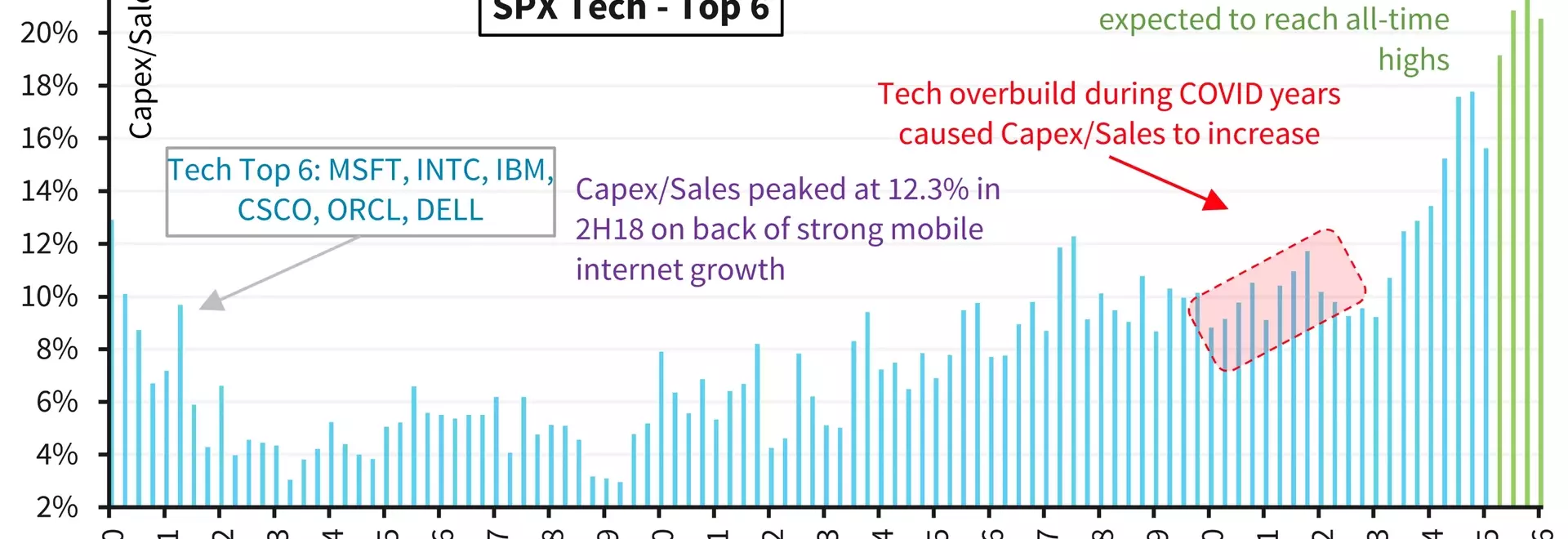
This substantial financial commitment to AI infrastructure, encompassing data centers and high-end graphics processing units, is causing a noticeable drain on corporate free cash flow. Barclays strategists have highlighted that the ratio of capital expenditures to sales is set to reach an all-time high in the third quarter of this year, underscoring the intensified spending without a proportional increase in revenue generation. Wall Street's patience is wearing thin as investors seek clearer evidence of how these massive outlays will translate into concrete financial benefits and improved shareholder value. The collective forward free cash flow of the 'Magnificent Seven' is anticipated to decline significantly from its 2024 peak, signaling the financial strain imposed by these AI investments. Market experts are therefore adopting a cautious stance, emphasizing the need for these companies to demonstrate how their extensive AI spending will convert into substantial earnings and sustained growth in the near future.
Investor Skepticism Amidst High Capital Expenditures
Investor sentiment towards major technology companies is becoming increasingly cautious as these firms continue to allocate substantial capital towards artificial intelligence initiatives. The market is expressing growing impatience with the colossal investments in AI, which are projected to reach staggering figures this year. Despite the visionary potential of AI, the financial community is concerned that these expenditures are not yet yielding the expected returns on sales and, consequently, on overall profits. This hesitation is reflected in the market performance of several prominent tech companies, with many of the so-called 'Magnificent Seven' failing to keep pace with the broader market index in the current year, with only a few exceptions demonstrating stronger growth.
The intensive and continuous infrastructure development required for AI, including the establishment of data centers and the acquisition of advanced GPUs, is significantly depleting corporate cash reserves. This aggressive spending spree has notably reduced the collective free cash flow of the 'Magnificent Seven,' with forecasts predicting a sharp decline from previous highs. Analysts are urging these tech powerhouses to articulate a clear strategy for monetizing their AI investments, emphasizing the importance of translating these expenditures into tangible financial results rather than merely incurring costs. As the earnings season approaches, market strategists are advocating for a conservative approach regarding these tech stocks, stressing that future stock performance will largely depend on clear guidance, improved free cash flow, and a demonstrable path to profitability derived from their AI endeavors.
