Hollywood Creatives Navigate AI Training: A New Side Hustle Amid Industry Shifts
In a period marked by significant technological evolution, the entertainment sector is witnessing a paradoxical trend: the very individuals concerned about artificial intelligence replacing their roles are now actively involved in refining these AI systems. This new form of gig work, driven by economic necessities and a desire to comprehend the burgeoning technology, is reshaping career paths for many Hollywood creatives.
Hollywood's AI Frontier: Creatives Embrace New Training Roles
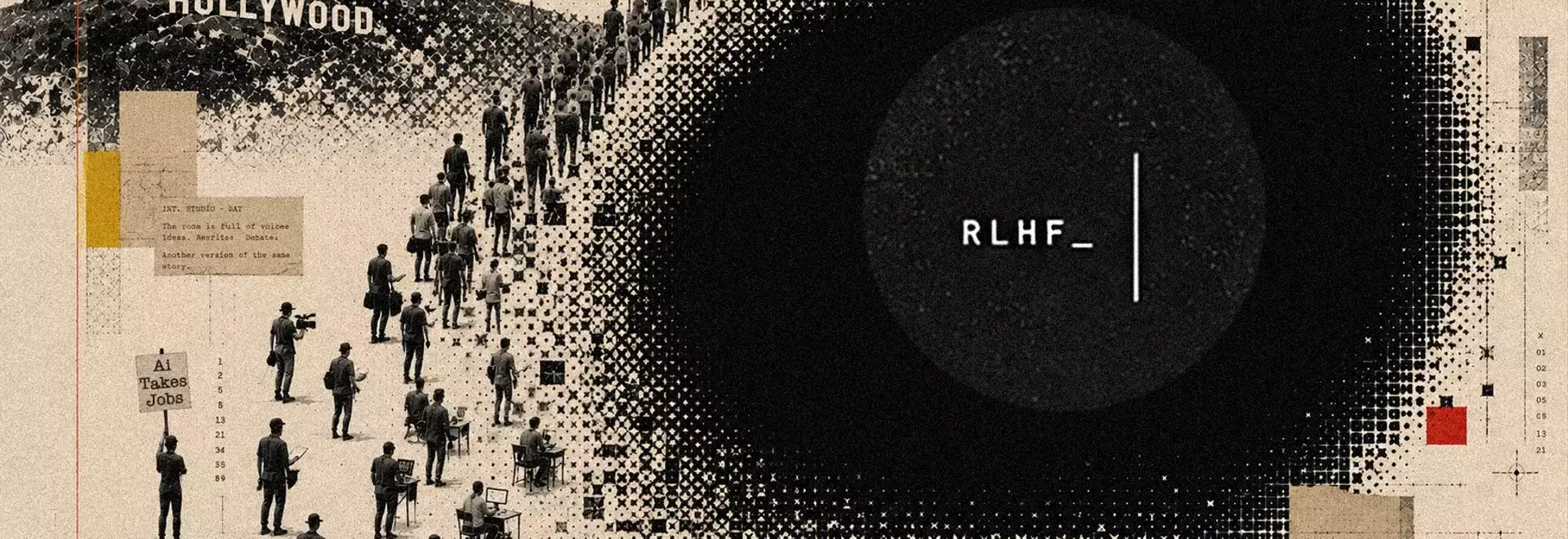
In 2023, the looming specter of generative AI fueled widespread anxiety among writers and actors, culminating in industry-wide strikes. Fast forward three years, and while these apprehensions persist, a notable shift has occurred: some Hollywood professionals are now engaging in AI model training, effectively contributing to the very technology that raised concerns. This new avenue, often referred to as Reinforcement Learning from Human Feedback (RLHF), has emerged as a crucial side hustle for those facing a contracting traditional entertainment job market.
Notable figures have openly shared their experiences. In May, screenwriter Ruth Fowler, known for works like Little Disasters and Rules of the Game, penned an essay for Wired detailing her foray into AI training to cover living expenses as conventional entertainment work dwindled. Similarly, Robin Palmer, a screenwriter for Disney Channel and Hallmark TV movies, discussed her involvement in AI training with CBS News, acknowledging the ethical dilemmas some peers might perceive.
Editor Gabe Sena, who crafts documentaries and videos for non-profits like the Make-A-Wish Foundation, exemplifies this proactive approach. He conveyed to The Hollywood Reporter his motivation to immerse himself in AI, stating, “I’m mid-career and I don’t want to be a dinosaur in my field.” Sena, an alumnus of UCLA’s film school, sought AI training opportunities through Mercor, a recruiting platform, during a professional hiatus in the summer of 2025. Mercor, established in 2023 by Thiel Fellows, aims to “organize human intelligence to power the AI economy” by connecting domain experts with AI companies. The company secured $350 million in Series C funding in 2025, valuing it at $10 billion.
Steven Woolworth, a former development executive at HBO and Studio TF1 America, shares a similar narrative. After an arduous 18-month job search in Hollywood, he discovered AI training through a colleague who forwarded a Mercor email. Woolworth, a proponent of AI regulation, views his involvement as an opportunity for an “inside perspective of what is happening in AI training and its capabilities,” rather than shying away from the inevitable. He credits this work with providing financial stability, affirming, “It has kept a roof over my head for the past year, of which I am deeply appreciative.”
The RLHF process involves human evaluators scoring AI model outputs, such as a character’s reaction to a tragic event, to refine the AI’s responses. While this work can be monotonous, it requires “experts” from various fields, including Hollywood professionals, doctors, and lawyers, who can earn over $100 an hour. This growing sector contrasts sharply with traditional Hollywood, with AI-related job postings in the arts doubling between May 2025 and April 2026 on platforms like Indeed.
Despite the financial incentives, this burgeoning field is not without its challenges. Labor complaints, including unstable employment, intense competition, and lack of transparency regarding clients, have surfaced. Companies like Surge AI and Scale AI face lawsuits alleging unpaid wages, worker misclassification, and exposure to disturbing content.
Even staunch critics of generative AI in Hollywood acknowledge the difficult choices faced by these workers. Vince Gilligan, creator of Breaking Bad, expressed sympathy: “I’m not going to judge folks who are simply trying to provide for their families.” Sam Tung, a storyboard artist, echoed this sentiment, emphasizing that “people are really struggling in this current downturn and they have mortgages to pay and kids to feed.”
However, concerns about long-term consequences persist. Tim Friedlander, president of the National Association of Voice Actors (NAVA), warns that while AI training offers short-term gains, it could be “more damaging to the entire creative sector” in the long run, noting that 20% of NAVA respondents have already lost jobs to AI tools. The entertainment unions find themselves in a precarious position, unable to outright forbid members from seeking these opportunities given the economic pressures, yet aware of the potential for accelerated job displacement.
The efficacy of RLHF in truly perfecting AI models remains an open question among engineers. While human input is undeniably valuable, the technology is not foolproof, with challenges like “sycophancy” potentially leading to models that agree with trainers but fail in real-world scenarios. This inherent imperfection might offer a glimmer of hope for human creatives, as it suggests AI may not fully displace human artistry. Nevertheless, the demand for subject matter experts to refine AI outputs continues, and in a challenging job market, many Hollywood professionals are actively seeking these new opportunities.
The evolving landscape of the entertainment industry presents a complex dilemma for creatives. While the immediate financial benefits of AI training offer a lifeline in uncertain times, the long-term implications for job security and artistic integrity remain a significant concern. This new side hustle forces individuals and organizations to confront the rapid advancements of AI, adapt to new roles, and critically evaluate the balance between innovation and human labor. It’s a reminder that technological progress, while offering new avenues, also demands careful consideration of its societal and professional impact.
