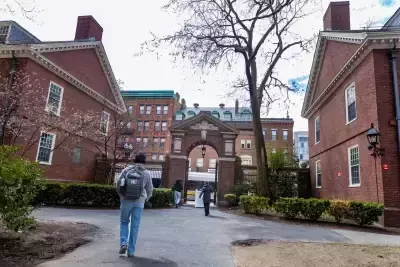
Harvard's Standoff with the Trump Administration: A Legal Battle Over Funding and Academic Freedom
Harvard University and the Trump administration are embroiled in a significant legal dispute, with the university challenging the government's decision to withhold over $2 billion in federal research grants. This standoff centers on allegations of antisemitism on campus and the administration's subsequent funding freeze, which Harvard asserts is an unlawful overreach into academic autonomy. The outcome of this case carries immense implications for higher education institutions across the nation, as many are closely observing the potential precedent it could set regarding federal control over university affairs.
The central arguments revolve around whether the administration followed proper legal procedures in implementing the cuts and if there is a legitimate connection between the alleged campus issues and the cessation of critical research funding. Harvard contends that the move violates the Administrative Procedure Act and impinges on its First Amendment rights to academic freedom. Conversely, the administration maintains that Harvard's alleged failure to combat antisemitism justifies the funding withdrawal. This complex legal confrontation underscores fundamental questions about institutional independence, federal oversight, and the imperative of safeguarding vital scientific and medical advancements.
The Legal Foundations of Harvard's Challenge
Harvard University is actively pursuing legal recourse against the Trump administration's decision to suspend over $2 billion in federal grants, asserting that this action constitutes an unlawful interference with its academic operations. The university's legal team contends that the administration's move to freeze these substantial funds, critical for numerous research initiatives, is a coercive tactic designed to dictate academic decision-making. At the heart of their argument is the claim that the administration bypassed established legal protocols for withdrawing federal funding related to discrimination concerns, specifically violating the Administrative Procedure Act. This act outlines strict guidelines for federal agencies to follow when altering procedures, which Harvard argues were not adhered to.
Furthermore, Harvard asserts that there is no logical correlation between the alleged antisemitism on campus and the decision to halt funding for vital medical, scientific, and technological research. The university emphasizes that these research projects are crucial for national well-being, contributing to advancements in various fields, including disease prevention and national security. They argue that the government's actions also infringe upon the First Amendment, suggesting that the administration is attempting to impose its ideological views by interfering with the university's internal affairs, including hiring practices and student admissions. The university's lawyers are pushing for a swift resolution through summary judgment, though the prospect of immediate finality remains uncertain given the high likelihood of appeals.
The Administration's Counterarguments and Wider Implications
The Trump administration's position is firmly rooted in its accusation that Harvard University has not adequately addressed instances of antisemitism on its campus, thereby failing to comply with Title VI of the Civil Rights Act. Following Harvard's refusal to concede to a set of demands, the administration's Joint Task Force to Combat Anti-Semitism, a multi-agency body, moved to freeze the federal funds. A White House spokesperson underscored this stance by declaring an end to what they termed the "gravy train of federal assistance" to institutions that, in their view, do not meet basic conditions for accessing taxpayer funds, particularly those that enrich "overpaid bureaucrats" while struggling American families bear the cost. The government argues that Harvard's alleged fostering of antisemitism and engagement in discriminatory practices through diversity, equity, and inclusion (DEI) initiatives justify the withdrawal of these research dollars.
Legal experts acknowledge the federal government's inherent authority to impose such measures but question whether the Trump administration employed this power appropriately within the legal framework. The case's broader implications extend far beyond Harvard, as countless other academic institutions nationwide have also experienced similar funding freezes. Colleges and universities across the higher education landscape are closely monitoring the proceedings, recognizing that the outcome will profoundly influence the extent of federal governmental oversight and control over their operations. The dispute directly impacts over 900 research projects at Harvard, including critical studies on Alzheimer's, cancer, and national security, jeopardizing years of work and the well-being of participants, such as children in clinical trials for severe allergies. The prolonged legal battle, likely to involve appeals up to the Supreme Court, suggests that a definitive resolution is still a distant prospect.
