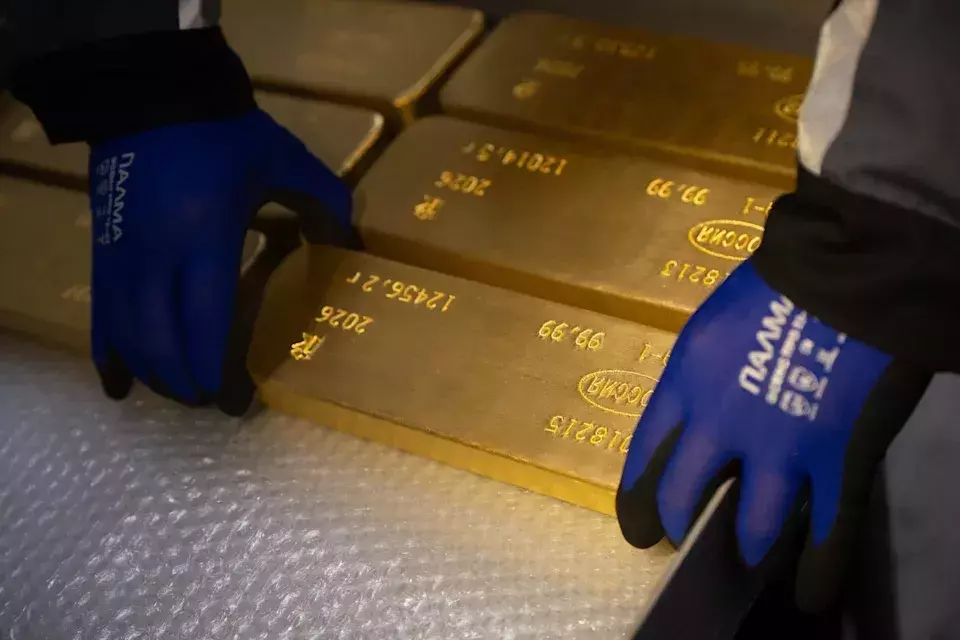
Gold's Tumultuous Journey in 2026: A Deep Dive into Market Dynamics
The gold market has experienced an exceptionally turbulent year, characterized by dramatic price swings that have left many investors seeking clarity on its future direction. From soaring to unprecedented levels to enduring sharp corrections, the precious metal's movements are currently under intense scrutiny as market participants attempt to decipher reliable indicators. This article delves into the critical elements influencing gold's erratic path, highlighting the interplay between shifting monetary policy expectations, global central bank activities, and the perspectives of prominent financial experts, all of which contribute to the metal's complex and captivating narrative.
Early in 2026, gold reached a remarkable peak of approximately $5,589 per ounce on January 28th, only to subsequently face a significant retraction, shedding over 18% from its record valuation. Despite this substantial pullback, the metal's price remains considerably above its annual nadir. A notable resurgence occurred recently, with gold recording its most impressive weekly performance since January, marking a gain exceeding 7%. This rally was primarily fueled by economic data that suggested a softer labor market and more subdued inflationary pressures than anticipated, prompting a reassessment of the Federal Reserve's likelihood of implementing a rate hike in September. These developments, as reported by CNBC, further accelerated an already elevated trading environment for gold-related assets. Pippa Malmgren, a former Special Assistant to President George W. Bush and member of the National Economic Council, articulated a prevailing sentiment: "Gold is the new gold," attributing its enduring appeal to concerns over unchecked U.S. fiscal spending and sluggish global growth, both of which she believes point towards a continuation of inflationary trends.
A fundamental pillar supporting gold prices continues to be the consistent accumulation by central banks worldwide, with China emerging as a leading force in this trend. This ongoing acquisition, according to Malmgren, signifies a progressive erosion of confidence in conventional fiat currencies. Patrick Kennedy, founder of AllSource Investment Management, cited Caixin Global in noting that the People's Bank of China (PBOC) augmented its gold reserves by 19.9 tons in July, marking its largest monthly increase since late 2023 and extending its purchasing streak to an impressive 21 consecutive months. Billionaire hedge fund manager John Paulson, a long-term proponent of gold, posits that the metal's current rally is still in its nascent stages. His conviction stems from diminishing trust in paper money and persistent, unchecked government expenditures, as conveyed by CNBC. Similarly, Goldman Sachs aligns with this rationale, projecting that central banks will maintain a monthly gold acquisition rate of approximately 60 tonnes throughout 2026, driven by their strategic diversification away from the U.S. dollar. This marks a significant shift from earlier in the year, when elevated interest rate expectations triggered billions of dollars in outflows from gold exchange-traded funds (ETFs), a trend that has since decelerated.
Expectations surrounding the Federal Reserve's interest rate decisions have undergone rapid adjustments. Traders are currently assigning roughly a 40% probability to a September rate hike, a notable decrease from previous estimates following the release of the latest inflation figures, as indicated by the CME Group's FedWatch tool and reported by CNBC. Reduced probabilities of rate increases, coupled with a weakening dollar, typically create a favorable environment for gold by diminishing the opportunity cost associated with holding a non-yielding asset. Nick Cawley, an analyst contributing to UK bullion dealer Solomon Global, observed that the odds of a Fed rate hike were already declining sharply prior to the inflation data's publication. However, Kennedy urged caution against overinterpreting this shift, reminding that the Fed maintained steady rates throughout the year, and Wednesday's Consumer Price Index (CPI) report largely met economists' expectations for both headline and core inflation. The entry of new Fed Chair Kevin Warsh introduces an additional layer of complexity. Eugenia Mykuliak of B2Prime Group characterized Warsh's initial communications as "cautious and often ambiguous," suggesting that this uncertainty has prompted a reallocation of funds from equities to gold. During the Fed's July 29 meeting, policymakers opted to keep rates unchanged, despite three officials advocating for a hike, as detailed by CNBC. This incident is not the first instance where precious metal markets have reacted acutely to interpretations of Warsh's policy stance.
Investors seeking exposure to the gold market are exploring various avenues beyond direct metal ownership. Some traders are identifying value in gold mining equities. Vince Stanzione, an independent trader and author of "The Millionaire Dropout," highlighted companies such as AngloGold Ashanti and S&P 500 constituent Newmont as examples of entities trading at single-digit forward earnings multiples while simultaneously offering attractive dividends. For retail investors, equity-focused funds like VanEck Gold Miners and VanEck Junior Gold Miners, or bullion-centric ETFs such as SPDR Gold Shares and iShares Gold Trust, provide more direct exposure to gold price fluctuations. Bank of America has expressed a preference for larger producers within the sector, including Newmont, particularly during periods of price retraction, over smaller mining operations. Gold mining stocks inherently offer greater leverage compared to the metal itself; when gold prices appreciate while operational costs remain stable, profit margins can expand at a faster rate than the price of gold. This dynamic explains why Kennedy views miner funds as a supplementary investment rather than a primary portfolio component. Notably, silver has also mirrored gold's upward trend, experiencing its most significant weekly gain since February.
The gold market's unpredictable nature in 2026, oscillating between record highs and significant downturns, underscores the complex interplay of macroeconomic factors. The reassessment of Federal Reserve policies, bolstered by central bank purchases and shifting investor confidence in traditional currencies, has fueled a recent rally. Experts anticipate continued volatility, driven by ongoing concerns about fiscal health and inflation, suggesting that the precious metal's dramatic performance may not yet be concluded. Both direct gold investments and related equities are being closely watched as indicators of future market direction.
