A Glimpse into the World of Lego Skylines: A City Builder's Dream
Following the recent unveiling of Lego Skylines by Paradox and Iceflake Studio, an in-depth examination of an early build provided extensive insights into this highly anticipated city-building game. The preview encompassed both initial and advanced gameplay scenarios, offering a comprehensive understanding of its campaign structure, the complexity of its simulation dynamics, and, critically, its customization capabilities. Despite some minor concerns regarding late-game equilibrium, the game's focus on smaller-scale construction and an enhanced emphasis on aesthetic personalization positions Lego Skylines as a promising and distinctive spin-off in the genre.
Iceflake Studios has previously indicated a robust campaign mode for Lego Skylines. The introductory scenario places players at the beginning of their journey as master builders, on an island inhabited by a family seeking rural tranquility but finding only desolation. The initial tasks involve constructing a residence, enhancing its exterior, and establishing essential amenities such as shopping facilities and workplaces, thereby enabling the nascent community to thrive.
For those familiar with city-building games like Cities: Skylines, the core distinction of Lego Skylines immediately becomes apparent. Unlike its counterparts, Lego Skylines places greater importance on individual households rather than expansive commercial and residential zones. While broader urban planning remains crucial, citizen requirements significantly influence the city's development. The campaign mode engages players with various requests from residents and local dignitaries, which gradually shapes the town's fundamental layout, offering a more accessible entry point to city building compared to the often steep learning curve of Cities: Skylines.
Every household presents a set of fundamental needs that players must address, including ensuring employment opportunities for all residents—a concept that, if only, mirrored real life. These needs evolve dynamically, much like in the mainline Skylines series, with families requiring childcare and seniors needing appropriate facilities. These elements, from preliminary observations, function similarly to the established mechanics of the main series.
A particularly exciting aspect of Lego Skylines, and where it significantly diverges from other Skylines titles, lies in the 'appeal' category for houses. Decorative items are the primary means of satisfying these appeal needs, categorized into themes such as cozy, nature, formal, and industrial. Players can utilize flower beds and ponds for nature-themed appeal, garden features for coziness, and statues and benches for formal aesthetics.
Initially, my approach was to fulfill resident requests without much forethought, resulting in a rather haphazard and aesthetically displeasing neighborhood. However, as I delved deeper, I began to strategically plan and create thematically cohesive areas, even with diverse decorative elements. It was remarkable to witness the transformations achievable by merely repositioning a few props and embracing creative placement. The advanced-stage save files provided valuable inspiration for these decorative endeavors.
Beyond coordinating yards and communal spaces, players are offered multiple home variations for each size category. Whether desiring a classic Tudor-style district, Victorian—or 'Bricktorian'—suburbs, beach houses, condos, townhouses, or cabins, a diverse array of styles is available, each with several variations. The wealth of customization options made it challenging to disengage from decorating and focus on quests.
Furthermore, each plot can be personalized with prop items. While these do not seem to impact needs, and the current selection is somewhat limited, it is anticipated that modders will quickly expand this area of customization.
Despite the heightened emphasis on customization, the simulation aspects remain integral. Essential services such as power, water, waste management, and education are required, with various provision methods available. Upgrades, akin to Cities, extend a service building's reach, often at the cost of increased operational expenses or environmental impact. Policies, taxation, and budget management are also present, though I had limited opportunity to explore these in depth.
The simulation balance, however, presented some peculiarities. In the late-game scenario, a city of 2,000 residents—a considerably smaller scale than Cities—faced persistent issues with accumulating trash despite numerous garbage disposal centers, and only half of the educated populace was deemed 'highly educated.' The necessity of deploying multiple additional garbage centers, though inconspicuous, felt excessive for a population of that size. Similarly, the education situation appeared disproportionate, with annoyingly low enrollment figures despite the clear demand for institutions. These, however, appear to be balance issues that can be rectified through adjustments.
Leisure and happiness mechanics are uniquely implemented and commendably designed. In Lego Skylines, constructing more leisure facilities unlocks progressively superior options. Players might begin with basic sports venues or mini-golf courses, but as these are integrated into the city, more advanced facilities like stadiums become available. These larger venues host events that enhance overall happiness and contribute significantly to the city's aesthetic. Their distinct appearances allow for the creation of unofficial districts, such as a music venue near graffiti walls for a bohemian downtown area, or upscale theaters and restaurants for an affluent uptown district.
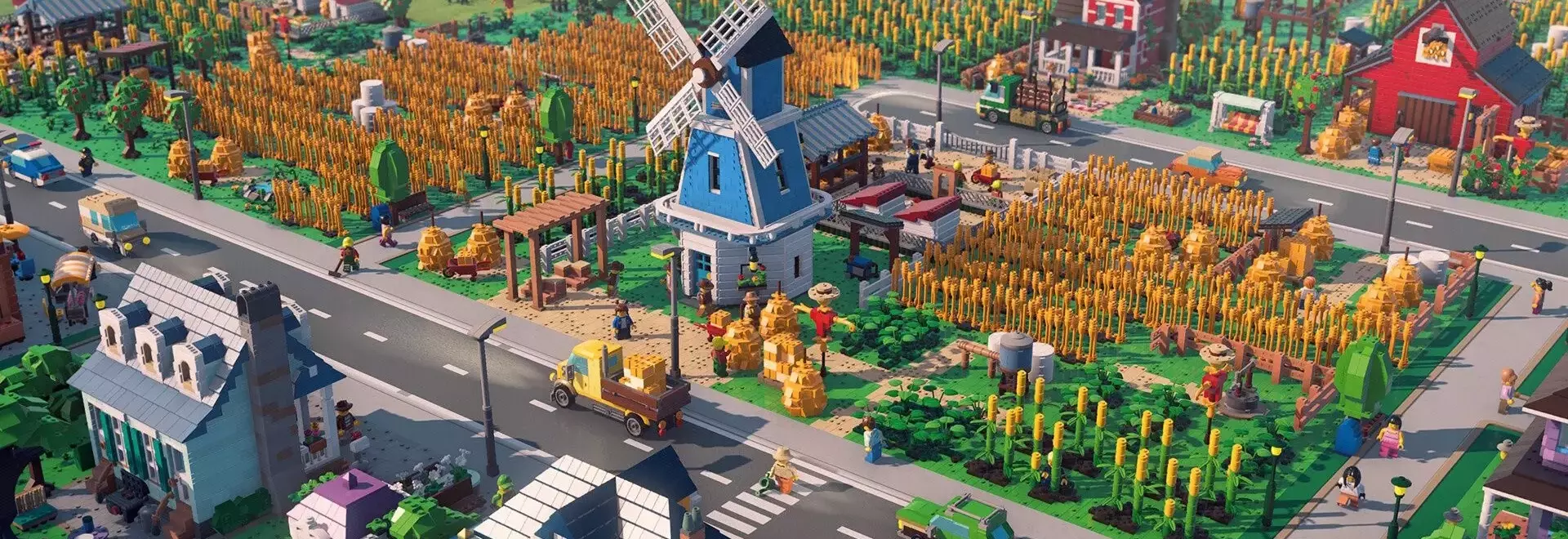
The industrial system in Lego Skylines also diverges from Cities: Skylines. Unlike the multi-product industries in Cities' Industries DLC, Lego Skylines' industries produce color-coded goods. Local businesses require these specific goods to operate efficiently; otherwise, they resort to importing, which reduces profitability. The full complexity of this system is yet to be explored, but aesthetically, the concept of designating specific areas for certain goods and industries is appealing, particularly given the reduced space requirements compared to Cities: Skylines. My Lego farm district, for instance, housed four operational farms within a fraction of the space a single farm would occupy in Cities.
While my initial engagement with Lego Skylines was relatively brief for a city-builder, the preview offered a compelling glimpse into Iceflake's ambitious vision, leaving me eager for its full release. However, the release date remains unannounced, necessitating a longer wait for enthusiasts.
