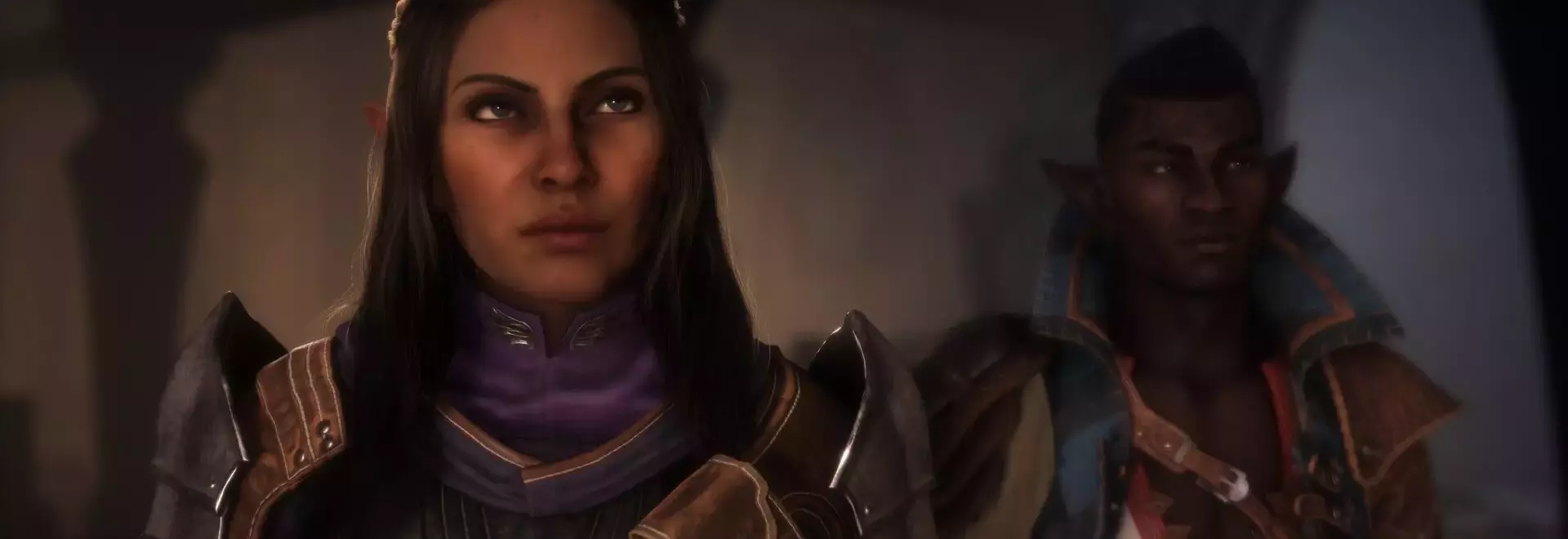
Former BioWare Executive Doubts Future of Dragon Age Series Amidst EA's Business Strategy
The future of the iconic Dragon Age saga appears uncertain, with veteran BioWare executive producer Mark Darrah casting a shadow of doubt over its prospects. Darrah, who oversaw the series from Dragon Age: Origins to Inquisition, suggests that Electronic Arts' (EA) current operational philosophy, which he colorfully describes as akin to a "hedge fund with a video game hobby," combined with the recent underwhelming commercial performance of Dragon Age: The Veilguard, points towards a potential discontinuation of the franchise. This perspective highlights the challenges faced by creative studios operating within large corporate structures, where financial metrics often outweigh artistic and long-term franchise development considerations.
Darrah’s concerns are rooted in what he perceives as EA's detached approach to game development. In a recent discussion, he articulated that the company views its involvement in video games more as a peripheral interest than a core commitment, particularly when it comes to resource allocation and nurturing intellectual properties. This corporate mindset, according to Darrah, creates a difficult environment for any game, let alone a long-running RPG series like Dragon Age, to thrive.
The underperformance of Dragon Age: The Veilguard is cited as a critical factor in this pessimistic outlook. Following its release, the game failed to meet expected sales targets, prompting EA to reportedly scale back its support for BioWare. This move, which some interpret as a significant downsizing of the studio, further exacerbates the challenges of sustaining a major franchise. Darrah also highlighted the vast number of dormant intellectual properties under EA's ownership, suggesting that reviving any of them, including Dragon Age, would face immense internal resistance and political maneuvering from various stakeholders within the company.
Furthermore, Darrah hinted at the complex internal dynamics within BioWare itself, suggesting that any attempt by an external party or even another internal team to pitch a new Dragon Age title would likely be met with strong opposition from existing BioWare personnel. This internal struggle, he implies, could stifle any potential creative resurrection of the series, regardless of commercial viability or fan interest.
Adding another layer of complexity to the situation is the potential acquisition of EA by Saudi Arabia. Such a high-stakes corporate takeover, often involving massive debt restructuring, could lead to widespread budget cuts and a re-evaluation of all ongoing projects. In such a scenario, less profitable or more niche franchises like Dragon Age might be deemed non-essential and face cancellation, as the new ownership prioritizes financial stability and high-return investments. While a new Mass Effect title is reportedly still in development at BioWare, the broader future of the studio's other properties remains precarious.
David Gaider, a former lead writer for the Dragon Age series, echoed similar sentiments previously. He indicated that EA executives often failed to grasp the intrinsic value of the franchise, frequently dismissing its successes, such as Dragon Age: Inquisition's unexpected triumph, as mere coincidences. This persistent lack of understanding and appreciation from the upper echelons of EA, according to Gaider, has consistently undermined the series' potential and creative direction. The combination of corporate indifference, internal friction, and external financial pressures paints a grim picture for the continued existence of the Dragon Age universe.
The veteran game developer's candid assessment underscores the precarious position of established video game franchises within large, publicly traded companies. The prioritization of short-term financial gains and a perceived lack of understanding of creative processes can lead to the demise of beloved series, despite their cultural impact and dedicated fan bases. The future of Dragon Age, therefore, hangs in the balance, contingent on corporate strategies that may not align with its artistic legacy or commercial potential.
