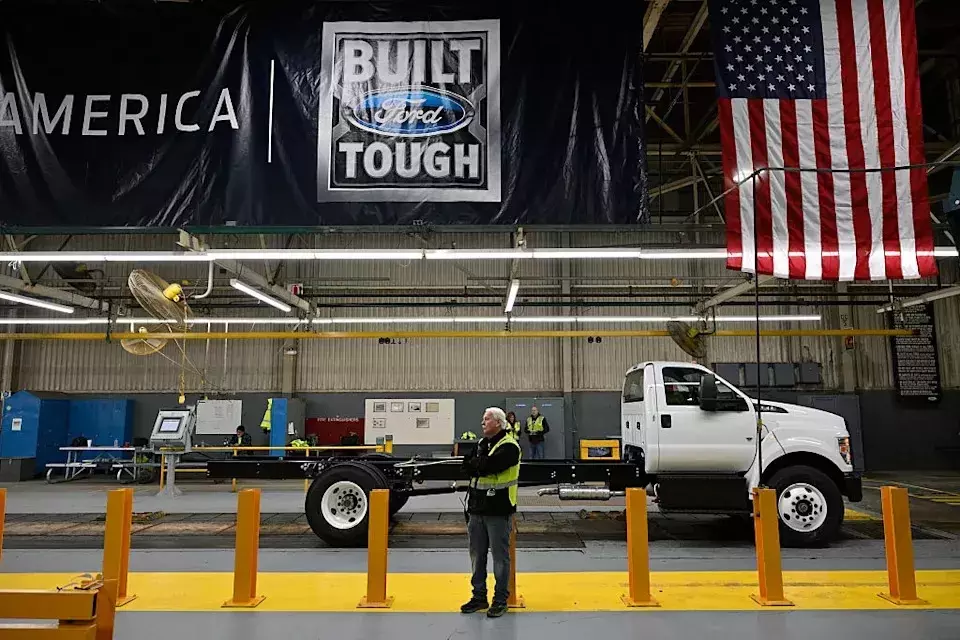
Ford Rehires Experienced Engineers After AI Quality Shortcomings
Ford Motor Company has made a strategic move to re-engage experienced engineers, acknowledging that its previous reliance on artificial intelligence and automated systems did not yield the anticipated quality improvements. This decision, which involves bringing back 350 seasoned professionals, marks a significant shift in the automaker's approach to product development and quality assurance, emphasizing human expertise alongside technological advancements.
The company's commitment to enhancing product quality and efficiency is evident in this initiative. By integrating the wisdom of veteran engineers with ongoing AI development, Ford aims to create a more robust and reliable manufacturing process. This blend of human insight and artificial intelligence is expected not only to resolve existing quality issues but also to drive substantial cost reductions and reinforce Ford's competitive edge in the automotive industry.
Ford's Shift from AI to Human Expertise in Quality Assurance
Ford has recently brought back 350 veteran engineers, including some who previously worked for the company and others from supplier networks, following unsatisfactory performance from their AI and automated quality systems. This strategic re-engagement of experienced personnel comes after the company's chief operating officer, Kumar Galhotra, admitted that an over-reliance on automated quality checks led to disappointing outcomes. These seasoned engineers, affectionately termed 'gray beards,' are now tasked with proactively identifying potential failure points in components long before they reach the assembly line, a critical step in preventing defects and ensuring a higher standard of product quality.
The decision to rehire these experts underscores a renewed focus on human judgment and deep technical knowledge in Ford's quality assurance processes. While the company initially believed that integrating AI with design requirements would naturally lead to superior products, this assumption proved flawed. The immediate impact of this initiative has been positive, with Ford projecting a substantial reduction of $1 billion in costs this year. Furthermore, the company has seen its efforts recognized by achieving the top position among mainstream brands in the JD Power Initial Quality Survey, indicating a significant turnaround in its product reliability and customer satisfaction metrics.
Integrating Veteran Knowledge with Advanced Technology
While Ford is bringing back experienced engineers to address current quality challenges, the company is not entirely abandoning its investment in artificial intelligence. Instead, these veteran professionals are playing a crucial role in refining Ford's AI strategies and tools. Their extensive practical knowledge and insights are being utilized to train a new generation of younger staff and to reprogram AI systems, thereby enhancing the effectiveness and accuracy of these automated technologies. This approach aims to bridge the gap between theoretical AI capabilities and real-world manufacturing demands, ensuring that future technological implementations are more aligned with the company's quality objectives.
This dual strategy highlights Ford's commitment to leveraging the strengths of both human expertise and advanced technology. By having the 'gray beard' engineers mentor newer employees and fine-tune AI algorithms, Ford is building a more resilient and adaptable quality control framework. This hybrid model is designed to prevent past mistakes by incorporating invaluable human experience into the development of automated systems, ultimately leading to more robust products and operational efficiencies. The successful implementation of this strategy is expected to yield lasting benefits, solidifying Ford's reputation for quality and innovation in the competitive automotive market.
