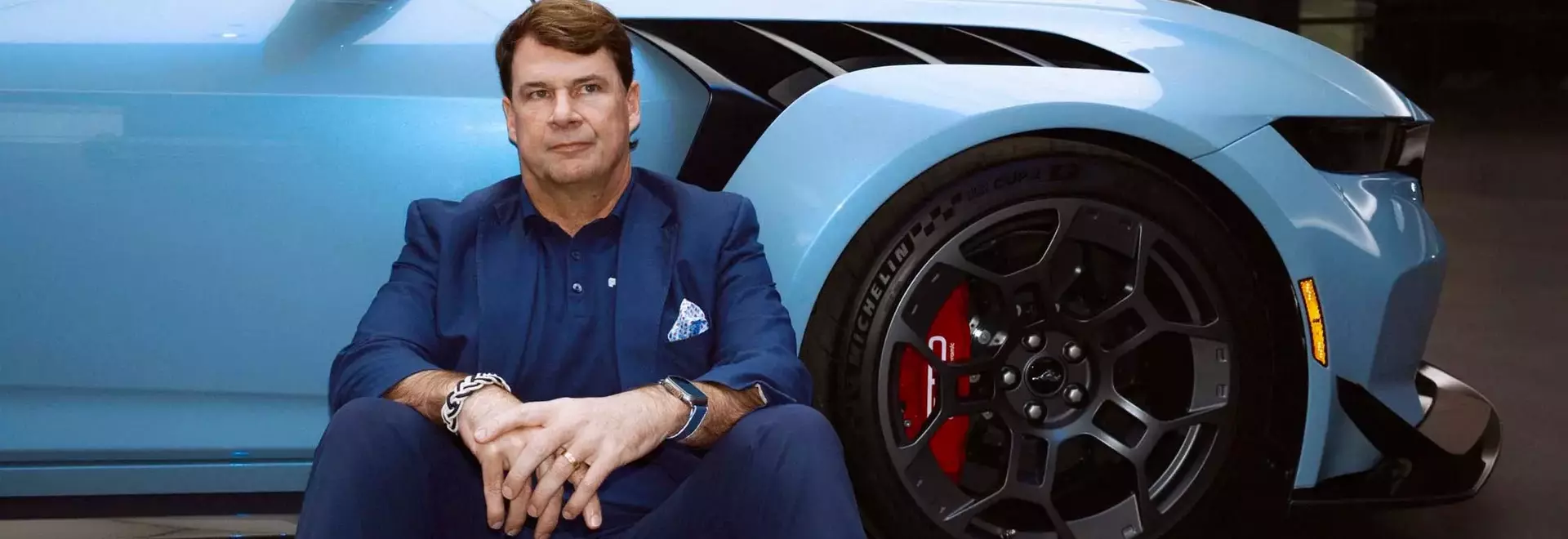
Ford CEO Jim Farley on EVs, Competition, and Company Transformation
Ford Motor Company CEO Jim Farley recently reflected on his five years at the helm, discussing the challenges and triumphs of steering a legacy automaker through a rapidly evolving industry. Amidst critiques regarding the company's electric vehicle (EV) initiatives and the financial setbacks they have incurred, Farley offers a candid assessment of Ford's strategic direction, acknowledging missteps while emphasizing a forward-looking approach centered on innovation and sustainability. He delves into the complex landscape of global competition, particularly the rise of Chinese EV manufacturers, and outlines Ford's ambition to transform beyond its traditional manufacturing roots.
Farley's tenure has been marked by significant shifts, including the recent decision to discontinue the F-150 Lightning and a substantial financial writedown. These actions stem from a reevaluation of Ford's EV strategy, which Farley admits was initially flawed. He cites insights gained from dissecting competitors' vehicles, revealing fundamental differences in design philosophy, such as Tesla's approach to battery and wiring harness optimization. This realization has spurred a renewed focus on designing cost-effective and competitive EVs, with a new modular platform slated for a 2027 debut.
The CEO also touches upon his personal connection to the automotive world, recounting childhood memories of visiting the Chinetti building and his passion for racing. He emphasizes that while he loves cars, his primary focus is the long-term viability of Ford, which includes enhancing quality, safety, and operational efficiency. This commitment extends to fostering a secure working environment and creating a robust business model that can contribute to societal well-being and deliver strong shareholder returns.
The conversation further explores the unexpected success of Ford's off-road vehicle lineup, including the Bronco, Raptors, and Tremors, which have become a surprisingly profitable segment. Conversely, he addresses the difficulties faced in the European market, where stringent CO2 regulations and fierce competition from Chinese brands, often masked by local names, present unique challenges. Despite these hurdles, Ford has seen success with its Puma Gen-E in the UK, demonstrating the potential for affordable electric options.
Farley advocates for greater diversity in vehicle sizes within the American market, a departure from the current trend of larger, truck-focused vehicles. He believes Ford's best opportunity to compete in this segment lies in applying innovative EV technologies, leveraging their strong hybrid offerings to challenge competitors. He identifies Chinese OEMs like BYD, Great Wall, and Geely as significant threats, highlighting their advanced, low-cost electric vehicle development and the substantial government support they receive.
Addressing the internal dynamics of Ford, Farley recounts historical challenges with internal politics and how a sense of collective purpose, often galvanized during crises like the 2008 financial downturn or the COVID-19 pandemic, has helped overcome these divisions. He sees the current era, defined by software-driven vehicles and electrification, as another such transformative moment, requiring a departure from traditional auto engineering and embracing talent from diverse backgrounds, including Formula 1 and Tesla.
Looking beyond conventional automotive manufacturing, Farley envisions Ford expanding into adjacent sectors, such as drone and VTOL aircraft development, by leveraging its expertise in electric architectures and battery technology. He believes these ventures could offer new revenue streams, reduce business cyclicality, and provide essential capabilities for the company's future. The interview concludes with Farley's vision of a revitalized Ford, akin to Henry Ford's original spirit of innovation, adapting to a world where vehicles are not just for driving but also serve as versatile "third spaces" for entertainment and other activities, driven by the profound impact of software.
In essence, the dialogue underscores Ford's ongoing journey of transformation. It reflects a company grappling with its legacy while ambitiously pursuing a future defined by electric mobility, digital innovation, and expanded business horizons. Farley's leadership emphasizes a blend of strategic recalibration, technological advancement, and a cultural shift towards adaptability and continuous learning, all aimed at securing Ford's position in a rapidly changing global automotive landscape.
