Florida's 'Alligator Alcatraz' Detention Facility Faces Imminent Closure Amid Legal Challenges
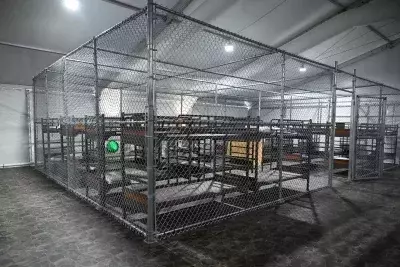
The contentious “Alligator Alcatraz” immigration detention center, situated deep within the Florida Everglades, is on the verge of emptying its population. This pivotal moment arises from a federal court's decisive ruling, which has initiated a sixty-day period for the facility to cease new admissions and progressively conclude its controversial operations. Authorities within Florida have confirmed a marked decline in the number of individuals held, anticipating a complete vacancy in the very near future. This turn of events marks a significant development for a site that has garnered considerable public and legal scrutiny.
Florida's 'Alligator Alcatraz' Facility Nearing Empty Status Following Judicial Intervention
In a significant shift, the immigration holding facility in Florida's vast Everglades, colloquially referred to as \"Alligator Alcatraz,\" is rapidly approaching zero detainees. This development was underscored by an email from Kevin Guthrie, the executive director of Florida's Division of Emergency Management, to a South Florida rabbi, indicating an impending emptying of the facility \"within a few days.\"
On August 28, 2025, Florida Governor Ron DeSantis acknowledged the declining population, attributing it to an accelerated pace of removals. This aligns with a crucial ruling issued last week by U.S. District Judge Kathleen Williams, who mandated that both Florida and the Trump administration halt the transfer of new detainees to the site and phase out existing operations within two months. Judge Williams's preliminary injunction was a direct response to a lawsuit brought forth by environmental advocacy groups and the Miccosukee tribe. U.S. Representative Maxwell Frost, following a tour of the facility, noted a detainee count of approximately 336, a number that has since dramatically decreased as documented by volunteers from Friends of the Everglades, who observed multiple busloads of detainees departing the premises. Eve Samples, the executive director of Friends of the Everglades, expressed relief at the state's apparent adherence to the court order, emphasizing the unsuitability of the Everglades for such a facility.
The judicial order highlighted concerns that the rapid construction of the facility potentially contravened federal statutes, specifically those requiring public engagement, exploration of alternative solutions, and comprehensive environmental impact assessments. Despite appeals lodged by Florida and the Trump administration with the U.S. Court of Appeals for the 11th Circuit to challenge the injunction, the state maintains that the decision to transfer detainees rests with federal immigration authorities. Governor DeSantis stated, \"We don't determine who goes into the facility,\" suggesting ongoing litigation as a potential influence on the Department of Homeland Security's (DHS) decisions. A DHS spokesperson affirmed the relocation of detainees to comply with the judge's directive, while simultaneously vocalizing strong disapproval of the ruling, asserting that the administration holds a strong legal and factual position in the matter.
The state of Florida embarked on the construction of this detention facility at the underutilized Dade-Collier Training and Transition Airport, nestled in the ecologically sensitive Everglades. Projections indicated an expenditure exceeding $400 million for its construction and operation, with Governor DeSantis having already approved contracts totaling about $245 million.
The unfolding events surrounding the 'Alligator Alcatraz' facility serve as a powerful reminder of the intricate balance between national policy, environmental preservation, and human rights. From a critical perspective, the judicial system's intervention underscores the importance of due process and adherence to regulatory frameworks, even in matters of national security and immigration. The rapid emptying of the facility, driven by legal challenge rather than proactive policy change, highlights a reactive approach to complex issues. It prompts reflection on the initial decision-making processes that led to the establishment of such a facility in an environmentally sensitive area, and the broader implications for governance when executive actions bypass established legal and environmental safeguards. This situation should inspire a deeper conversation about the ethical considerations of detention, the ecological impact of human infrastructure, and the essential role of an independent judiciary in upholding the rule of law and protecting natural heritage.
