Federal Reserve Vows to Stabilize Prices Amidst Rising Inflation Concerns
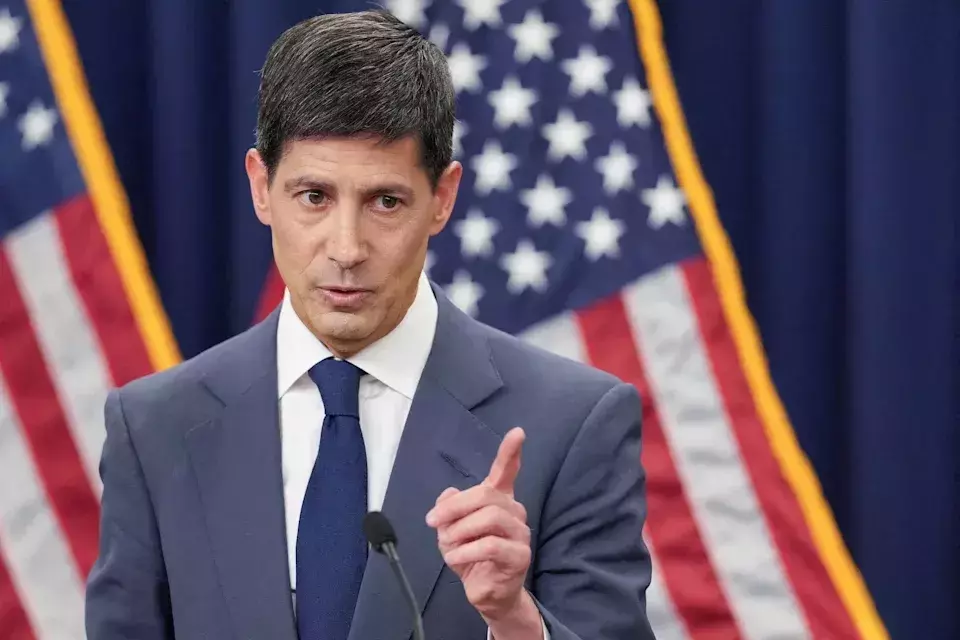
In its latest semi-annual Monetary Policy Report to Congress, the Federal Reserve emphasized its unwavering commitment to achieving price stability amidst ongoing inflationary pressures. This declaration comes as Federal Reserve Chairman Kevin Warsh prepares to address lawmakers on Capitol Hill, where he is expected to face rigorous questioning regarding the economic outlook, the trajectory of inflation, and future interest rate adjustments.
Chairman Warsh is scheduled to testify before the House Financial Services Committee and the Senate Banking Committee next week, fulfilling his statutory obligation to provide updates to Congress twice annually. During his appearances, policymakers are anticipated to press Warsh on the central bank's strategy for managing inflation, which remains a significant concern for the economy. Despite the pressure, Warsh has indicated a cautious approach to forward guidance, preferring to reserve detailed insights for internal discussions within the Federal Open Market Committee (FOMC).
The report highlights several factors contributing to the persistent elevation of inflation, including increased energy costs stemming from geopolitical tensions in the Middle East, as well as the impact of tariffs on consumer goods. Furthermore, robust demand for semiconductors and other components crucial for data center development has also played a role in pushing up prices. While acknowledging a rise in service sector prices, Fed officials express a belief that these increases are unlikely to be sustained over the long term.
Financial markets have already reacted to the inflationary environment, with Treasury yields climbing and market participants anticipating higher interest rates. The report notes that certain quantitative policy frameworks suggest a need for the federal funds rate to exceed its current range of 3.5% to 3.75%. However, the Federal Reserve cautions against a simplistic interpretation of these models, emphasizing that economic conditions would evolve differently under various policy paths.
Upcoming data, including the Consumer Price Index (CPI) report for June, will be closely watched. Analysts project a moderation in June's CPI to 3.8% from 4.2% in May, partly attributed to a decline in oil prices following a deal involving President Trump and Iran. Core inflation, which excludes volatile food and energy components, is also expected to slightly decrease. Chairman Warsh is likely to be questioned on these figures but is expected to maintain a reserved stance on immediate policy implications.
Discussions from the Federal Reserve's June policy meeting minutes reveal a bifurcated outlook for interest rates, contingent on inflation's trajectory. Should inflation subside, officials generally favor maintaining current rates or eventually lowering them. Conversely, a scenario involving a stable labor market alongside persistent inflation, driven by factors such as AI demand, the Middle East conflict, or tariffs, would likely prompt nearly all officials to support further policy tightening, signaling rate hikes.
Chairman Warsh is also expected to elaborate on the five task forces he has established to examine critical areas: public communications, balance sheet policy, data quality, inflation analysis, and the influence of artificial intelligence on productivity and employment. These initiatives underscore the Federal Reserve's proactive approach to adapting its policy framework to evolving economic realities. Furthermore, Warsh has affirmed the central bank's unwavering independence, reiterating its commitment to sound monetary policy irrespective of external political pressures, including any preferences from the executive branch regarding interest rates. The long-term effects of AI on the economy, particularly its potential to boost productivity and temper inflation, remain a key area of inquiry for the Federal Reserve.
