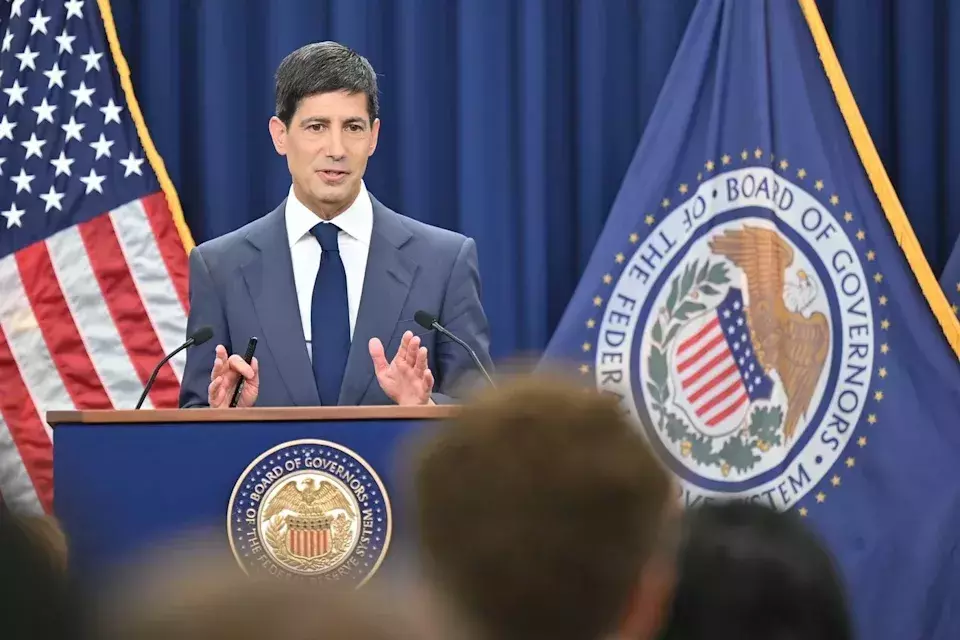
Federal Reserve's New Direction Under Kevin Warsh: A Shift in Investor Expectations
Federal Reserve Chairman Kevin Warsh has ushered in a new era for monetary policy, signaling a profound change in how the central bank communicates with the market. His brief yet impactful statement has dramatically altered investor perceptions, particularly regarding future interest rate movements. This strategic pivot emphasizes reduced forward guidance, providing the Federal Open Market Committee (FOMC) greater agility in its decisions and aiming to glean more precise insights from real-time economic indicators.
Warsh assumed leadership of the Federal Reserve during a particularly challenging economic period. Geopolitical tensions, notably the conflict in Iran and the resulting disruption to the Strait of Hormuz, triggered a sharp surge in oil and other commodity prices. This immediately fueled inflationary pressures, with the Consumer Price Index (CPI) showing a significant increase in the months following his appointment. The central bank faces the critical task of formulating an effective response to this escalating inflation, which has become the primary focus of its policy agenda.
During his initial press conference and subsequent FOMC meeting, Warsh made his intentions clear, declaring, "This Committee will deliver price stability." This unambiguous commitment has been consistently reiterated, becoming the cornerstone of his chairmanship. While specific tactical details remain forthcoming, the available instruments for achieving price stability primarily involve adjusting interest rates and managing the Federal Reserve's balance sheet. Warsh has indicated a preference for reducing the balance sheet, either by allowing existing bond holdings to mature without replacement or through direct sales, which would exert upward pressure on long-term interest rates. However, he acknowledges that this process will be gradual, noting the considerable time it took to build the balance sheet.
In addition to balance sheet adjustments, Warsh emphasized that interest rate policy would serve as the central mechanism for monetary actions. This stance has led to a significant recalibration of market expectations. Investors, who had largely abandoned hopes for rate cuts even before Warsh took office, are now bracing for a series of rate hikes. Futures markets currently indicate a high probability of at least one rate increase before the end of the year, with many anticipating such moves as early as September. This shift extends beyond just rate expectations; consumer sentiment, as reflected in the University of Michigan's survey, also shows a decrease in inflation expectations, despite recent CPI figures.
The implications of rising interest rates and potentially decelerating inflation are substantial for the stock market. Higher rates typically lead to lower valuations as investors demand greater returns for future earnings. Conversely, stable prices could bolster consumer confidence, benefiting companies reliant on consumer spending. The Federal Reserve's path under Warsh's leadership requires a delicate balancing act to ensure economic stability. Any missteps in implementing rate adjustments could negatively impact stock prices, while judicious monetary policies could foster a climate of stable prices for both consumers and investors.
In essence, Chairman Warsh's direct and unwavering message has set a new course for the Federal Reserve. His focus on achieving price stability through clear, albeit less frequent, communication, coupled with a commitment to utilizing interest rate policy as a core tool, has profoundly influenced market sentiment. This strategic shift underscores a determined effort to navigate the current economic challenges and restore equilibrium to an environment marked by persistent inflationary pressures.
