Federal Reserve Faces Mounting Pressure to Raise Rates Amid Inflation Concerns
The Federal Reserve faces a critical juncture this week as it grapples with renewed inflationary pressures. The delicate balance between maintaining economic stability and controlling rising prices has put the central bank in a contentious position. Factors such as escalating geopolitical tensions in the Middle East, a surge in demand driven by artificial intelligence, and the implementation of new tariffs by the Trump administration are all contributing to a complex economic landscape. These elements have cast a shadow over recent, more favorable consumer price data, leading to increased calls for a potential interest rate hike.
Federal Reserve's Pivotal Rate Decision Amidst Soaring Inflation
As the Federal Reserve approaches its policy meeting on July 28-29, 2026, the central bank finds itself at a crucial crossroads, pressured by a resurgence in price increases that could lead to a significant interest rate adjustment. This decision is poised to be highly debated, reflecting the intricate economic forces at play.
Recent events, notably heightened tensions in the Middle East, have driven oil prices upward, overshadowing a more subdued consumer price index (CPI) reading for June. This initial dip in CPI had previously offered a glimmer of hope for maintaining stable interest rates. However, the unexpected inflation rebound, coupled with a robust demand surge from the artificial intelligence sector and the Trump administration's announcement of new tariffs, has intensified the debate among Fed officials.
Financial markets have reacted swiftly, with investors increasing their expectations for a rate hike, pushing the probability to nearly 40% at one point last week. Vanguard's Senior Portfolio Manager, Alex Payne, highlighted the market's adjustment to the risk of more persistent inflation, largely attributing this to ongoing geopolitical instability.
Several influential policymakers are openly advocating for higher rates. Dallas Fed President Lorie Logan and Cleveland Fed President Beth Hammack have both expressed concerns that inflation is not sustainably moving towards the Fed's 2% target, with Hammack emphasizing inflation as a more immediate concern than employment. Both officials, who hold voting power in this week's decision, might dissent if the Federal Reserve opts to keep rates unchanged.
Even during the previous month's meeting, minutes revealed that while policy was held stable, some officials had already considered the necessity of rate increases in scenarios where inflation remained elevated due to AI-driven demand, the Middle East conflict, or tariffs. These discussions underscore a growing consensus that such circumstances would likely necessitate tighter monetary policy.
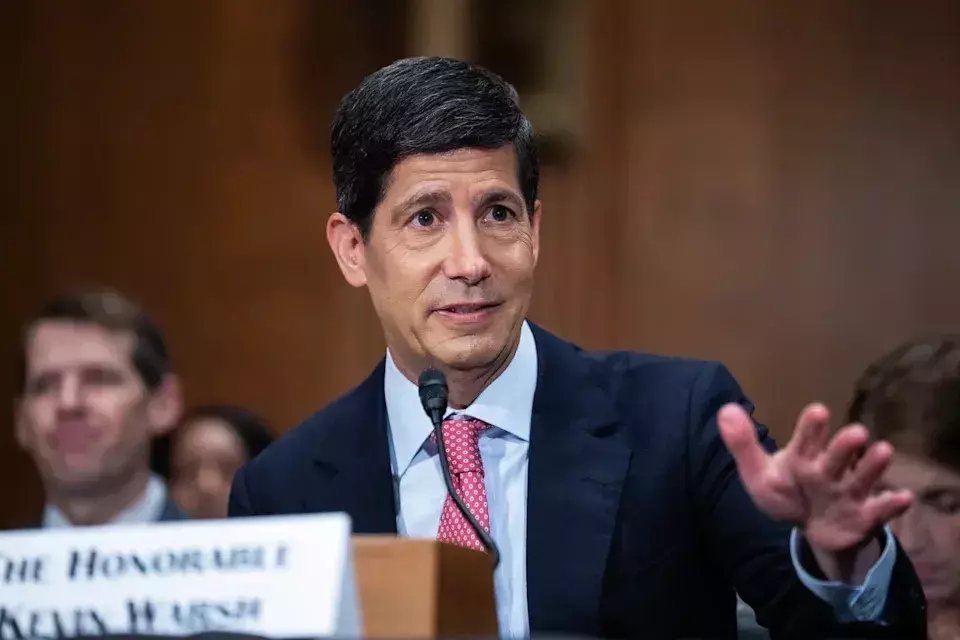
Fed Chairman Kevin Warsh has reiterated the Fed's commitment to achieving price stability. However, his measured approach to detailing specific policy tools has left markets speculating. According to federal funds futures contracts, the probability of a rate increase at this meeting stands around 35%, a rebound from a low of 10% following the June CPI report. Pradeep Bhatia, CEO of Derivative Path Inc., noted the market's divided stance, with roughly a third of banks preparing for further rate hikes and the rest hedging against cuts, indicating widespread uncertainty regarding the Fed's next move.
While some officials, like Fed Vice Chair Philip Jefferson, advocate for patience, they also acknowledge that continued inflationary pressures would warrant reconsidering the current policy stance. Joseph Lavorgna, Chief Economist of the Americas for SMBC Nikko Securities America, suggested that an immediate rate hike could bolster Warsh's credibility and avoid the perception of political influence, especially given past controversies surrounding rate adjustments near election cycles. This move, Lavorgna argues, could also help manage inflation expectations, which is a key concern for political leaders like former President Trump.
The upcoming press conference by Chairman Warsh will be closely scrutinized for insights into the committee's collective outlook on the economy and future rate trajectory. Deutsche Bank Securities Inc.'s Chief US Economist, Matthew Luzzetti, emphasized the importance of understanding the committee's central position on the necessity of rate hikes in the coming months.
The Federal Reserve's impending decision is not just a technical adjustment but a deeply consequential one, balancing complex economic realities with diverse policy perspectives, all under the watchful eyes of both domestic and international markets.
The upcoming Federal Reserve policy meeting highlights the inherent challenges of modern monetary policy. The need to balance inflation control with economic growth, especially in a volatile global environment, is a perpetual tightrope walk. This situation emphasizes the intricate interplay between geopolitics, technological advancements, and domestic economic policies. It also underscores the immense pressure on central bank leaders to communicate clearly and decisively, as market reactions are swift and far-reaching. The Fed's transparency and perceived independence are crucial in maintaining market confidence, particularly when decisions are made under significant external and internal scrutiny. Ultimately, this scenario serves as a powerful reminder that monetary policy is not merely about numbers but about navigating a complex web of human expectations, political pressures, and unforeseen global events.
