The Evolution of Men's Fashion: A 'Devil Wears Prada' Perspective
Two decades ago, the film The Devil Wears Prada offered a glimpse into the world of high fashion, revealing a specific aesthetic for clothing in the mid-2000s. While primarily focusing on women's attire, the movie also inadvertently provided a keen observation of how men in urban settings presented themselves at that time. It illustrated a significant period in menswear, bridging the gap between intentional dressing and a more casual, less considered approach, just before digital platforms transformed fashion trends.
The early 2000s represented a fascinating dichotomy in American men's fashion. On one hand, the "metrosexual" movement fostered an increasing awareness of personal style, encouraging men to embrace tailoring and accessories as forms of self-expression. These individuals viewed dressing as an art, meticulously curating their wardrobes. Conversely, a vast majority adopted a more laid-back uniform: loose-fitting denim, graphic t-shirts, and casual outerwear. This era, perfectly encapsulated in The Devil Wears Prada, stood at a crossroads, preceding the internet's profound influence on democratizing and accelerating fashion trends for men.
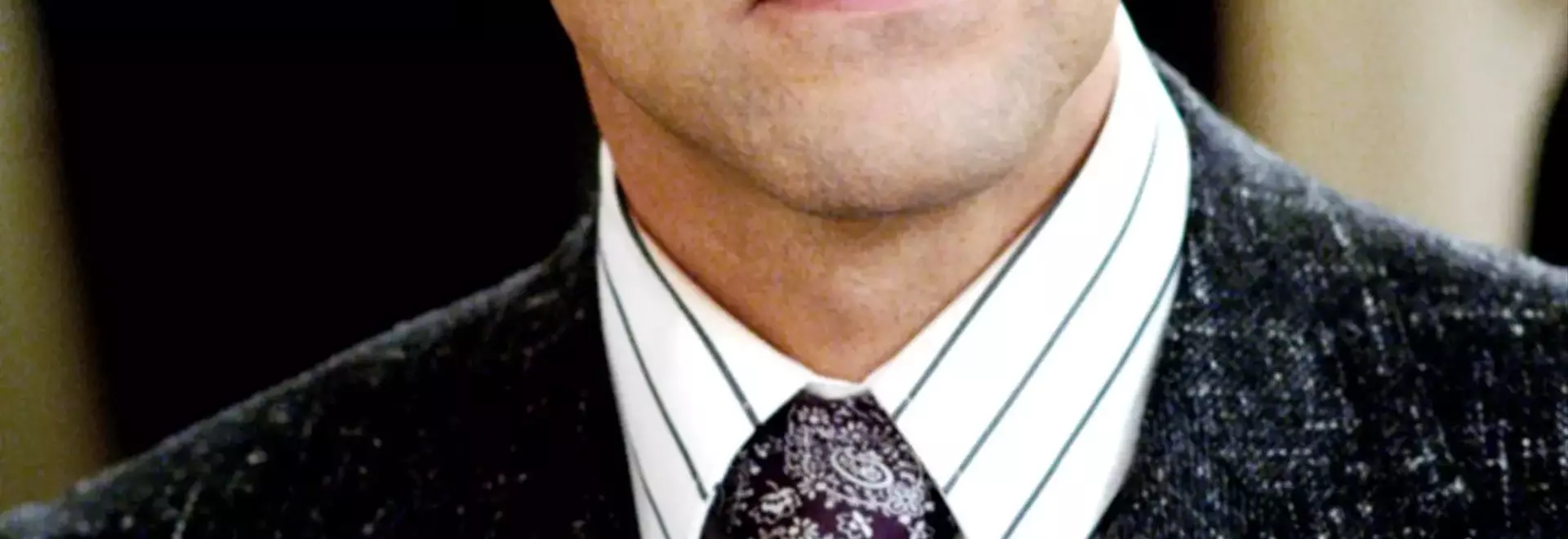
Within the narrative, Nigel Kipling, the esteemed editor at the fictional Runway magazine, epitomized the refined gentleman. Portrayed by Stanley Tucci, Nigel's commitment to the three-piece suit was almost a creed, reflecting a European sophistication in his layering and attention to detail. His suits, while tailored, maintained a comfortable silhouette, a stark contrast to the ultra-slim cuts that would soon dominate or the relaxed styles prevalent today. Nigel's ties were bold, patterned, and impeccably knotted, showcasing a deliberate mix of textures and designs. Even in a simple black turtleneck, his outfit conveyed a sense of controlled elegance, hinting at a personality that delighted in sartorial flourish.
Beyond the magazine's stylish confines, the film presented a wider spectrum of men's clothing choices. Nate, the chef boyfriend of protagonist Andy Sachs, embodied the quintessential mid-2000s casual man. His wardrobe consisted of bootcut jeans, flannel shirts, and zip-up hoodies, reflecting an unpretentious approach to dressing where clothes were secondary. Nate's disdain for the fashion industry, particularly his questioning of women's need for multiple handbags, underscored his 'everyman' persona, seemingly oblivious to the industry's pervasive influence.
Christian Thompson, a journalist and another romantic interest, occupied a middle ground between Nigel's precision and Nate's nonchalance. His style leaned towards relaxed tailoring, featuring soft blazers and slightly rumpled button-ups, often paired with a signature skinny scarf. His look suggested a cultured intellectual, always ready for a thoughtful discussion over coffee. Doug, Andy's friend, offered a more subtle style case study. On the surface, he appeared corporate in dark suits and narrow ties, yet his ability to casually reference high-fashion designers like John Galliano hinted at an underlying, more astute fashion sensibility than he initially let on.
Reflecting on this era, it's evident how nascent men's fashion truly was. The film's release predated significant shifts like J.Crew's influential slim Ludlow suit and Thom Browne's emergence from cult status to global recognition. It was a time before widespread discussions about men's improved dressing habits and the rise of well-dressed men became common topics. The blogosphere of menswear, with its introduction of sophisticated items like cordovan wingtips and Neapolitan blazers, was yet to fully bloom. The Devil Wears Prada, therefore, serves as a remarkable cultural artifact, perfectly preserving a transitional moment when men's fashion was still a niche concern, showcasing its diverse facets from meticulously tailored suits to casual everyday wear, skinny scarves, and beyond.
